Section World
Putin to visit Chinese leader Xi Jinping days after Trump’s trip to Beijing
Beijing announced a May 19–20 state visit for the Russian president—Xi and Li Qiang on the schedule, a joint declaration, and Russia–China “years of education”—immediately after Donald Trump’s May 13–15 Beijing summit, the first bilateral U.S. presidential visit to China in roughly nine years.
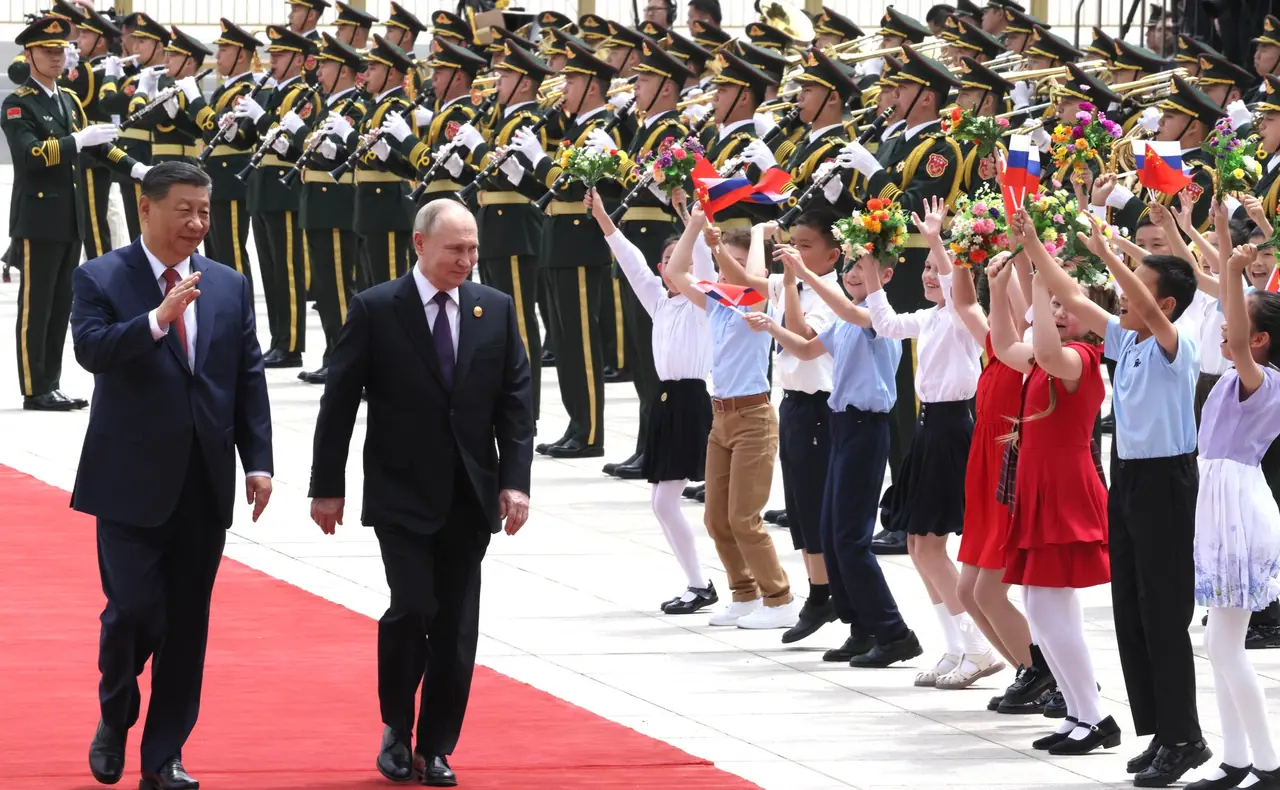
China will host Russian President Vladimir Putin for a state visit from Monday, May 19 through Tuesday, May 20, 2026, at the invitation of President Xi Jinping, according to a Saturday announcement by Beijing’s foreign ministry. The Kremlin’s same-day readout said the two leaders would discuss how to “further strengthen the comprehensive partnership and strategic cooperation” between Moscow and Beijing, exchange views on major international and regional issues, and sign a joint declaration at the end of their talks. The Russian side also described an official opening for bilateral “years of education” running 2026–2027 and a separate economic track with Premier Li Qiang—details that matter to anyone tracking exchange quotas and trade follow-through, not only to summit photographers.
The dates land immediately after U.S. President Donald Trump concluded a three-day Beijing stay that ran May 13–15, 2026—the first bilateral visit to China by a sitting American president in roughly nine years, delayed from an earlier window because of the expanded U.S.–Iran war. That sequencing does not prove a hidden agenda; it does show how Beijing is stacking bilateral anchors with Washington and Moscow in the same fortnight, which other capitals read for balance-of-signals as much as for logistics.
What official readouts already confirm
| Thread | Detail in public messaging (16 May 2026) |
|---|---|
| Host order | Xi as inviting head of state; Putin travelling as guest for a full state-visit protocol block. |
| Duration | Two calendar days in Beijing in MFA and Kremlin accounts—not a fly-in luncheon. |
| Deliverables | Joint declaration plus unspecified bilateral instruments; education “years” launch on the Russian summary. |
| Economics seat | Li Qiang’s trade channel keeps banks, provincial exporters, and customs-adjacent regulators in the same conversation as foreign-ministry messaging. |
Neither side used Saturday’s releases to preview new sanctions rollbacks or battlefield pledges; the texts stayed at partnership adjectives and “regional issues,” shorthand that usually covers Ukraine, the Middle East, and Asia-Pacific deterrence. Treat anything beyond that—secret “understandings,” basing shifts, currency union—as uncorroborated until documents or verified transactions appear.
Why the calendar reads as more than logistics
Stacking a Russian state visit days after an American summit is unusual for any capital, but it fits how Beijing has managed triangular optics before: reassure Moscow that China’s U.S. channel is not purchased at the expense of strategic depth with the Kremlin, while signalling to Washington that the Beijing–Moscow relationship is institutional, not accidental.
For Moscow, the optics matter because sanctions and battlefield fatigue make high-level Chinese energy, finance, and dual-use market access politically valuable. For Washington, the sequencing will invite analytic questions about whether any lines from the Trump–Xi meetings assumed quiet Chinese channels to Moscow on escalation control—questions that rarely resolve cleanly in open sources.
China–Russia ties are not a Cold War clone; they are a pragmatic partnership with overlapping interests in multipolar rhetoric, commodities, arms technology, and UN diplomacy, plus limits whenever either side fears entanglement in the other’s hardest conflicts. China’s U.S. relationship is older, deeper in trade, and more volatile in security perception. Back-to-back visits therefore stress narrative discipline in all three capitals: Moscow wants non-isolation; Beijing wants non-subordination; Washington wants a summit read as worth the pageantry.
Treaty anniversaries and the P5 guest list
Diplomatic calendars love round numbers. Several outlets linked the May visit to the twenty-fifth anniversary of the 2001 Treaty of Good-Neighbourliness, Friendship and Cooperation—originally signed between Putin and then Chinese president Jiang Zemin—a framing that helps domestic audiences read the trip as continuity rather than improvisation.
Hong Kong–based reporting also noted a statistical rarity: within a few months, China will have hosted the leaders of all five permanent members of the UN Security Council on bilateral tracks, after earlier stops attributed in press accounts to France’s Emmanuel Macron and Britain’s Keir Starmer and the just-finished Trump programme. That is partly host bragging rights, partly a reminder that Beijing wants to be the table where P5 interests are staged, not only the arena where they collide in New York.
Protocol: pageantry, recovery time, and substance
Trump’s Beijing leg drew international coverage of classic great-power staging—motorcades, ceremonial troops, massed welcomes, and a late-stage leaders’ walk through Zhongnanhai gardens on the final day (see corroborating broadcast summaries in Sources). Kremlin guidance distributed to reporters on Saturday did not promise an identical parade scale; Chinese hosts often compress second-leader visits when security and motorcade teams are still unwinding a prior state event.
The South China Morning Post, citing unnamed sources, reported that Putin’s visit might carry less pomp—including a tipped one-day emphasis on 20 May in that paper’s sourcing—because officials were still absorbing bandwidth from the Trump trip. Official Kremlin and MFA materials already emphasise declaration and sector meetings over spectacle; if the sourcing holds, the visual contrast could be real even when strategic messaging toward Moscow stays warm.
Cosmetic differences matter less for markets and allies than whether joint documents touch renminbi–ruble settlement, pipeline volumes, or export-control lines Western capitals watch for dual-use leakage—clauses that show up only after legal scrub in both languages.
What would make the visit newsworthy beyond handshakes
Watch for signed memoranda in energy, cross-border payments, or education exchanges; a joint line on ceasefire diplomacy that goes past boilerplate; or any Chinese movement on export controls that third parties can verify in customs data, not only in rhetoric. Watch third-party capitals—Tokyo, New Delhi, Brussels, NATO’s eastern flank—for how they read Middle East paragraphs in any declaration, because Hormuz insurance, Gulf shipping, and humanitarian corridors sat near the top of the U.S.–China conversations that immediately preceded Putin’s arrival window.
Until those texts exist in public, treat corridor claims about secret side deals as speculation. The confirmed spine is the invitation, the dates, the announced meeting stack, the education-year launch on the Kremlin readout, and the diplomatic fact of a U.S. presidential visit that ended the same week—enough to explain why the story matters without pretending the communiqué is already written.
Geography and themes
Related places and recurring themes for this story.
- China
- Russia
- United States
- China–Russia relations
Suggested reading
Other stories that pair well with this one—often from the same section or on overlapping themes.
India says Russian crude buys track commercial logic—not Washington’s waiver calendar
Petroleum ministry joint secretary Sujata Sharma told reporters on 18 May 2026 that imports ran before, during, and after the latest U.S. Treasury carve-out, while state fuel retailers still bleed roughly ₹750 crore a day even after a ₹3-per-litre pump increase.
U.S. lets Russian seaborne-oil sanctions waiver lapse with no renewal
A one-month Treasury general license that had let third countries complete purchases of Russian-origin crude already loaded on tankers ended at 12:01 a.m. Eastern on 16 May 2026; OFAC posted no follow-on extension, after the secretary had already ruled out another rollover.
Trump withholds commitment on Taiwan arms after Xi warning as U.S.–China trade headlines land
President Donald Trump told reporters he would decide on a stalled roughly $14 billion arms package “over the next fairly short period,” after Xi Jinping warned mishandling Taiwan could bring the powers into conflict—while Washington and Taipei each insisted broader policy had not flipped overnight.
U.S. says China pledged at least $17 billion a year in farm buys through 2028 after Trump-Xi summit
A White House fact sheet framed new agricultural purchase targets and joint trade and investment boards as the centerpiece of the Beijing meetings, while Beijing’s commerce ministry called tariff moves preliminary and still under negotiation.
China signals tariff cuts, advances in farm market access after Trump-Xi summit
Beijing’s commerce ministry described new U.S.–China farm understandings as preliminary but pointed to reciprocal tariff reductions, beef-plant registrations, and a path to ease poultry and non-tariff hurdles.
Trump–Xi in Beijing: what readers actually need to know after the summit
From tariffs and grocery bills to chips, travel risk, and how long ‘big purchase’ pledges take to prove out—plain answers to the questions people search after a superpower meeting.
Trump touts 'fantastic trade deals' with China, but details are scarce
Following a high-stakes summit in Beijing, the President claims massive aircraft and agricultural purchases while markets remain skeptical of the lack of formal documentation.
Five key takeaways from President Trump's high-stakes China trip
From massive commodity purchases to the 'red lines' on technology, the Beijing summit of 2026 has reshaped the landscape of the world's most critical bilateral relationship.
U.S. indicts Raúl Castro over 1996 plane shootdown
Federal prosecutors in Miami unsealed murder and conspiracy charges against the 94-year-old former Cuban leader for his alleged role in downing two civilian aircraft.
Trump delays Iran strike after Gulf appeal
President Donald Trump said late on 18 May 2026 in Washington that he was postponing a U.S. military strike on Iran that had been scheduled for the following day after Qatar, Saudi Arabia, and the United Arab Emirates asked for time while diplomacy continued; he also told the armed forces to stay ready for a large-scale assault if talks fail.
Keep exploring
Browse the full archive or return to the front page.
Sources and external links
Sources and filings our editors consulted to verify this story. External links open in a new tab.