Section Science
El Niño weather predictions: how climate outlooks differ from your daily forecast
Seasonal ENSO guidance is built from ocean temperatures, wind patterns, and ensembles of physics models—expressed as shifting odds for months ahead, not a deterministic map of next week’s storms.
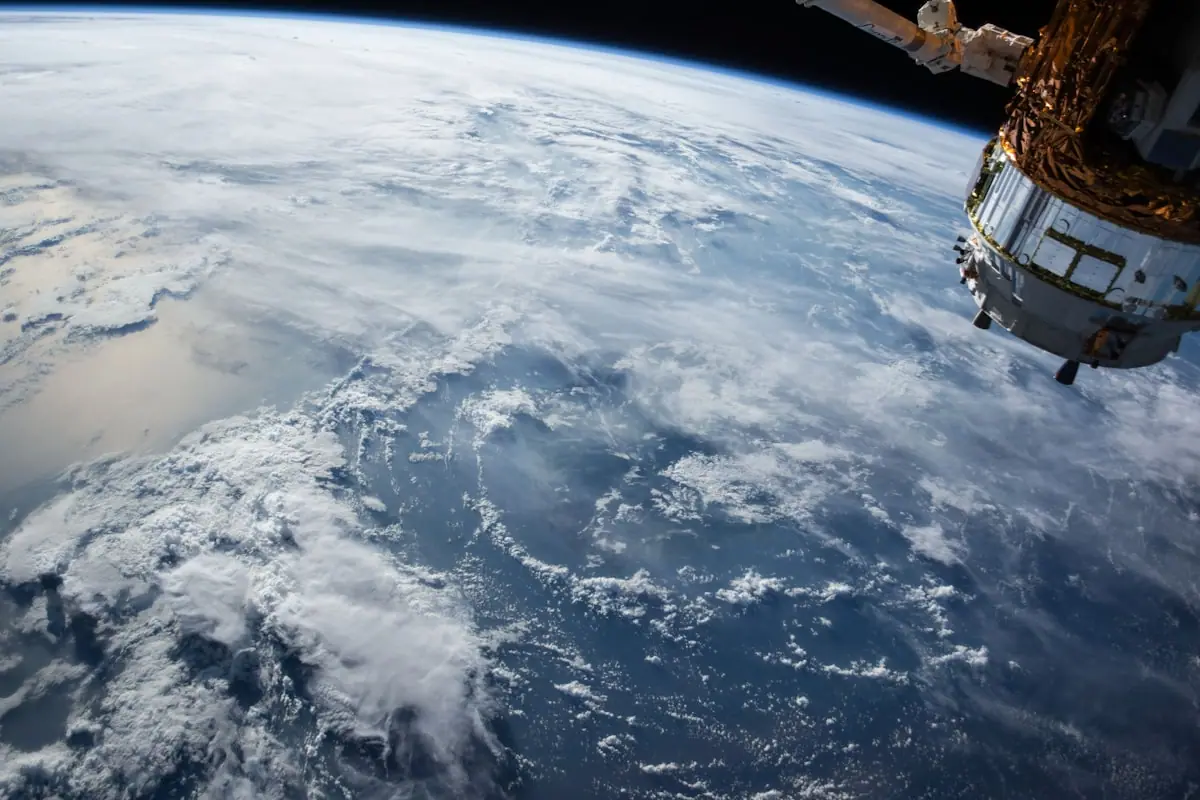
El Niño predictions are almost never about whether it will rain on Tuesday. They are seasonal climate outlooks: statements about how the odds of warmer, cooler, wetter, or drier months might tilt because the tropical Pacific has reorganised its heat, winds, and rainfall. That distinction matters because the same headline index can be scientifically meaningful for water managers and still useless for planning a picnic unless you read the right product.
The standard monitoring shorthand is a set of Niño regions—longitude–latitude boxes across the equatorial Pacific—especially Niño-3.4, where anomalies are averaged over overlapping three-month seasons (for example December–February). Agencies classify El Niño when those seasonal averages cross agreed warm thresholds and persist; La Niña is the cold phase; ENSO-neutral sits between.
Where operational predictions come from
| Layer | What it is | What it is not |
|---|---|---|
| Observations | Buoys, satellites, ships of opportunity | A single “magic number” that captures every local impact |
| Diagnostic synthesis | Expert teams reconcile winds, sea-surface temperature, and subsurface heat | A verdict that never revises |
| Model ensembles | Many parallel runs to expose spread | One deterministic movie of the future |
| Probability products | Charts of chances for El Niño, neutral, La Niña by season | A guarantee for any one city |
In the United States, the Climate Prediction Center publishes an ENSO Diagnostic Discussion alongside graphical probability guidance that updates as new observations arrive. International readers often pair that with independent academic monitoring—such as the International Research Institute for Climate and Society plume—and national outlooks from agencies like Australia’s Bureau of Meteorology, because each centre may weight local impacts differently.
Why spring and early summer are awkward forecast moments
Forecasters talk about a spring predictability barrier: skill in predicting how ENSO will look many months ahead is often lower when the Pacific is still organising early in the calendar year, then frequently improves once stronger ocean–atmosphere coupling becomes clearer through boreal summer. That is not a failure of science; it is a statement about signal-to-noise in a coupled system where small wind bursts can accelerate or brake warming.
For public communication, the practical lesson is to treat any long-lead headline as a distribution—watch whether model spread tightens or widens on successive monthly releases—rather than as a single trajectory etched in stone.
From Pacific indices to “weather where I live”
Even a confident El Niño outlook does not automatically dictate local weather. Teleconnections—statistical links between remote sea-surface temperature patterns and regional jet-stream, storm-track, or monsoon behaviour—are real but probabilistic. India’s monsoon, Australia’s fire season, Indonesia’s dry-season moisture, and North American winter precipitation all have historically shifted under strong ENSO phases, but local soil moisture, snowpack, Indian Ocean variability, and long-term warming trends can dominate any single season.
That is why responsible seasonal messaging separates ENSO-driven anomalies from background climate change: the same Niño-3.4 reading today may not produce identical impacts to a similar reading decades ago when baselines were cooler or circulation patterns differed.
How to read the next round of updates
Watch three levers in official products rather than chasing labels: whether subsurface warm water continues to upwell toward the eastern Pacific, whether trade winds weaken in a sustained way, and whether tropical rainfall reorganises into an El Niño-like pattern—signals that coupling is strengthening. When probability charts shift mass toward warm categories for late-year seasons, emergency planners typically re-run drought, flood, and cyclone scenarios even before any single week looks unusual on a phone app.
NewsTenet will keep pairing these large-scale outlooks with ground-truth hydrology and agricultural reporting as the 2026 development season progresses—especially when headline indices and lived impacts begin to diverge, which is when probabilistic forecasts are most often misunderstood.
Geography and themes
Related places and recurring themes for this story.
- El Niño
- Climate
- Science
Suggested reading
Other stories that pair well with this one—often from the same section or on overlapping themes.
Forecasters warn of potential "Super" El Niño this year as Pacific heat builds
Seasonal models and ocean observations point toward a strong El Niño by late 2026, reviving memories of 1997–98 and 2015–16 while stressing that timing, strength, and regional impacts still carry major uncertainty.
Europe and China count down to SMILE, a joint mission to watch Earth’s magnetic shield breathe under the solar wind
The Solar wind Magnetosphere Ionosphere Link Explorer is booked to lift on a Vega-C from French Guiana on 19 May 2026, carrying European and Chinese instruments into a long polar ellipse so researchers can link what the Sun throws at the magnetosphere with what the auroral ionosphere does in reply.
Asteroid 2026 JH2 to pass closer to Earth than the Moon this Monday
The near-Earth object will fly within 90,000 kilometers of the planet, providing a rare opportunity for astronomers to study a space rock at close range.
Mayo Clinic validation work shows REDMOD AI spotting pancreatic cancer on CTs far ahead of usual reads
Decrypt’s April recap of the landmark study highlights up to a three-year lead in select cases; oncology trade write-ups of the same paper pin median detection near 475 days with 73% sensitivity versus roughly 39% for pooled radiologists on identical prediagnostic scans.
M5.2 Guangxi quake near Liuzhou kills 2, leaves 1 missing, and pushes 7,000-plus into shelter lines
Xinhua copy carried by RTHK pins the shock to Liunan District minutes after midnight Monday local time, eight kilometers down—while wider Chinese authority briefings cited by Indian wire aggregators add the five-figure precautionary evacuations, four hospitalizations, and cracked or partly collapsed older buildings.
Valerie Fridland’s new book traces how accents train listeners to sort strangers before a word’s meaning lands
A spring 2026 trade title from a University of Nevada, Reno linguist ties vowel shifts and rhythm to playground bias, hiring screens, and the spread of prosody-scoring software.
Lab work suggests audio-only focus slightly improves how listeners judge deception in controlled speech tasks
When participants shut out faces and rate recorded answers, small prosody shifts—pitch, vowel length, micro-pauses—carry more of the usable signal than rapid visual scanning in the paradigms under discussion.
Siberian Neanderthal molar shows cylindrical bore consistent with living flint drill use about 59,000 years ago
Analysts argue micro-striations and CT taper match intentional stone boring during life rather than carnivore damage or post-mortem scraping—if replicated, the case pushes evidence for Pleistocene oral intervention earlier than many textbook timelines.
Scheduled mild cold—vests or showers—linked to small fat-mass drop in 47-adult pilot trial
Participants with obesity or overweight were randomised to shiver-light cold sessions versus thermoneutral routines; body-composition tools showed a modest fat-mass signal the authors tie to brown-adipose activity.
Pooled PSA screening trials show a small absolute drop in prostate cancer deaths, synthesis finds
A meta-analysis across six randomised programmes involving nearly 800,000 men estimates about two fewer prostate cancer deaths per 1,000 invited to screening—implying hundreds screened per death avoided, with biopsy and overtreatment harms on the other side of the ledger.
Keep exploring
Browse the full archive or return to the front page.
Sources and external links
Sources and filings our editors consulted to verify this story. External links open in a new tab.
- ENSO: El Niño / La Niña Diagnostic Discussion (NOAA Climate Prediction Center) (opens in a new tab)— NOAA Climate Prediction Center
- Official CPC ENSO strength and phase probabilities (NOAA) (opens in a new tab)— NOAA Climate Prediction Center
- IRI ENSO forecast (International Research Institute for Climate and Society) (opens in a new tab)— IRI / Columbia University
- Climate Driver Update — ENSO (Australian Bureau of Meteorology) (opens in a new tab)— Australian Bureau of Meteorology