Section Science
Siberian Neanderthal molar shows cylindrical bore consistent with living flint drill use about 59,000 years ago
Analysts argue micro-striations and CT taper match intentional stone boring during life rather than carnivore damage or post-mortem scraping—if replicated, the case pushes evidence for Pleistocene oral intervention earlier than many textbook timelines.
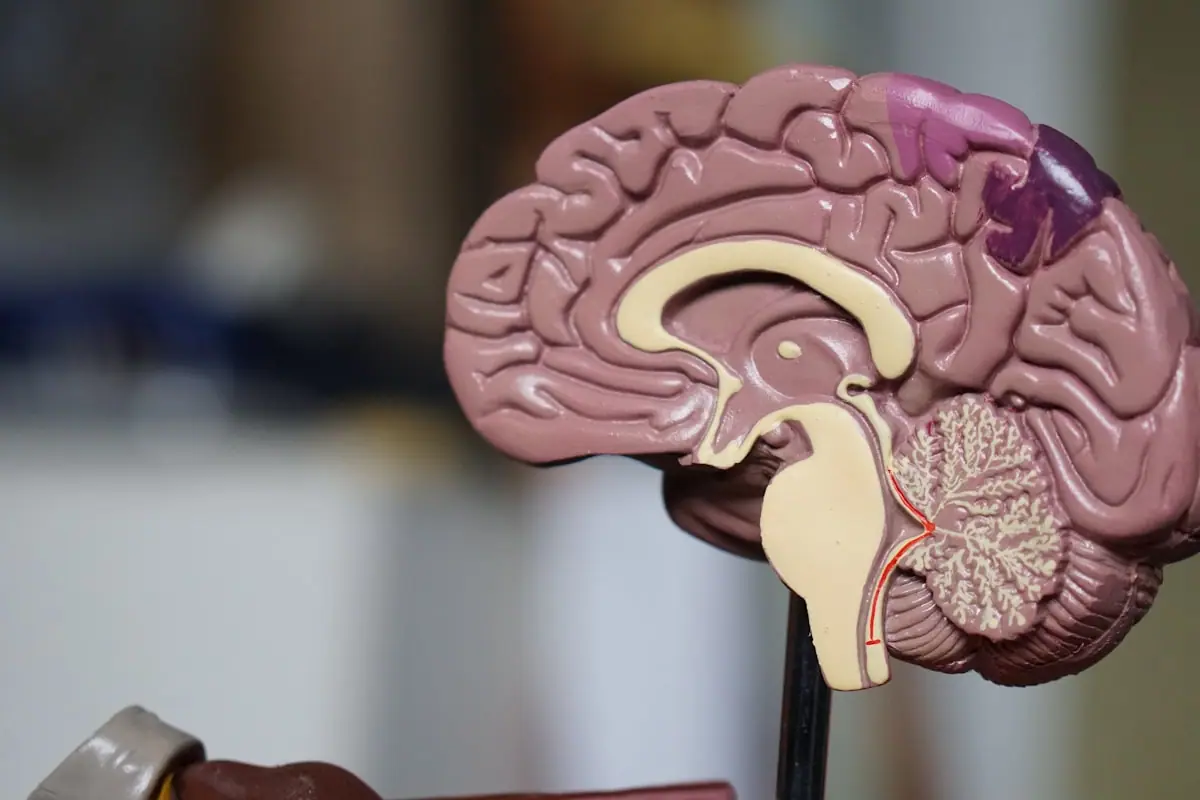
Analysts studying a Neanderthal upper molar from southern Siberia report a cylindrical opening bored while the individual was alive, roughly 59,000 years ago, using a narrow flint point that left concentric micro-striations on dentine walls. The team argues the geometry does not match natural caries progression, carnivore gnawing, or common post-mortem abrasion seen in burial contexts.
If independent replication agrees, the find widens evidence for Pleistocene agency over oral pain—sitting alongside older arguments about medicinal plants, splinted fractures, and deliberate burial. Sceptics will still ask whether the procedure aimed mainly at symptom relief, at social signalling through enamel alteration, or at both; the tooth alone cannot settle motive.
How researchers test an “intentional bore” claim
| Technique | What a positive match would show |
|---|---|
| Scanning electron microscopy | Directional flint scratches consistent with rotation, not random pitting |
| Computed tomography | Depth taper that avoids instant pulp penetration expected from accidental puncture |
| Experimental kits | Controlled flint-on-enamel drilling reproduces wear signatures within bounded time |
Replication groups often budget 20–40 hours of instrumented drilling on pig molars before curators approve destructive work on hominin material—so the evidentiary bar stays high.
Why the Altai–Siberia corridor matters
Caves in the broader Altai region already rewrote admixture chronologies for Neanderthals and Denisovans; a documented interventionist dental act from the same macro-region strengthens the picture of socially transmitted technical knowledge—not only opportunistic flake production.
Population density and repeat contact with the same raw-material outcrops also raise the odds that specialists could teach and correct technique across seasons.
Limits readers should carry alongside the headline
Pulp exposure in a pre-antibiotic world carried sepsis risk; any compassionate intent could still have ended lethally. Ancient DNA from drill swabs must clear contamination thresholds, and isotope dietary papers could complicate whether heavy wear came from grit in food rather than from post-bore survival time.
3D surface scans released openly would let classrooms and critics re-fit angles without handling originals—often the fastest path from press release to peer pressure on a claim.
What would sharpen or weaken the read next
Companion microwear studies on neighbouring teeth, radiocarbon or burial context if the specimen ties to a dated horizon, and blinded replication attempts on non-hominin analogues would each move confidence. Museum provenance files clarifying post-discovery handling would also matter if sceptics argue modern curatorial damage mimics ancient drilling.
Suggested reading
Other stories that pair well with this one—often from the same section or on overlapping themes.
Europe and China count down to SMILE, a joint mission to watch Earth’s magnetic shield breathe under the solar wind
The Solar wind Magnetosphere Ionosphere Link Explorer is booked to lift on a Vega-C from French Guiana on 19 May 2026, carrying European and Chinese instruments into a long polar ellipse so researchers can link what the Sun throws at the magnetosphere with what the auroral ionosphere does in reply.
El Niño weather predictions: how climate outlooks differ from your daily forecast
Seasonal ENSO guidance is built from ocean temperatures, wind patterns, and ensembles of physics models—expressed as shifting odds for months ahead, not a deterministic map of next week’s storms.
Valerie Fridland’s new book traces how accents train listeners to sort strangers before a word’s meaning lands
A spring 2026 trade title from a University of Nevada, Reno linguist ties vowel shifts and rhythm to playground bias, hiring screens, and the spread of prosody-scoring software.
Lab work suggests audio-only focus slightly improves how listeners judge deception in controlled speech tasks
When participants shut out faces and rate recorded answers, small prosody shifts—pitch, vowel length, micro-pauses—carry more of the usable signal than rapid visual scanning in the paradigms under discussion.
Scheduled mild cold—vests or showers—linked to small fat-mass drop in 47-adult pilot trial
Participants with obesity or overweight were randomised to shiver-light cold sessions versus thermoneutral routines; body-composition tools showed a modest fat-mass signal the authors tie to brown-adipose activity.
Pooled PSA screening trials show a small absolute drop in prostate cancer deaths, synthesis finds
A meta-analysis across six randomised programmes involving nearly 800,000 men estimates about two fewer prostate cancer deaths per 1,000 invited to screening—implying hundreds screened per death avoided, with biopsy and overtreatment harms on the other side of the ledger.
Bradford heritage-science paper uses facial geometry on Holbein drawings to challenge two long-standing Anne Boleyn captions
A peer-reviewed heritage-science article compares digitised contours in Hans Holbein the Younger’s Royal Collection sketch corpus; the Royal Collection Trust says it did not commission or endorse the algorithmic attributions.
Asteroid 2026 JH2 to pass closer to Earth than the Moon this Monday
The near-Earth object will fly within 90,000 kilometers of the planet, providing a rare opportunity for astronomers to study a space rock at close range.
Forecasters warn of potential "Super" El Niño this year as Pacific heat builds
Seasonal models and ocean observations point toward a strong El Niño by late 2026, reviving memories of 1997–98 and 2015–16 while stressing that timing, strength, and regional impacts still carry major uncertainty.
Drone strikes generator outside UAE nuclear plant perimeter
Air defenses intercepted two of three unmanned aircraft entering from the west, but a third hit an electrical generator near the Barakah facility, igniting a fire.
Keep exploring
Browse the full archive or return to the front page.
Sources and external links
Sources and filings our editors consulted to verify this story. External links open in a new tab.