Section Technology
Eric Schmidt booed at University of Arizona commencement when his speech turns to artificial intelligence
Former Google chief executive Eric Schmidt delivered the University of Arizona’s 15 May 2026 commencement address in Tucson, but Business Insider and other outlets reported that parts of the stadium crowd booed whenever he pivoted to AI and automation; he paused to acknowledge the noise, called graduates’ anxieties rational, and argued they should help steer the technology rather than only fear it.
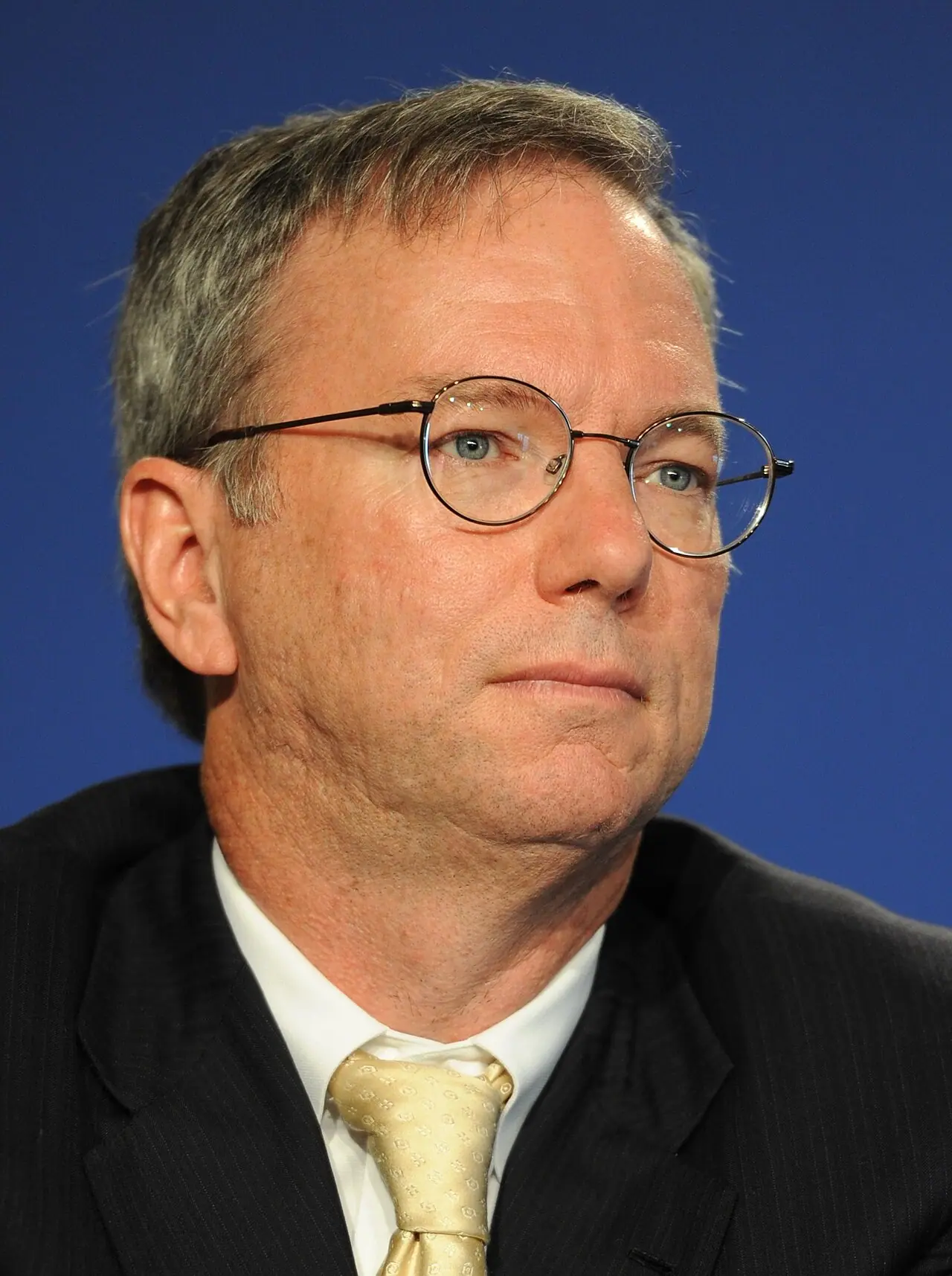
Eric Schmidt, who ran Google as chief executive through its global expansion years and later chaired Alphabet, stood at the University of Arizona’s 15 May 2026 commencement as the headline speaker the institution had announced weeks earlier for Casino Del Sol Stadium. According to Business Insider’s account—widely picked up by aggregators—Schmidt drew sustained boos from sections of the audience whenever his remarks turned to artificial intelligence and labour disruption, a sharp contrast with warmer receptions other speakers reportedly received.
In passages Business Insider quoted, Schmidt reflected on unintended consequences of the consumer internet—“the same platforms that gave everyone a voice … degraded the public square”—before the crowd reaction intensified on AI. He stopped mid-thought, telling graduates, “**I know what many of you are feeling about that. I can hear you.
There is a fear**,” as shouting continued. He listed worries he attributed to their cohort—automation, climate, fractured politics, inheriting problems they did not create—and called those fears “rational,” while insisting adaptation still mattered: “The question is not whether AI will shape the world. It will,” he said.
“The question is whether you will have shaped artificial intelligence.”
Why the moment landed the way it did
Commencement stages are unusually blunt feedback loops: families who paid tuition sit beside students entering a job market where employers have already piloted AI screening tools and some firms have publicly tied headcount cuts to automation experiments—threads Business Insider tied to wider Gen Z anxiety even as surveys show young people also adopt chatbots in daily life. NewsTenet is not scoring Tucson’s crowd as a scientific sample, but the audio mismatch between Silicon Valley optimism and graduate jitters is the story outlets emphasised.
The University of Arizona’s own pre-ceremony release praised Schmidt’s philanthropy and Schmidt Sciences partnership on the Lazuli space-telescope programme, framing him as a benefactor of STEM ambition. A spokesperson quoted by Business Insider defended the invitation on innovation grounds—context that helps explain why administrators stayed the course even as portions of the audience rebelled in real time.
Separate controversy outlets linked to the booing
Business Insider also reported that some students had organised to jeer Schmidt over sexual assault allegations that surfaced in prior coverage; the piece said his attorney called the claims “fabricated” and noted a judge had ordered the dispute into arbitration in March 2026. NewsTenet treats that strand as legally unresolved in public filings readers can monitor separately; it may have amplified hostility in the stadium but should not be conflated, without evidence, with every AI-related boo.
What to watch next
Whether other tech elders adjust commencement messaging after Tucson, and whether universities publish internal student feedback on speaker vetting, will matter more than one night’s clip cycle. Schmidt still chairs Relativity Space and remains a frequent Washington voice on competitiveness; how Class of 2026 alumni channel Friday’s frustration into policy, union, or startup paths is the longer arc.
Geography and themes
Related places and recurring themes for this story.
Suggested reading
Other stories that pair well with this one—often from the same section or on overlapping themes.
Google I/O 2026 Pushes Always-On Gemini Agent
Google I/O 2026 in Mountain View spotlighted Gemini Spark, described as an always-on personal agent across Workspace and other apps—with user approval before sensitive actions—plus faster Gemini models, agentic Search, and Android XR hardware.
Claude Code Auto Mode routes risky tool calls through a Sonnet 4.6 classifier instead of endless taps
Anthropic’s March 2026 engineering deep dive frames Auto Mode as permission automation: a two-stage transcript filter plus a prompt-injection probe, built after internal telemetry showed users accepting 93% of manual prompts anyway.
Anthropic’s Q1 2026 growth reads near 80× in markets coverage; Semi Analysis tallies put ARR above $44 billion
Benzinga and syndicated Fortune copy captured chief executive Dario Amodei calling the pace “too hard to handle” around an 80-fold quarterly surge narrative, while a Semi Analysis digest summarized by trade press puts annualized run-rate revenue above $44 billion after a climb from about $9 billion at year-end 2025.
Anthropic buys Stainless, the API-to-SDK toolchain rivals including OpenAI and Google relied on
The 2022 New York startup led by former Stripe engineer Alex Rattray automated libraries across Python, TypeScript, Kotlin, Go, and Java; Anthropic confirms it will wind down hosted products for other vendors while letting past customers keep generated code.
Google CLI Links OpenClaw to Gmail Unsupported
Google's open-source Workspace CLI on GitHub links AI agents including OpenClaw to Gmail and Drive, but the company labels the project unsupported and warns workflows may break as APIs evolve.
Walmart’s six new Onn Android 16 tablets from $97: spec sheet, who they beat, and who should skip them
Launch-day listings describe Android 16 across the stack—from a 7-inch Helio G80 starter through a 13-inch Pro bundle with stylus—but paper wins still need reality checks against Amazon’s Fire line, Lenovo’s budget slabs, and discounted Samsung Tab hardware.
Oakland jury shuts Musk’s OpenAI fight on a clock question, not the ‘betrayed lab’ plot
Nine Northern District jurors agreed the February 2024 filing landed outside the limitations window they were instructed to use; Judge Yvonne Gonzalez Rogers still formalises the advisory result, but the merits of charitable-trust and enrichment theories never went to a second-phase verdict.
Calif’s Mythos-on-M5 kernel exploit story gains an official Apple footnote in macOS Tahoe 26.5 security credits
Calif still narrates seven-day lab work with Memory Integrity Enforcement on macOS 26; Apple’s catalogue page for Tahoe 26.5 now lists CVE-2026-28952 as reported by Calif.io in collaboration with Claude and Anthropic Research—a narrower confirmation than Calif’s full chain narrative but stronger than silence.
Microsoft AI chief’s “12–18 months” white-collar forecast: what Mustafa Suleyman actually said
Headlines that flatten the claim into “every office job disappears in eighteen months” oversell the wording: in a 12 February 2026 interview-based report, Microsoft AI CEO Mustafa Suleyman tied a task-level automation window to desk-bound professional work—lawyers, accountants, project managers, marketers—not a calendar for guaranteed mass layoffs.
Elon Musk vs Sam Altman trial: what the OpenAI fight is about
A federal jury trial in Oakland pits Musk’s breach and unjust-enrichment theories against OpenAI’s account of a co-founder who left governance years before the consumer-AI boom reshaped the company’s capital stack.
Keep exploring
Browse the full archive or return to the front page.
Sources and external links
Sources and filings our editors consulted to verify this story. External links open in a new tab.
- 2026 Commencement (official schedule hub) (opens in a new tab)— University of Arizona