Section Technology
Microsoft AI chief’s “12–18 months” white-collar forecast: what Mustafa Suleyman actually said
Headlines that flatten the claim into “every office job disappears in eighteen months” oversell the wording: in a 12 February 2026 interview-based report, Microsoft AI CEO Mustafa Suleyman tied a task-level automation window to desk-bound professional work—lawyers, accountants, project managers, marketers—not a calendar for guaranteed mass layoffs.
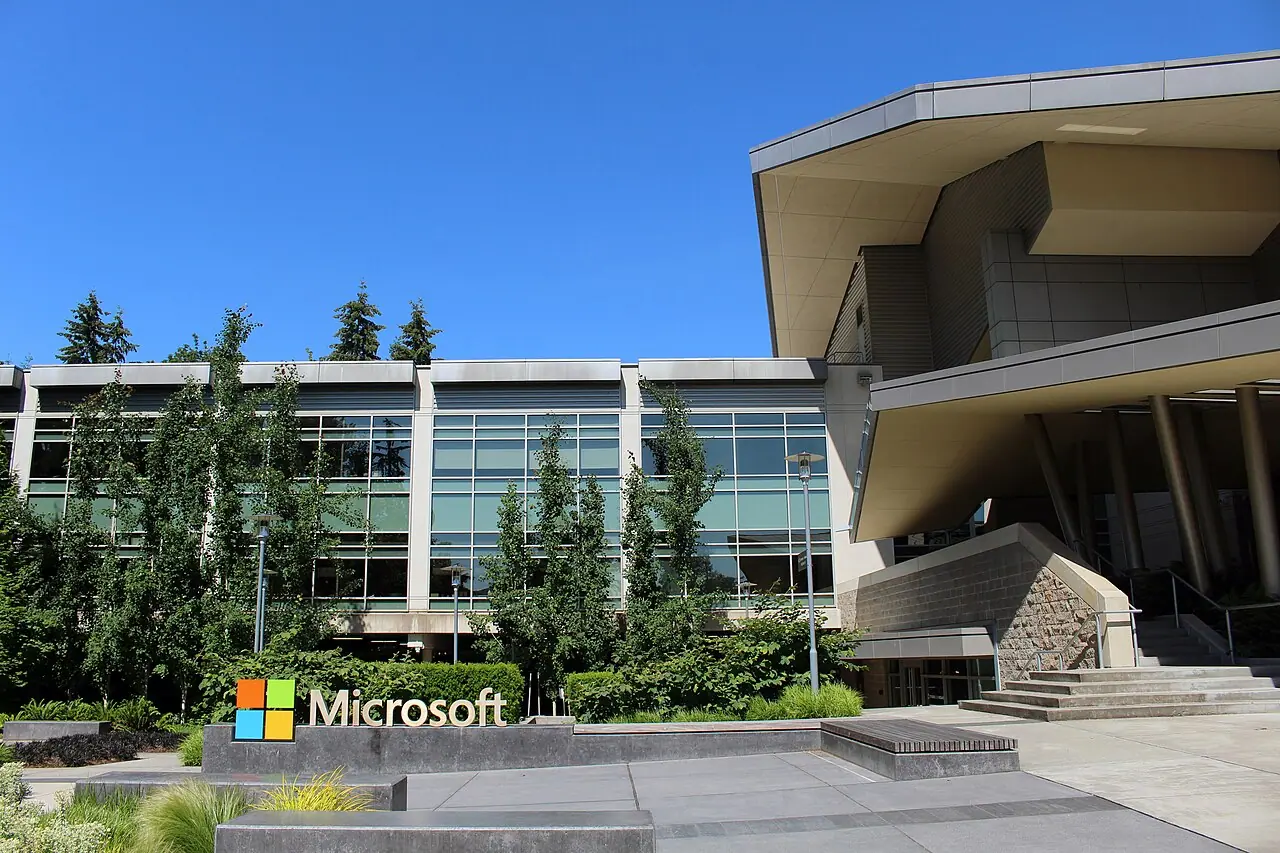
Microsoft AI chief Mustafa Suleyman drew a tight timeline for how much of everyday knowledge work could be handed to models and agents, not a promise that every payroll line item vanishes on the same clock. In reporting dated 12 February 2026, The Verge quoted him directly: “White-collar work, where you’re sitting down at a computer, either being a lawyer or an accountant or a project manager or a marketing person — most of those tasks will be fully automated by an AI within the next 12 to 18 months.” The same item notes he also pointed readers toward Financial Times commentary and flagged upcoming in-house Microsoft foundation models—context that matters because vendor roadmaps and procurement cycles rarely move as fast as keynote rhetoric, even when the underlying technology accelerates.
“Most tasks” is not the same headline as “all jobs”
Editors compress forecasts into search-friendly absolutes; labour economists usually separate task displacement from occupational extinction. A tax partner might lose hours of first-draft memo formatting to a copilot while gaining hours of client negotiation, disclosure judgement, and liability review—or lose none of the judgement work but see the firm’s leverage over junior staffing change sharply. Suleyman’s phrasing targets tasks tied to a computer, which already covers a huge share of marketing analytics, contract review passes, and spreadsheet hygiene, yet still leaves room for human sign-off, regulatory interpretation, and physical-world steps software cannot touch.
That distinction is why responsible paraphrases keep the word “most” and the examples—law, accounting, project management, marketing—rather than extrapolating to every teacher, surgeon, or building inspector without a keyboard-centric workflow.
Why tech CEOs publish aggressive windows in the first place
Compressed timelines serve three overlapping corporate goals: recruiting researchers who want to ship at the frontier, signalling to enterprise buyers that budgets for copilots and agents are “use it or lose it” against competitors, and anchoring regulators’ expectations that self-governance proposals had better arrive before legislatures write blunt rules. Microsoft has publicly positioned Suleyman as leader of its consumer and Copilot-shaped AI work since 2024; tying automation talk to imminent model releases is consistent with a platform sales cycle even when macro employment statistics move on quarterly, not eighteen-month, grids.
Readers should therefore treat the 12–18 month figure as a scenario anchor about capability and vendor intent, not as an employment forecast validated by establishment surveys—similar to how past “year of mobile” or “cloud-first” slogans mixed real shifts with marketing heat.
What independent evidence still has to prove
Macro studies of AI diffusion (including IMF and OECD syntheses) generally stress uneven adoption across firms, complementarity with skilled labour, and institutional friction: legacy software, sector-specific liability rules, union contracts, and customer demand for human accountability all stretch deployment curves. Even fast-moving coding workflows—often cited as the canary because version control and unit tests give models tight feedback—still mix generated lines with human review, security review, and architecture decisions.
Until national accounts show matching productivity spikes and payroll categories move in ways net of normal recessions, the honest epistemic status of any single executive window is “order-of-magnitude hypothesis,” not settled social science.
How enterprises usually absorb a headline window
Even when vendor rhetoric compresses time, budget cycles and security review rarely do. Large organisations pilot copilots in narrow workflows—contract first-pass, code review assist, marketing localization—before they rewrite headcount plans. Procurement teams ask for data residency, audit logs, and human-in-the-loop controls that models alone cannot “automate away.”
That stack of gates is why the same quotation can be simultaneously directionally credible about capability and misleading if read as a firm-wide layoff schedule.
This desk’s February 2026 anchor remains the verbatim exchange published with the interview; later product launches or earnings tone may sharpen or soften emphasis without retracting the underlying claim about task coverage—watch for wording shifts from “most tasks” to “many workflows” in prepared remarks, which often signal legal and customer pressure more than a physics change in the models.
What to watch if you are budgeting headcount or studying policy
Practical indicators over the next year and a half include: whether enterprise contracts for Microsoft and peers bake in usage-based AI pricing that displaces junior hours; how professional licensing boards and courts treat machine-generated filings; whether unions in media, finance, and the public sector win new limits on unsupervised model outputs; and whether insurance and cybersecurity carriers tighten rules on who may sign off on agent actions. Suleyman’s quote is a useful temperature reading on executive belief; the institutions that actually pace labour markets will answer more slowly—and in finer granularity than a single headline number.
Geography and themes
Related places and recurring themes for this story.
Suggested reading
Other stories that pair well with this one—often from the same section or on overlapping themes.
Anthropic buys Stainless, the API-to-SDK toolchain rivals including OpenAI and Google relied on
The 2022 New York startup led by former Stripe engineer Alex Rattray automated libraries across Python, TypeScript, Kotlin, Go, and Java; Anthropic confirms it will wind down hosted products for other vendors while letting past customers keep generated code.
Google I/O 2026 Pushes Always-On Gemini Agent
Google I/O 2026 in Mountain View spotlighted Gemini Spark, described as an always-on personal agent across Workspace and other apps—with user approval before sensitive actions—plus faster Gemini models, agentic Search, and Android XR hardware.
Claude Code Auto Mode routes risky tool calls through a Sonnet 4.6 classifier instead of endless taps
Anthropic’s March 2026 engineering deep dive frames Auto Mode as permission automation: a two-stage transcript filter plus a prompt-injection probe, built after internal telemetry showed users accepting 93% of manual prompts anyway.
Anthropic’s Q1 2026 growth reads near 80× in markets coverage; Semi Analysis tallies put ARR above $44 billion
Benzinga and syndicated Fortune copy captured chief executive Dario Amodei calling the pace “too hard to handle” around an 80-fold quarterly surge narrative, while a Semi Analysis digest summarized by trade press puts annualized run-rate revenue above $44 billion after a climb from about $9 billion at year-end 2025.
Oakland jury shuts Musk’s OpenAI fight on a clock question, not the ‘betrayed lab’ plot
Nine Northern District jurors agreed the February 2024 filing landed outside the limitations window they were instructed to use; Judge Yvonne Gonzalez Rogers still formalises the advisory result, but the merits of charitable-trust and enrichment theories never went to a second-phase verdict.
Elon Musk vs Sam Altman trial: what the OpenAI fight is about
A federal jury trial in Oakland pits Musk’s breach and unjust-enrichment theories against OpenAI’s account of a co-founder who left governance years before the consumer-AI boom reshaped the company’s capital stack.
Eric Schmidt booed at University of Arizona commencement when his speech turns to artificial intelligence
Former Google chief executive Eric Schmidt delivered the University of Arizona’s 15 May 2026 commencement address in Tucson, but Business Insider and other outlets reported that parts of the stadium crowd booed whenever he pivoted to AI and automation; he paused to acknowledge the noise, called graduates’ anxieties rational, and argued they should help steer the technology rather than only fear it.
Sam Altman testifies in Elon Musk's OpenAI suit as Oakland trial turns to governance and control
OpenAI's chief executive spent hours on the stand defending the company's nonprofit-to-commercial arc, rebutting claims that insiders hijacked a charity—and sketching a co-founder relationship that fractured over money, structure, and who would steer research.
Cisco to cut fewer than 4,000 jobs as it doubles down on AI, silicon, and security
In a workforce email tied to record Q3 FY26 results, Cisco leadership framed fewer than 5% of roles as the price of focus—while promising transition support and deeper bets on silicon, optics, security, and internal AI adoption.
Strategy adds about $2 billion of Bitcoin in a week; treasury reaches 843,738 BTC above latest IBIT tally
An SEC-backed disclosure window ending mid-May shows another preferred-and-common equity raise funding 24,869 coins at roughly $80,985 apiece; independent ETF trackers still put BlackRock’s iShares sleeve materially lower, though the two are different animals legally.
Keep exploring
Browse the full archive or return to the front page.
Sources and external links
Sources and filings our editors consulted to verify this story. External links open in a new tab.
- AI Will Transform the Global Economy. Let’s Make Sure It Benefits Humanity (IMF Blog) (opens in a new tab)— International Monetary Fund