Section Business
Gautam Adani consents to US SEC penalties; Adani Enterprises settles Treasury OFAC case for $275m
Federal filings show the SEC moving for $6m and $12m civil judgments against Gautam and Sagar Adani over a 2021 green-bond roadshow, while a parallel Treasury arm deal wraps Iranian-linked LPG trade allegations against the listed flagship Adani Enterprises—not a single envelope with both signatures.
Two different US enforcement threads involving the Adani conglomerate advanced in the same mid-May window, and readers should keep the parties straight before headlines blur them into one handshake.
On the securities side, Gautam Adani and his nephew Sagar Adani—the founder figure and an executive director at Adani Green Energy—are named in Securities and Exchange Commission papers that seek court approval of consent judgments carrying $6 million and $12 million civil monetary penalties respectively, with permanent injunctions under core antifraud provisions, all without admissions or denials. On the sanctions side, coverage of a Treasury Department arm settlement focuses on Adani Enterprises Limited, the Mumbai-listed flagship, over alleged Iranian-linked liquefied petroleum gas trade and dollar payments that touched US financial institutions.
What the SEC docket says happened
The commission’s public litigation release ties the case to a November 2024 complaint in federal court in Brooklyn alleging false and misleading statements around a September 2021 $750 million bond offering by Adani Green Energy, of which more than $175 million was placed with US investors. Staff restate the core theory—that offering materials praised anti-bribery compliance while, according to the government’s narrative, a scheme was under way to pay or promise the equivalent of large bribes to Indian officials in exchange for above-market energy purchase commitments benefiting the issuer.
The proposed consent package filed in mid-May 2026 would, if a judge signs it, bar each man from future violations of Securities Act section 17(a) and Exchange Act section 10(b) and Rule 10b-5, alongside the dollar penalties. Because the filing is consent-based and still subject to judicial approval, the amounts are prospective until the order is entered; defence counsel and Indian market commentators will watch the text of any final judgment for ancillary conduct restrictions beyond the headline fines.
What the Treasury-track settlement is—and is not
Parallel reporting describes a $275 million resolution between Adani Enterprises and the Treasury’s Office of Foreign Assets Control over alleged Iran sanctions breaches tied to LPG purchases routed through a Dubai counterparty between late 2023 and mid-2025, with dollar-clearing legs that drew US jurisdiction. Wire and trade press accounts emphasise that the corporate settlement is framed without an admission of liability and that the company pointed to cooperation, remedial steps, and a suspended import line after press scrutiny in 2025.
That package is legally distinct from the SEC’s individual consent motion: different statute books, different defendants on the caption, and different policy levers—market integrity versus geoeconomic controls. Gautam Adani’s public role inside the wider group does not, by itself, convert an enterprise-level OFAC agreement into a second personal “Treasury settlement” in the same sense as the SEC filing naming him alongside his nephew, even though both stories will travel under the same conglomerate banner on Indian business television.
What investors and prosecutors still have to watch
Equity and bond desks will model the cash hits against consolidated balance sheets—tens of millions on the SEC line versus hundreds of millions on the OFAC line—and ask which vehicles booked the provisions. Criminal prosecutors in the Southern District of New York had parallel bribery-related charges on the same underlying fact pattern as the SEC civil case; international outlets report active discussions about whether those indictments survive once civil penalties crystallise, but any dismissal order would need its own public docket entry before editors treat the criminal exposure as closed.
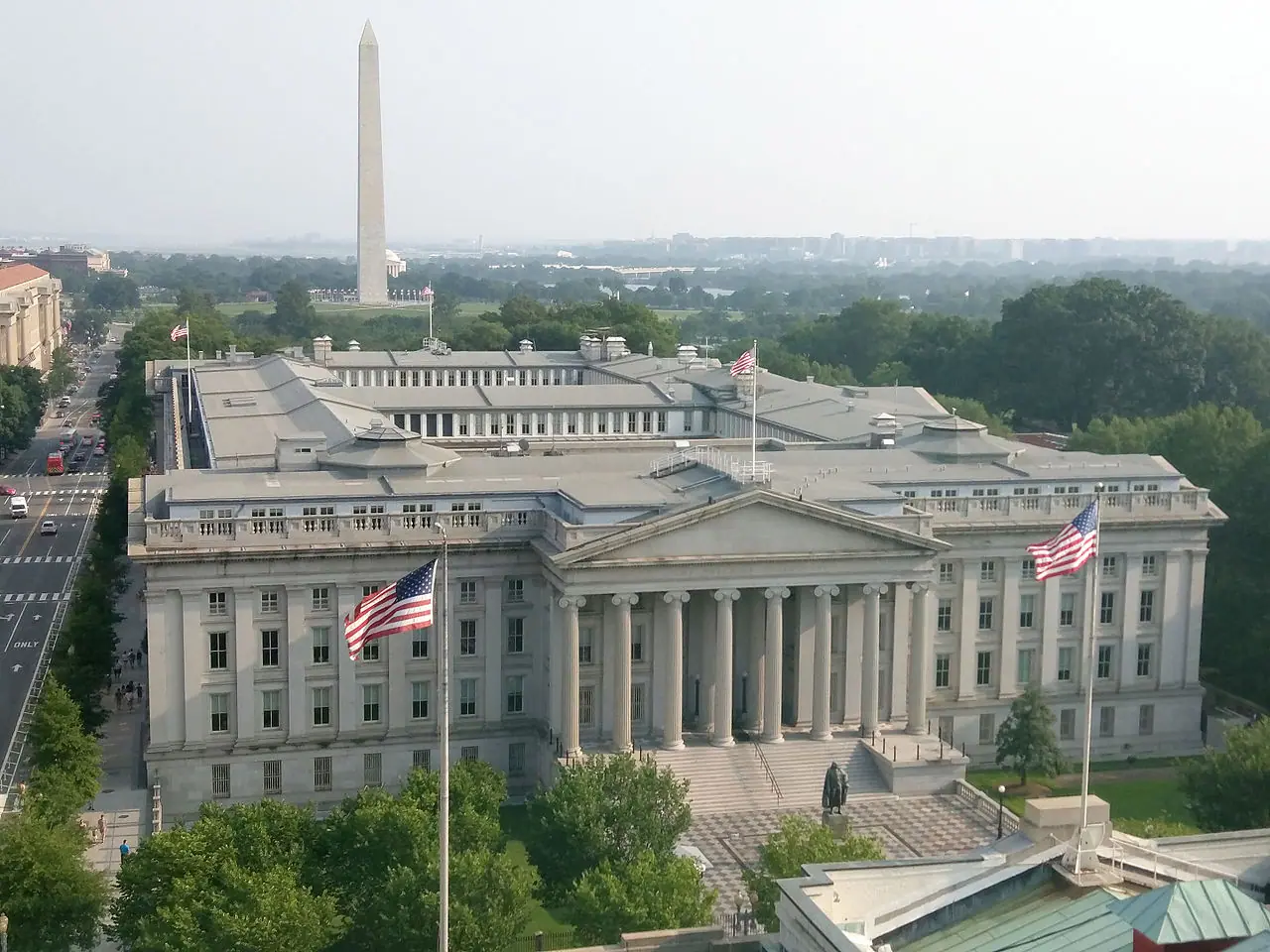
For governance readers, the open question is whether US resolutions quieten only American forums or also feed into ongoing Indian regulatory and parliamentary scrutiny of related-party flows, renewable project awards, and disclosure practices—topics that will not be settled by a Treasury building photograph or a single day’s headline stack.
Geography and themes
Related places and recurring themes for this story.
- India
- United States
- Markets
- Regulation
Suggested reading
Other stories that pair well with this one—often from the same section or on overlapping themes.
Anthropic’s Q1 2026 growth reads near 80× in markets coverage; Semi Analysis tallies put ARR above $44 billion
Benzinga and syndicated Fortune copy captured chief executive Dario Amodei calling the pace “too hard to handle” around an 80-fold quarterly surge narrative, while a Semi Analysis digest summarized by trade press puts annualized run-rate revenue above $44 billion after a climb from about $9 billion at year-end 2025.
Strategy adds about $2 billion of Bitcoin in a week; treasury reaches 843,738 BTC above latest IBIT tally
An SEC-backed disclosure window ending mid-May shows another preferred-and-common equity raise funding 24,869 coins at roughly $80,985 apiece; independent ETF trackers still put BlackRock’s iShares sleeve materially lower, though the two are different animals legally.
Bitcoin falls toward $76,000 after Trump issues fresh Iran threat
Truth Social warnings landed alongside another heavy week for U.S. spot crypto ETFs; CoinShares flow math and BBC-sourced diplomacy reporting give two different lenses on why risk assets wobbled.
India says Russian crude buys track commercial logic—not Washington’s waiver calendar
Petroleum ministry joint secretary Sujata Sharma told reporters on 18 May 2026 that imports ran before, during, and after the latest U.S. Treasury carve-out, while state fuel retailers still bleed roughly ₹750 crore a day even after a ₹3-per-litre pump increase.
China’s chip ‘Big Fund’ said to be in pole position to lead DeepSeek’s first outside raise near a $45 billion tag
Financial Times–sourced reporting summarized in trade press puts the China Integrated Circuit Industry Investment Fund in talks to anchor a maiden external round for the Hangzhou lab, with Tencent and Alibaba still circling co-investor slots while Reuters-style wires floated a higher $50 billion ceiling.
U.S. says China pledged at least $17 billion a year in farm buys through 2028 after Trump-Xi summit
A White House fact sheet framed new agricultural purchase targets and joint trade and investment boards as the centerpiece of the Beijing meetings, while Beijing’s commerce ministry called tariff moves preliminary and still under negotiation.
China signals tariff cuts, advances in farm market access after Trump-Xi summit
Beijing’s commerce ministry described new U.S.–China farm understandings as preliminary but pointed to reciprocal tariff reductions, beef-plant registrations, and a path to ease poultry and non-tariff hurdles.
Ankur Warikoo to shut down ₹100-crore online course business, citing AI disruption
The entrepreneur announces the end of his digital education venture despite massive profits, sparking a debate on the future of the EdTech sector.
Trump touts 'fantastic trade deals' with China, but details are scarce
Following a high-stakes summit in Beijing, the President claims massive aircraft and agricultural purchases while markets remain skeptical of the lack of formal documentation.
Berkshire Hathaway discloses a $2.65 billion Delta Air Lines stake—and a wider Q1 portfolio reset
A Friday U.S. filing showed Omaha rebuilding a major airline position it had dumped during the pandemic, while trimming card networks, health care, and e-commerce names and bulking up Alphabet and the New York Times.
Keep exploring
Browse the full archive or return to the front page.
Sources and external links
Sources and filings our editors consulted to verify this story. External links open in a new tab.