Section Business
U.S. says China pledged at least $17 billion a year in farm buys through 2028 after Trump-Xi summit
A White House fact sheet framed new agricultural purchase targets and joint trade and investment boards as the centerpiece of the Beijing meetings, while Beijing’s commerce ministry called tariff moves preliminary and still under negotiation.
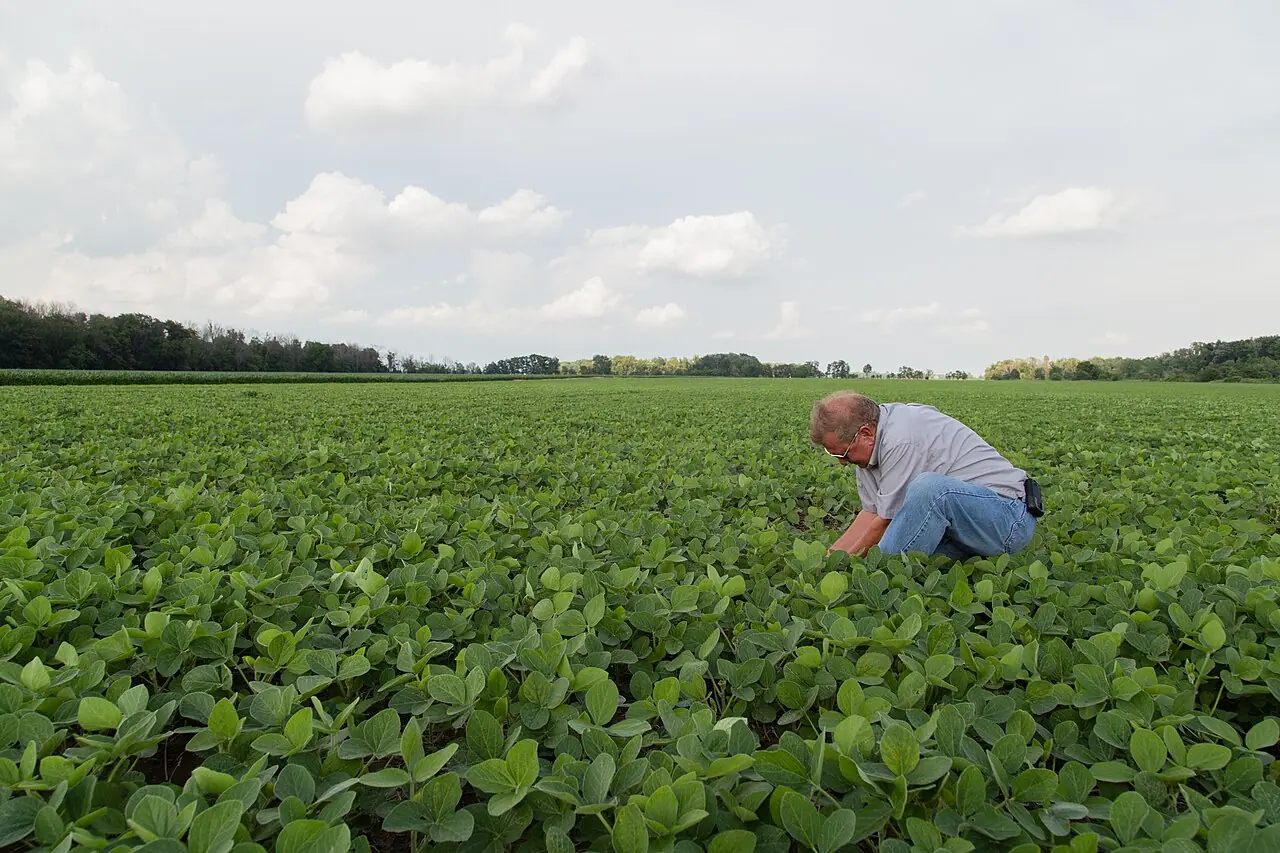
The United States is publicizing large, year-by-year agricultural purchase pledges from China after President Donald Trump’s summit with Chinese leader Xi Jinping in Beijing, pairing dollar headlines with new joint bodies meant to steer bilateral trade and investment.
The release landed alongside a separate Chinese commerce ministry statement that described reciprocal tariff cuts and follow-on work as preliminary, with teams still negotiating details—an asymmetry that leaves customs chapters, private buyer appetite, and inspection capacity as the practical test of the diplomacy.
What Washington put on paper first
A White House fact sheet summarized after the meetings said China agreed to buy at least $17 billion of U.S. agricultural products each year through 2028, on top of soybean purchase commitments negotiated after the leaders’ prior meeting in 2025.
The same summary cast new boards of trade and investment as the “cornerstone” of the package and said both governments would work to “optimize” two-way commerce. The document did not, in the reporting chain reviewed here, attach product-by-product schedules or signed purchase contracts.
On soybeans, the fact sheet reiterated earlier U.S. characterizations of a multi-year tonnage track: an initial 12 million metric ton purchase met after the 2025 meeting, with a stated follow-on of 25 million tons annually for three years. Markets have treated Brazilian competition and Chinese domestic demand as brakes on how much marginal volume actually shifts to U.S. Gulf loadings.
Beijing’s parallel read on levies and process
One day earlier, China’s commerce ministry said both sides would mutually cut levies on certain goods while continuing to work implementation details. That language matches how Chinese officials often stage economic commitments: political clearance first, then months of line-official bargaining over tariff lines and non-tariff hurdles.
For agriculture specifically, the ministry also pointed to restoring U.S. beef access by renewing expired listings for a large block of plants and to cooperating with U.S. regulators on poultry—deliverables exporters can track in monthly shipment tables faster than abstract purchase totals.
Why the dollar figure still needs a dockside audit
Published U.S. trade statistics cited in wire reporting put agricultural exports to China near $24 billion in 2024—including about $12 billion in soybeans—and far lower in 2025 after tariff escalation, giving any rebound headline enormous year-on-year leverage even from partial execution.
U.S. Trade Representative Jamieson Greer was separately quoted expecting “double-digit billions” in Chinese farm purchases over a multi-year window while acknowledging that neither capital had yet published line-item tables tying products to prices and volumes.
Analyst commentary carried alongside the fact sheet framed a $17 billion non-soybean commitment as potentially moving the U.S. back toward post–Phase One trade values if purchases materialize—while noting prior cycle shortfalls on large political purchase targets and cautioning that fertilizer and energy shocks tied to the wider Middle East conflict are still pressuring farm margins.
What traders watch next
Forward sales reporting, soybean basis bids in the Pacific Northwest, chilled-beef export rotations, and Chinese customs clearance data will show whether this summit round becomes inventory on the water or another shelf of political numerals awaiting enforcement.
Lower-level teams still owe tariff schedules, inspection protocols, and private-crusher economics that determine whether coastal plants reopen U.S. Gulf books at scale. Until those indicators move together, risk desks will price the agriculture package as directionally bullish for sentiment but not yet as a locked flow.
Geography and themes
Related places and recurring themes for this story.
- United States
- China
- Trade
- Agriculture
Suggested reading
Other stories that pair well with this one—often from the same section or on overlapping themes.
China signals tariff cuts, advances in farm market access after Trump-Xi summit
Beijing’s commerce ministry described new U.S.–China farm understandings as preliminary but pointed to reciprocal tariff reductions, beef-plant registrations, and a path to ease poultry and non-tariff hurdles.
Trump touts 'fantastic trade deals' with China, but details are scarce
Following a high-stakes summit in Beijing, the President claims massive aircraft and agricultural purchases while markets remain skeptical of the lack of formal documentation.
Trump–Xi in Beijing: what readers actually need to know after the summit
From tariffs and grocery bills to chips, travel risk, and how long ‘big purchase’ pledges take to prove out—plain answers to the questions people search after a superpower meeting.
Trump withholds commitment on Taiwan arms after Xi warning as U.S.–China trade headlines land
President Donald Trump told reporters he would decide on a stalled roughly $14 billion arms package “over the next fairly short period,” after Xi Jinping warned mishandling Taiwan could bring the powers into conflict—while Washington and Taipei each insisted broader policy had not flipped overnight.
Putin to visit Chinese leader Xi Jinping days after Trump’s trip to Beijing
Beijing announced a May 19–20 state visit for the Russian president—Xi and Li Qiang on the schedule, a joint declaration, and Russia–China “years of education”—immediately after Donald Trump’s May 13–15 Beijing summit, the first bilateral U.S. presidential visit to China in roughly nine years.
Five key takeaways from President Trump's high-stakes China trip
From massive commodity purchases to the 'red lines' on technology, the Beijing summit of 2026 has reshaped the landscape of the world's most critical bilateral relationship.
China’s chip ‘Big Fund’ said to be in pole position to lead DeepSeek’s first outside raise near a $45 billion tag
Financial Times–sourced reporting summarized in trade press puts the China Integrated Circuit Industry Investment Fund in talks to anchor a maiden external round for the Hangzhou lab, with Tencent and Alibaba still circling co-investor slots while Reuters-style wires floated a higher $50 billion ceiling.
Gautam Adani consents to US SEC penalties; Adani Enterprises settles Treasury OFAC case for $275m
Federal filings show the SEC moving for $6m and $12m civil judgments against Gautam and Sagar Adani over a 2021 green-bond roadshow, while a parallel Treasury arm deal wraps Iranian-linked LPG trade allegations against the listed flagship Adani Enterprises—not a single envelope with both signatures.
Berkshire Hathaway discloses a $2.65 billion Delta Air Lines stake—and a wider Q1 portfolio reset
A Friday U.S. filing showed Omaha rebuilding a major airline position it had dumped during the pandemic, while trimming card networks, health care, and e-commerce names and bulking up Alphabet and the New York Times.
Spanish Broadcasting System files Chapter 11 bankruptcy to restructure $310 million in debt as Trinseo also enters prepackaged reorganisation
The largest Spanish-language radio network in the U.S. filed in Delaware on May 11, with creditor backing already secured, while specialty materials company Trinseo simultaneously moved to cut $2 billion in obligations.
Keep exploring
Browse the full archive or return to the front page.
Sources and external links
Sources and filings our editors consulted to verify this story. External links open in a new tab.