Section Science
Asteroid 2026 JH2 to pass closer to Earth than the Moon this Monday
The near-Earth object will fly within 90,000 kilometers of the planet, providing a rare opportunity for astronomers to study a space rock at close range.
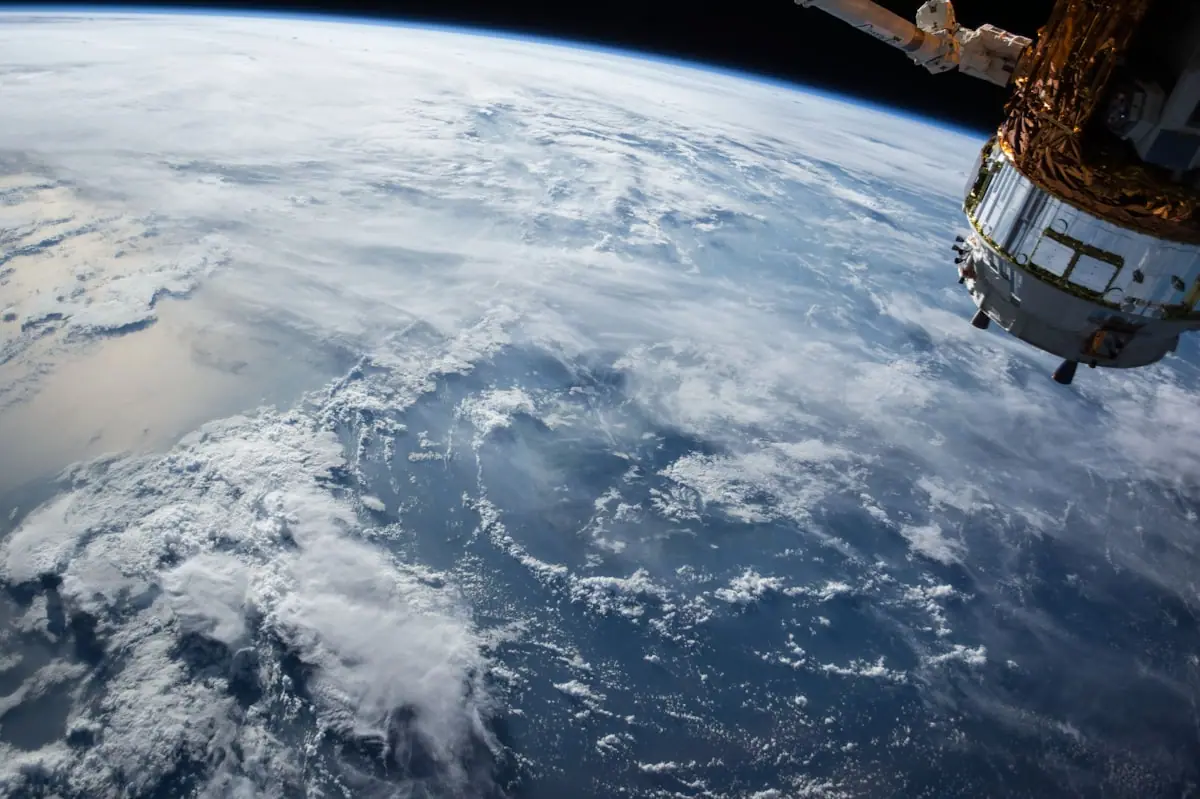
Astronomers are preparing for a rare celestial event as a near-Earth object (NEO), designated Asteroid 2026 JH2, is predicted to pass remarkably close to our planet on Monday, May 18, 2026. The space rock, which was only recently identified by automated sky surveys, will fly within 90,000 kilometers (56,000 miles) of Earth — a distance that is approximately 24% of the average gap between the Earth and the Moon.
While the proximity of the flyby may sound alarming, NASA's Center for Near-Earth Object Studies (CNEOS) and the European Space Agency (ESA) have confirmed that there is zero risk of impact. Instead, the event is being hailed as a 'significant scientific opportunity' to observe a small planetary body in close proximity without the need for a dedicated deep-space mission.
Orbital Mechanics and Speed
Asteroid 2026 JH2 is traveling through the solar system at a velocity of roughly 12 kilometers per second (27,000 miles per hour). Its path will bring it into the 'cislunar' space — the region between the Earth and the lunar orbit. At its closest point, which is expected to occur around 6:51 PM UTC, the asteroid will be well within the orbit of the Moon, making it one of the closest predicted passes of a known object in the current calendar year.
Because the asteroid is relatively small, measuring between 15 and 35 meters (50–115 feet) in diameter, its gravitational pull is negligible and will not have any effect on the Earth's tides or atmosphere. However, the Earth's own gravity will significantly alter the asteroid's trajectory as it passes, potentially shifting its future orbital period as it continues its journey around the Sun.
Observation and the Virtual Telescope Project
Despite its proximity, Asteroid 2026 JH2 will not be visible to the naked eye. Astronomers estimate its peak brightness will reach a magnitude of 11.5, which is several thousand times fainter than the faintest stars visible without aid. However, for amateur astronomers with modest telescopes (4-inch aperture or larger) and clear skies, the asteroid will appear as a fast-moving 'star' crossing the celestial background.
| Parameter | Value | | :--- | :--- | :--- | | Designation | 2026 JH2 | | Closest Approach (Earth) | ~90,000 km | | Closest Approach (Moon) | ~0.0028 AU | | Estimated Size | 15–35 meters | | Relative Speed | 12.4 km/s | | Impact Risk | Zero |
For those without access to specialized equipment, the Virtual Telescope Project in Italy has scheduled a live webstream of the flyby. Using high-powered robotic telescopes, the project aims to capture real-time images of the object as it makes its closest approach, providing a public window into the work of planetary defense and astronomical tracking.
The Role of Planetary Defense
The discovery and tracking of objects like 2026 JH2 are part of a broader global effort to map the millions of asteroids that share our neighborhood in the solar system. While 2026 JH2 is too small to be classified as a 'Potentially Hazardous Asteroid' (PHA) — a label reserved for objects larger than 140 meters that come within 7.5 million kilometers of Earth — its close pass serves as a valuable test for the world's detection networks.
The Palomar Observatory and the Catalina Sky Survey were instrumental in identifying the asteroid early enough to calculate its precise orbit. This 'early warning' capability is the cornerstone of modern planetary defense, ensuring that if a larger, more dangerous object were ever found to be on a collision course, humanity would have years or even decades of notice to implement mitigation strategies, such as the kinetic impactor technology tested during NASA's DART mission in 2022.
The Yarkovsky Effect and Orbital Evolution
One of the most intriguing aspects of the 2026 JH2 flyby for professional researchers is the opportunity to measure the Yarkovsky effect in real-time. This subtle force occurs when an asteroid absorbs sunlight and re-emits it as heat, creating a tiny but persistent thrust that can slowly nudge an object out of its predicted orbit over many decades. For small asteroids like JH2, this effect is much more pronounced than it is for larger bodies.
By tracking the asteroid with extreme precision during its closest approach, astronomers can refine their models of how thermal forces influence the long-term stability of the near-Earth population. This data is not just of academic interest; it is vital for long-term planetary defense planning, as it allows for much more accurate predictions of which objects might pose a threat a century or more into the future.
Science in Close Proximity
Beyond the tracking data, scientists hope to use the 2026 JH2 flyby to perform radar imaging. By bouncing radio waves off the asteroid's surface using facilities like the Goldstone Observatory in California, researchers can determine the object's exact shape, rotation rate, and even its surface composition. Many small asteroids of this size are 'rubble piles' — loose collections of rock and dust held together by weak gravity — rather than solid monolithic stones.
Understanding the internal structure of these objects is critical for future space mining efforts and for refining our models of how the solar system evolved. The data gathered this Monday will contribute to a global database that tracks the morphological diversity of the asteroid belt's smaller members. As 2026 JH2 retreats into the darkness of space following Monday's encounter, it will leave behind a wealth of data that will help astronomers better predict the movements of its many trillions of companions.
For now, the world can look up at the night sky on May 18 with wonder rather than fear, as one of our smallest neighbors pays a fleeting, high-speed visit.
Geography and themes
Related places and recurring themes for this story.
- Asteroids
- Astronomy
- Space
- Science
Suggested reading
Other stories that pair well with this one—often from the same section or on overlapping themes.
Europe and China count down to SMILE, a joint mission to watch Earth’s magnetic shield breathe under the solar wind
The Solar wind Magnetosphere Ionosphere Link Explorer is booked to lift on a Vega-C from French Guiana on 19 May 2026, carrying European and Chinese instruments into a long polar ellipse so researchers can link what the Sun throws at the magnetosphere with what the auroral ionosphere does in reply.
El Niño weather predictions: how climate outlooks differ from your daily forecast
Seasonal ENSO guidance is built from ocean temperatures, wind patterns, and ensembles of physics models—expressed as shifting odds for months ahead, not a deterministic map of next week’s storms.
Forecasters warn of potential "Super" El Niño this year as Pacific heat builds
Seasonal models and ocean observations point toward a strong El Niño by late 2026, reviving memories of 1997–98 and 2015–16 while stressing that timing, strength, and regional impacts still carry major uncertainty.
Mayo Clinic validation work shows REDMOD AI spotting pancreatic cancer on CTs far ahead of usual reads
Decrypt’s April recap of the landmark study highlights up to a three-year lead in select cases; oncology trade write-ups of the same paper pin median detection near 475 days with 73% sensitivity versus roughly 39% for pooled radiologists on identical prediagnostic scans.
M5.2 Guangxi quake near Liuzhou kills 2, leaves 1 missing, and pushes 7,000-plus into shelter lines
Xinhua copy carried by RTHK pins the shock to Liunan District minutes after midnight Monday local time, eight kilometers down—while wider Chinese authority briefings cited by Indian wire aggregators add the five-figure precautionary evacuations, four hospitalizations, and cracked or partly collapsed older buildings.
Valerie Fridland’s new book traces how accents train listeners to sort strangers before a word’s meaning lands
A spring 2026 trade title from a University of Nevada, Reno linguist ties vowel shifts and rhythm to playground bias, hiring screens, and the spread of prosody-scoring software.
Lab work suggests audio-only focus slightly improves how listeners judge deception in controlled speech tasks
When participants shut out faces and rate recorded answers, small prosody shifts—pitch, vowel length, micro-pauses—carry more of the usable signal than rapid visual scanning in the paradigms under discussion.
Siberian Neanderthal molar shows cylindrical bore consistent with living flint drill use about 59,000 years ago
Analysts argue micro-striations and CT taper match intentional stone boring during life rather than carnivore damage or post-mortem scraping—if replicated, the case pushes evidence for Pleistocene oral intervention earlier than many textbook timelines.
Scheduled mild cold—vests or showers—linked to small fat-mass drop in 47-adult pilot trial
Participants with obesity or overweight were randomised to shiver-light cold sessions versus thermoneutral routines; body-composition tools showed a modest fat-mass signal the authors tie to brown-adipose activity.
Pooled PSA screening trials show a small absolute drop in prostate cancer deaths, synthesis finds
A meta-analysis across six randomised programmes involving nearly 800,000 men estimates about two fewer prostate cancer deaths per 1,000 invited to screening—implying hundreds screened per death avoided, with biopsy and overtreatment harms on the other side of the ledger.
Keep exploring
Browse the full archive or return to the front page.
Sources and external links
Sources and filings our editors consulted to verify this story. External links open in a new tab.