Section Politics
Governor Jared Polis commutes Tina Peters’ prison sentence; parole set for June 1
Colorado’s Democratic governor cut the former Mesa County clerk’s state term roughly in half, citing an appellate concern about sentencing and protected speech, while leaving her felony convictions intact.
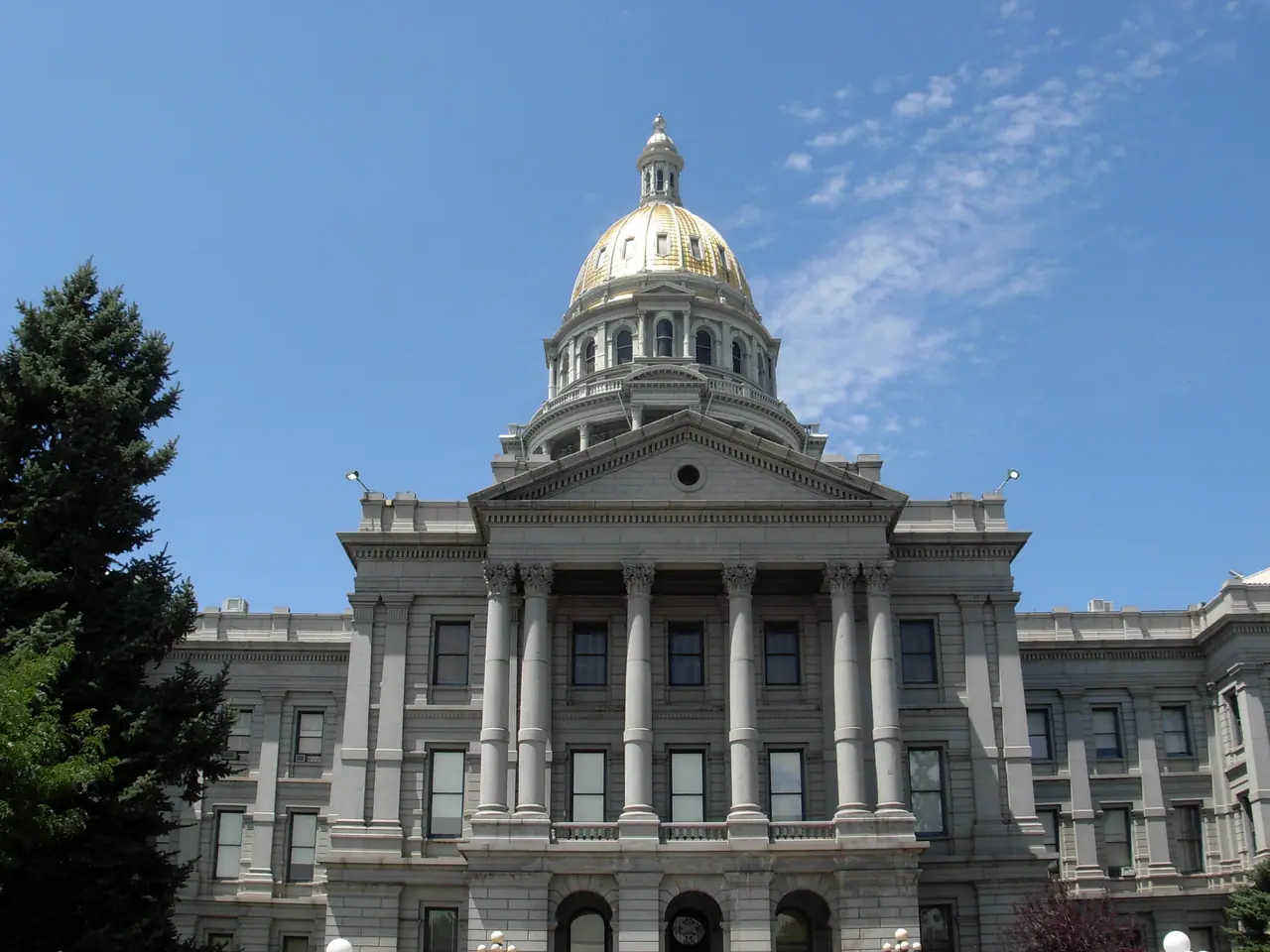
Colorado Governor Jared Polis commuted the state prison sentence of Tina Peters, the former Mesa County clerk and recorder convicted over a 2021 breach of county election equipment, and set her release on parole for June 1, 2026. The action shortens a sentence that trial court records summarized as eight and a half years in prison plus six months in jail following an August 2024 jury verdict on multiple felony and misdemeanor counts.
A commutation is not a pardon: Peters remains a convicted felon and must satisfy parole conditions fixed by the state board. Polis framed the move as correcting an excessive term for nonviolent, first-time misconduct tied to unauthorized access—not as erasing the underlying conviction or the security failures prosecutors proved at trial.
What the jury found—and what April’s appellate order had changed
State officials summarized the August 2024 verdict as including attempts to influence a public servant, conspiracy to commit criminal impersonation, first-degree official misconduct, violation of duty, and failure to comply with secretary-of-state requirements, all flowing from Peters’ role in allowing outsiders into trusted election infrastructure during a software update window.
On April 2, 2026, the Colorado Court of Appeals affirmed those convictions but ordered the trial court to conduct a new sentencing hearing. Reporting on the published opinion described the panel as faulting the trial judge for letting sentencing commentary drift into punishment for Peters’ public election-fraud claims rather than isolating punishment to the proved deceptive conduct around equipment access.
Polis’ commutation effectively supersedes that resentencing track by resetting the custodial term through executive clemency instead of sending the case back to the district judge first.
Why election administrators had urged the opposite outcome
Weeks earlier, on January 14, 2026, the secretary of state and the Colorado County Clerks Association delivered a joint letter asking Polis not to pardon or commute Peters. The letter argued that early release would validate lawbreaking by an insider with physical control of voting systems and would chill front-line election workers already facing elevated threats.
That intra-state pressure sat alongside sustained national attention on the case from the White House, which lacks authority to void state convictions but had publicly championed Peters. Polis insisted in interviews that his decision tracked Colorado law and proportionality—not federal political favors—while acknowledging the move would anger many in his own party.
How prosecutors and defense counsel are reading the governor’s rationale
The district attorney who tried the case issued a written statement calling the commutation irresponsible and disputing the governor’s First Amendment emphasis, arguing the trial record showed limited remorse and that accountability for equipment tampering should not bend to messaging wars.
Peters’ attorneys have long maintained she believed she was documenting software changes; the jury verdict nonetheless established criminal liability for how access was obtained and credentials were used. Polis pointed to thousands of constituent contacts about sentence length as part of his review, alongside Peters’ clemency application in which she acknowledged wrongdoing and pledged to follow the law after release.
What happens on June 1 and what could still move legally
Parole supervision can impose travel, employment, and internet-use conditions typical for high-profile white-collar offenders; violations can return a supervisee to custody even after a commuted underlying number.
Separately, victims of harassment tied to election denial campaigns may still pursue civil remedies where available, and the secretary of state’s office can continue administrative oversight of any future attempt by Peters to hold public office or handle ballots. If new federal or state charges ever arose from distinct conduct, a commutation of this state sentence would not immunize those matters—but none are alleged in the materials summarized here.
Geography and themes
Related places and recurring themes for this story.
- United States
- Colorado
- Election administration
Suggested reading
Other stories that pair well with this one—often from the same section or on overlapping themes.
Barney Frank Dies at 86, LGBTQ Trailblazer
He came out in Congress in 1987, chaired Financial Services through the 2008 crash, and helped steer Dodd-Frank before retiring in 2013; his sister confirmed his death to NBC Boston.
Trump-Backed Gallrein Ousts Massie in Kentucky
Ed Gallrein, backed by Donald Trump, ousted libertarian-leaning Rep. Thomas Massie in Kentucky's May 19 GOP primary for the 4th District—the costliest House primary on record.
Wyden: DOJ May Halt Trump IRS Audits
Senate Finance Chair Ron Wyden warns reported Justice Department settlement language could halt IRS audits of older Trump-family returns; CNN, ABC, the Post, and CNBC describe overlapping terms tied to the tax-leak lawsuit.
Brookings-linked modelling puts U.S.-citizen kids touched by parental ICE detention near 145,000 since the surge
ProPublica’s unpacking of a May 2026 Brookings exercise walks through Census-informed imputation against ICE arrest streams—far above what federal forms capture when parents fear disclosing citizen children—while parallel academic trackers still document the detention-and-removal machinery in administrative data alone.
House Democrats assail Trump’s IRS deal and $1.78 billion Anti-Weaponization Fund as a patronage slush lane
Jamie Raskin calls the vehicle unconstitutional; Pramila Jayapal says the president is exercising ‘open corruption’ in plain sight—while the Justice Department frames the payout as redress for weaponization and lawfare and points to older settlement precedents.
Thousands rally in Alabama for Black voting rights as redistricting fight reaches Montgomery and Selma
Organizers billed the May 2026 “All Roads Lead to the South” weekend as a mass response to a fresh Supreme Court order that reopened Alabama’s congressional map fight—linking Selma’s bridge to the Capitol steps where the Voting Rights Movement once converged.
Trump withholds commitment on Taiwan arms after Xi warning as U.S.–China trade headlines land
President Donald Trump told reporters he would decide on a stalled roughly $14 billion arms package “over the next fairly short period,” after Xi Jinping warned mishandling Taiwan could bring the powers into conflict—while Washington and Taipei each insisted broader policy had not flipped overnight.
Trump approval sinks amid unpopular Iran conflict and darkening G.O.P. midterm signals
National surveys from late April 2026 put the president’s overall job rating in the mid-thirties, pair that rating with majority rejection of the Iran fight on forced-choice items, and—on one national survey—give Democrats a ten-point lead on the generic House ballot with higher reported enthusiasm.
Trump attacks Massie as Republican critic describes ‘desperate’ attempts to oust him from primary
With Kentucky’s 4th District Republican primary on Tuesday, President Donald Trump again blasted Representative Thomas Massie on social media while Massie—framing rival spending as an outside “buy” of the seat—said his opponents act “desperate” because he believes he leads in surveys.
Thomas Massie news: Trump-backed Gallrein leads late KY-4 poll; Massie denies ‘hush money’ claim before primary
With Kentucky’s Republican primary for the 4th District set for 19 May 2026, a Quantus Insights survey of likely GOP voters put Ed Gallrein narrowly ahead of incumbent Thomas Massie while Axios-tracked ad spending blew past typical House races; Massie and Representative Victoria Spartz separately denied former aide Cynthia West’s election-week allegation of a $5,000 silence payment tied to a Spartz office dispute.
Keep exploring
Browse the full archive or return to the front page.
Sources and external links
Sources and filings our editors consulted to verify this story. External links open in a new tab.