Section Politics
Virginia redistricting fight reaches U.S. Supreme Court as justices decline emergency stay
A week after Virginia’s highest court voided a voter-approved amendment, Democratic leaders asked federal justices to freeze the ruling; the application failed, leaving pre-amendment House lines in place for now.
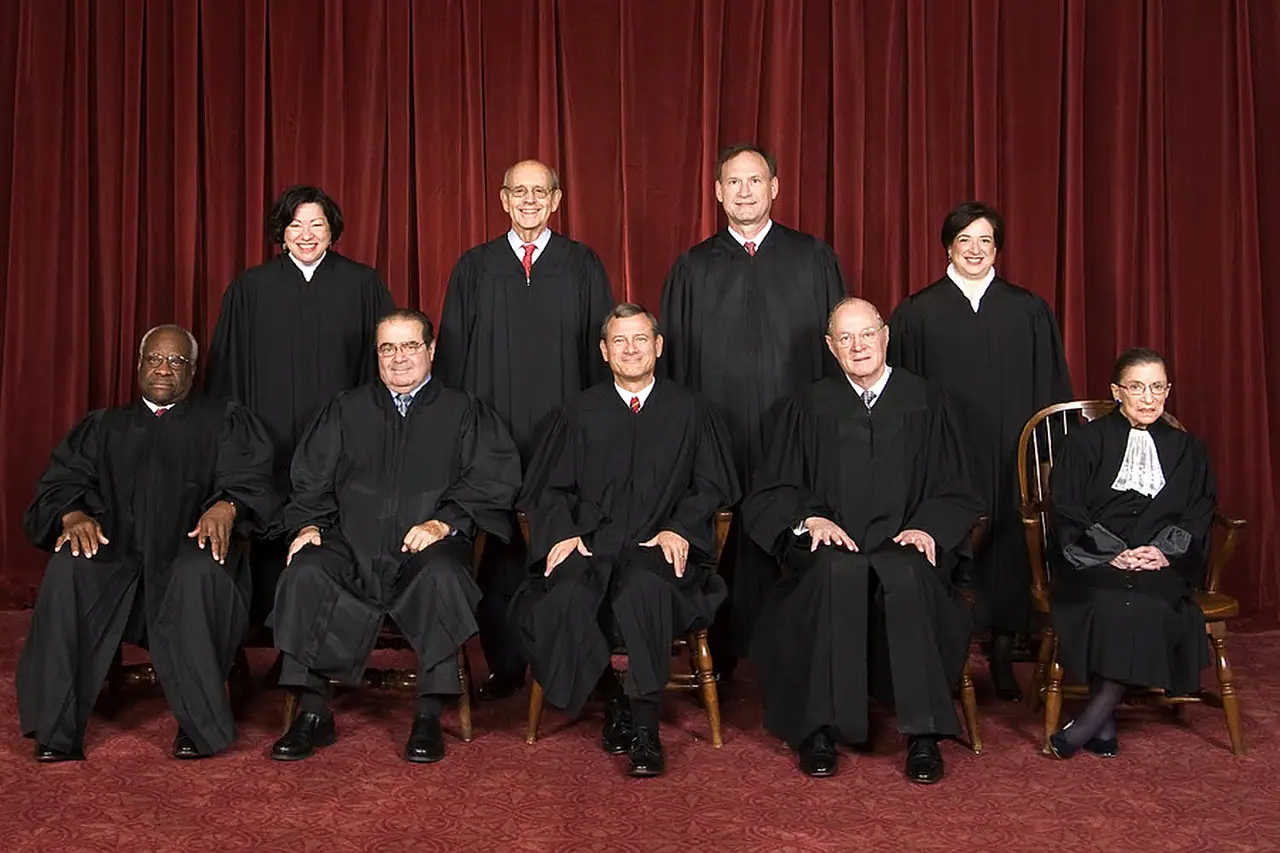
The United States Supreme Court turned away an emergency bid by Virginia’s Democratic leadership to pause a state high-court ruling that threw out a voter-approved constitutional amendment on congressional redistricting, leaving the commonwealth on the pre-amendment U.S. House map for the moment and capping a rapid sequence from April’s referendum to early May litigation in Richmond and Washington.
The federal order arrived roughly a week after the Supreme Court of Virginia invalidated the amendment in a 4–3 decision that faulted legislative procedure, not the partisan shape of any replacement map. Democratic officials had asked Washington to intervene while they pursued longer appeals; the denial, issued without a published majority opinion or noted dissents in the early reporting, ends the emergency lane for now.
What voters approved—and what the state court said went wrong
Commonwealth voters approved the amendment in April 2026 by about a 52% to 48% margin, according to the commonwealth’s public election results reporting for the April 21 special. The measure would have let the General Assembly redraw U.S. House lines outside the usual once-a-decade rhythm, part of a broader Democratic push to offset Republican-led map changes elsewhere.
The Virginia Supreme Court’s majority held that the legislature violated the multistep process the Virginia Constitution sets for placing amendments before the people, including the requirement for votes in separate contexts with an intervening election. The majority wrote that the procedural flaw “incurably taints” the referendum and ordered the state to run the next congressional election on the same district plan used in 2022 and 2024.
Why the dispute escalated to the U.S. Supreme Court on an emergency clock
After the state ruling, Virginia’s attorney general and allied lawmakers sought a federal stay that would have let officials treat the April vote as still operative while appeals continued. Their theory, as described in secondary legal reporting, stressed federal interest in orderly elections and argued the state tribunal had misread what counts as an “election” between amendment votes.
Emergency applications to the U.S. Supreme Court rarely carry the same evidence record as a fully briefed merits case; justices often defer to state courts on state constitutional questions unless a clear federal right is implicated. The quick rejection here signals the bench was unwilling to use the shadow docket to reverse—at least immediately—the state court’s nullification of the ballot measure.
National stakes beyond Virginia’s eleven House seats
Virginia’s map fight sits inside a mid-decade redistricting scramble tied to the 2026 midterms. Party committees had already been counting possible seat swings from Virginia, California, Utah, and southern states where legislatures moved lines after recent federal rulings loosened some voting-rights constraints.
When a referendum-backed map disappears after votes are cast but before filing deadlines lock, incumbents, challengers, and donors all face repricing risk: the same candidate names may run in materially different districts depending on which map survives appellate review.
What would change the picture next
A merits-stage petition, new legislation, or a fresh ballot path could reopen the procedural fight without relying on emergency relief. Federal district litigation—if any is filed—would add another layer, though Younger abstention and similar doctrines often complicate parallel federal challenges to ongoing state election disputes.
Watch next for certification deadlines in Virginia’s 2026 cycle, any motion for reconsideration in the state capital, and whether party committees reallocate television and field budgets now that the 2022–24 lines are again the operative baseline for planning.
Geography and themes
Related places and recurring themes for this story.
- United States
- Redistricting
- 2026 U.S. midterms
Suggested reading
Other stories that pair well with this one—often from the same section or on overlapping themes.
Deep South states redraw congressional maps ahead of 2026 midterms after Supreme Court ruling weakens Voting Rights Act protections
Louisiana, Alabama, Georgia, and Mississippi are each navigating court orders, legislative sessions, and delayed primaries as a mid-decade redistricting wave — unprecedented since the 1800s — reshapes the electoral map.
Barney Frank Dies at 86, LGBTQ Trailblazer
He came out in Congress in 1987, chaired Financial Services through the 2008 crash, and helped steer Dodd-Frank before retiring in 2013; his sister confirmed his death to NBC Boston.
Trump-Backed Gallrein Ousts Massie in Kentucky
Ed Gallrein, backed by Donald Trump, ousted libertarian-leaning Rep. Thomas Massie in Kentucky's May 19 GOP primary for the 4th District—the costliest House primary on record.
Wyden: DOJ May Halt Trump IRS Audits
Senate Finance Chair Ron Wyden warns reported Justice Department settlement language could halt IRS audits of older Trump-family returns; CNN, ABC, the Post, and CNBC describe overlapping terms tied to the tax-leak lawsuit.
Brookings-linked modelling puts U.S.-citizen kids touched by parental ICE detention near 145,000 since the surge
ProPublica’s unpacking of a May 2026 Brookings exercise walks through Census-informed imputation against ICE arrest streams—far above what federal forms capture when parents fear disclosing citizen children—while parallel academic trackers still document the detention-and-removal machinery in administrative data alone.
House Democrats assail Trump’s IRS deal and $1.78 billion Anti-Weaponization Fund as a patronage slush lane
Jamie Raskin calls the vehicle unconstitutional; Pramila Jayapal says the president is exercising ‘open corruption’ in plain sight—while the Justice Department frames the payout as redress for weaponization and lawfare and points to older settlement precedents.
Thousands rally in Alabama for Black voting rights as redistricting fight reaches Montgomery and Selma
Organizers billed the May 2026 “All Roads Lead to the South” weekend as a mass response to a fresh Supreme Court order that reopened Alabama’s congressional map fight—linking Selma’s bridge to the Capitol steps where the Voting Rights Movement once converged.
Trump withholds commitment on Taiwan arms after Xi warning as U.S.–China trade headlines land
President Donald Trump told reporters he would decide on a stalled roughly $14 billion arms package “over the next fairly short period,” after Xi Jinping warned mishandling Taiwan could bring the powers into conflict—while Washington and Taipei each insisted broader policy had not flipped overnight.
Trump approval sinks amid unpopular Iran conflict and darkening G.O.P. midterm signals
National surveys from late April 2026 put the president’s overall job rating in the mid-thirties, pair that rating with majority rejection of the Iran fight on forced-choice items, and—on one national survey—give Democrats a ten-point lead on the generic House ballot with higher reported enthusiasm.
Trump attacks Massie as Republican critic describes ‘desperate’ attempts to oust him from primary
With Kentucky’s 4th District Republican primary on Tuesday, President Donald Trump again blasted Representative Thomas Massie on social media while Massie—framing rival spending as an outside “buy” of the seat—said his opponents act “desperate” because he believes he leads in surveys.
Keep exploring
Browse the full archive or return to the front page.
Sources and external links
Sources and filings our editors consulted to verify this story. External links open in a new tab.
- Virginia April 21, 2026 special election — public results (State Department of Elections) (opens in a new tab)— Virginia Department of Elections