Section Technology
Google I/O 2026 Pushes Always-On Gemini Agent
Google I/O 2026 in Mountain View spotlighted Gemini Spark, described as an always-on personal agent across Workspace and other apps—with user approval before sensitive actions—plus faster Gemini models, agentic Search, and Android XR hardware.
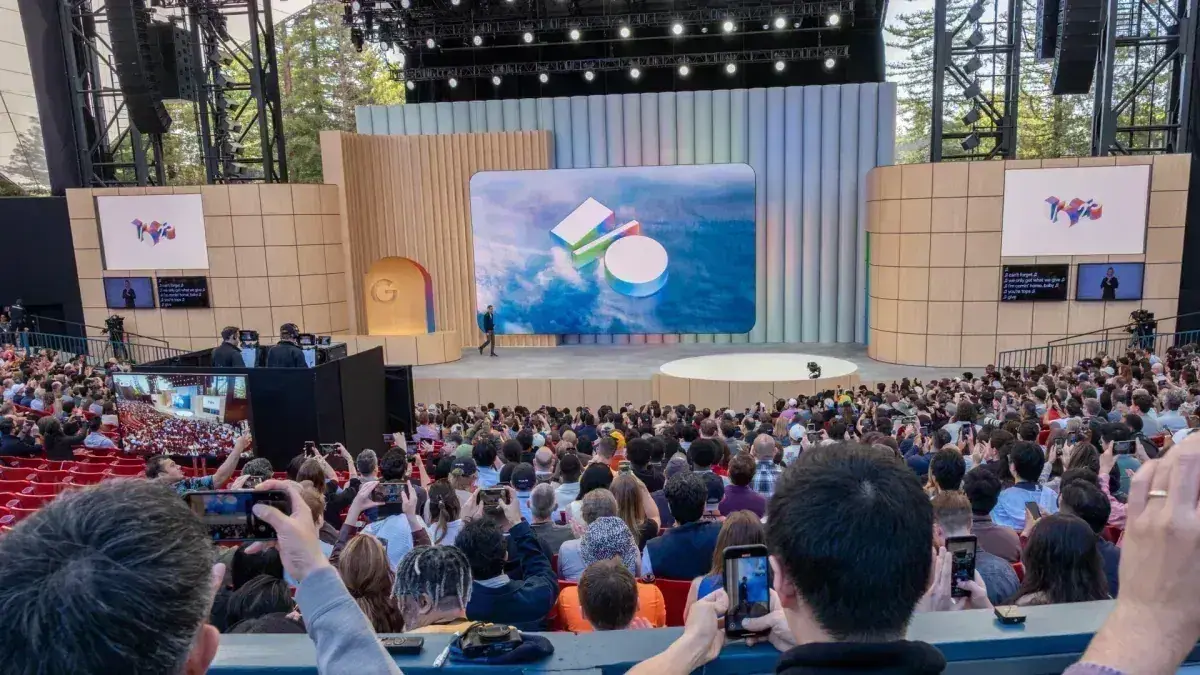
Google used its May 19, 2026, I/O keynote at Shoreline Amphitheatre in Mountain View, California, to center Gemini Spark, a personal AI agent executives described in always-on terms: working across Google Workspace and third-party services to complete tasks, with users required to approve sensitive actions before they run. CEO Sundar Pichai framed the slate as the next phase of an AI-first Google—moving from answering questions to executing multi-step workflows in Search, productivity apps, and partner platforms.
The pitch lands as regulators and consumers alike scrutinize how much autonomy belongs in inboxes, calendars, and shopping carts. The same keynote introduced faster Gemini models, redesigned Search with background "information agents," a Universal Cart commerce layer, Android XR eyewear partnerships, and developer tooling pitched as "agent-optimized."
Gemini Spark demos and guardrails
On stage, Spark planned a neighborhood block party by collecting RSVPs, updating a live Google Sheet, drafting follow-up mail to stragglers, and building a Slides deck. Google said Spark will add integrations this summer, including proactive ordering through services like Instacart, and reiterated that sensitive operations wait on explicit user approval.
Models: Gemini 3.5 Flash and Gemini Omni
Gemini 3.5 Flash targets low-latency coding and agent loops; Pichai said it emits tokens at roughly four times the rate of other frontier-class models Google benchmarked. Gemini Omni is a generative video model that can alter existing footage—adding characters, changing environments, or applying effects while preserving the original performance—shown in a hallway demo that cycled visual styles from a single photo input.
Search, agents, and Universal Cart
Search now expands dynamically for longer queries and can spawn persistent background agents to monitor stocks, rentals, or product drops, pushing alerts when conditions change. Universal Cart is an AI-assisted cart spanning Search and the Gemini app this summer, with planned expansion to YouTube and Gmail; it tracks deals, price history, and compatibility warnings such as mismatched PC parts, using the open Universal Commerce Protocol with retail partners.
Hardware: Android XR glasses and Googlebooks
Google previewed Project Aura, a higher-end Android XR headset slated for this year, plus wireless AI audio glasses from Samsung, Gentle Monster, and Warby Parker this fall—designed for all-day Gemini audio prompts without a lens display. Googlebooks merges Android and ChromeOS with Gemini in the shell; Acer, ASUS, Dell, HP, and Lenovo are slated to ship units in the fall.
Workspace, creativity, and developer surfaces
Google Pics adds region-targeted image edits via natural-language comments rather than full prompt rewrites. Stitch, a collaborative UI tool, crossed more than 100 million generated screens with new real-time design features. Developers received Antigravity 2.0 as a standalone desktop environment pitched as agent-optimized, plus AI Studio updates that can emit native Android apps with an embedded emulator.
Gemini for Science and Hassabis's closing note
DeepMind CEO Demis Hassabis introduced Gemini for Science, a research bundle that includes drug-discovery tooling described with the aspirational goal of "one day solving all disease." He called the era a "profound moment for humanity" and suggested society may be in the "foothills of the singularity," echoing the keynote's maximalist tone even as product leads emphasized user approvals for risky actions.
Roadmap questions
Android 17 remains in beta with floating Bubbles multitasking and deeper Gemini hooks; a stable release is expected in June or July. I/O sessions continue through May 20. The open question for readers is whether always-on agents win trust at scale—or trigger the same backlash already visible around autonomous access to personal data.
Geography and themes
Related places and recurring themes for this story.
Suggested reading
Other stories that pair well with this one—often from the same section or on overlapping themes.
Claude Code Auto Mode routes risky tool calls through a Sonnet 4.6 classifier instead of endless taps
Anthropic’s March 2026 engineering deep dive frames Auto Mode as permission automation: a two-stage transcript filter plus a prompt-injection probe, built after internal telemetry showed users accepting 93% of manual prompts anyway.
Anthropic’s Q1 2026 growth reads near 80× in markets coverage; Semi Analysis tallies put ARR above $44 billion
Benzinga and syndicated Fortune copy captured chief executive Dario Amodei calling the pace “too hard to handle” around an 80-fold quarterly surge narrative, while a Semi Analysis digest summarized by trade press puts annualized run-rate revenue above $44 billion after a climb from about $9 billion at year-end 2025.
Anthropic buys Stainless, the API-to-SDK toolchain rivals including OpenAI and Google relied on
The 2022 New York startup led by former Stripe engineer Alex Rattray automated libraries across Python, TypeScript, Kotlin, Go, and Java; Anthropic confirms it will wind down hosted products for other vendors while letting past customers keep generated code.
Eric Schmidt booed at University of Arizona commencement when his speech turns to artificial intelligence
Former Google chief executive Eric Schmidt delivered the University of Arizona’s 15 May 2026 commencement address in Tucson, but Business Insider and other outlets reported that parts of the stadium crowd booed whenever he pivoted to AI and automation; he paused to acknowledge the noise, called graduates’ anxieties rational, and argued they should help steer the technology rather than only fear it.
Google CLI Links OpenClaw to Gmail Unsupported
Google's open-source Workspace CLI on GitHub links AI agents including OpenClaw to Gmail and Drive, but the company labels the project unsupported and warns workflows may break as APIs evolve.
Walmart’s six new Onn Android 16 tablets from $97: spec sheet, who they beat, and who should skip them
Launch-day listings describe Android 16 across the stack—from a 7-inch Helio G80 starter through a 13-inch Pro bundle with stylus—but paper wins still need reality checks against Amazon’s Fire line, Lenovo’s budget slabs, and discounted Samsung Tab hardware.
Oakland jury shuts Musk’s OpenAI fight on a clock question, not the ‘betrayed lab’ plot
Nine Northern District jurors agreed the February 2024 filing landed outside the limitations window they were instructed to use; Judge Yvonne Gonzalez Rogers still formalises the advisory result, but the merits of charitable-trust and enrichment theories never went to a second-phase verdict.
Calif’s Mythos-on-M5 kernel exploit story gains an official Apple footnote in macOS Tahoe 26.5 security credits
Calif still narrates seven-day lab work with Memory Integrity Enforcement on macOS 26; Apple’s catalogue page for Tahoe 26.5 now lists CVE-2026-28952 as reported by Calif.io in collaboration with Claude and Anthropic Research—a narrower confirmation than Calif’s full chain narrative but stronger than silence.
Microsoft AI chief’s “12–18 months” white-collar forecast: what Mustafa Suleyman actually said
Headlines that flatten the claim into “every office job disappears in eighteen months” oversell the wording: in a 12 February 2026 interview-based report, Microsoft AI CEO Mustafa Suleyman tied a task-level automation window to desk-bound professional work—lawyers, accountants, project managers, marketers—not a calendar for guaranteed mass layoffs.
Elon Musk vs Sam Altman trial: what the OpenAI fight is about
A federal jury trial in Oakland pits Musk’s breach and unjust-enrichment theories against OpenAI’s account of a co-founder who left governance years before the consumer-AI boom reshaped the company’s capital stack.
Keep exploring
Browse the full archive or return to the front page.
Sources and external links
Sources and filings our editors consulted to verify this story. External links open in a new tab.