Section Politics
Trump approval sinks amid unpopular Iran conflict and darkening G.O.P. midterm signals
National surveys from late April 2026 put the president’s overall job rating in the mid-thirties, pair that rating with majority rejection of the Iran fight on forced-choice items, and—on one national survey—give Democrats a ten-point lead on the generic House ballot with higher reported enthusiasm.
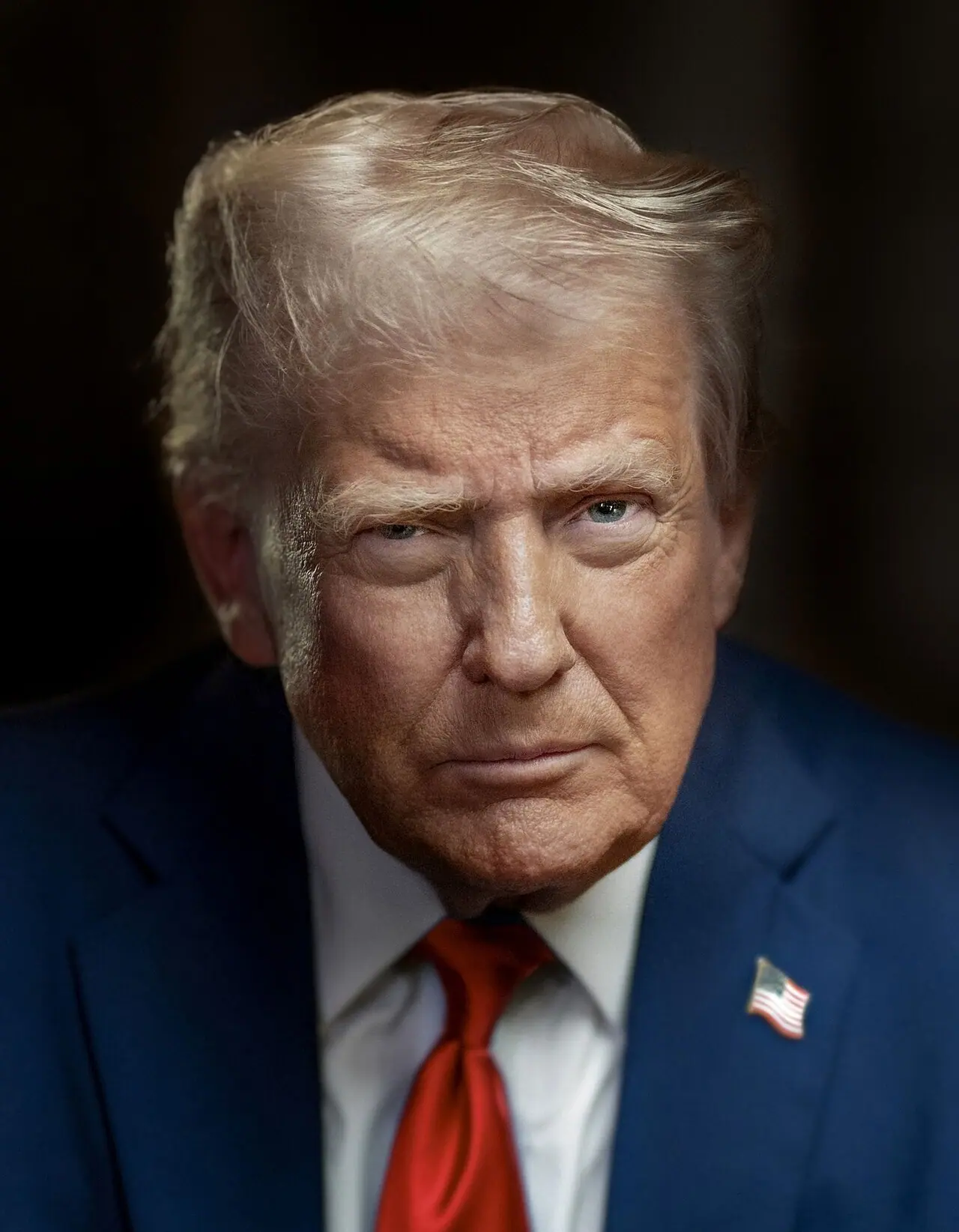
U.S. national opinion surveys completed in late April 2026 show President Donald Trump’s overall job approval in the mid-thirties—the weakest readings of his second term in the surveys reviewed for this story. The same window of fieldwork ties those ratings to majority disapproval of American military action against Iran and to economic strain at the gasoline pump.
Polls are not forecasts. They are contemporaneous measures of what registered when interviewers asked forced-choice questions. Six months remain before the 2026 midterms, and House control still depends on district-level margins, turnout, and money. The value of these releases is comparative: they give party operatives and general readers a shared set of magnitudes for approval, war attitudes, and the generic ballot heading into summer.
Two national surveys, two field windows
The rows below pair headline figures from (1) Pew Research Center’s American Trends Panel, April 20–26, 2026, among 5,103 U.S. adults, and (2) the Marist Institute’s national survey, April 27–30, 2026, among 1,322 U.S. adults with a reported margin of error of plus or minus 3.1 percentage points.
Wording and mode differ, so the columns are a side-by-side read—not a blended average.
| Headline measure | Pew (Apr 20–26) | Marist (Apr 27–30) |
|---|---|---|
| Overall job approval | 34% | 37% approve; 59% disapprove |
| Approve vs disapprove handling of Iran / military action | 36% approve / 62% disapprove | 33% approve (36% in prior March wave) |
| Judgment on using force in Iran | 59% wrong decision / 38% right | 61% say military action has done more harm than good |
| Generic House ballot (Democrat vs Republican) | — | 52% vs 42% (10-point margin) |
Marist’s Iran approval figure moved three points from March to April; with a 3.1-point margin, treat that move as a statistical blur unless later waves confirm a downward slope.
What shifted inside Trump’s personal ratings (Pew wave)
Beyond the top-line approval number, Pew’s published tables show erosion on trait items measured in the same wave. Thirty-eight percent said “keeps his promises” described Trump very or fairly well, down from 43% the previous August and 51% just after his November 2024 reelection. Confidence that he would “use military force wisely” stood at 38%, down from 46% the prior summer.
Partisan patterns still cushion the president among Republicans, but not at January highs. Sixty-eight percent of Republicans and Republican leaners approved his job performance, down from 73% in January. Among adults who said they voted for him in 2024, 78% approved—down from 83% in January and 95% in the opening phase of the term.
Iran, gasoline, and the midterm mood (Marist wave)
The Marist survey adds items on pocketbooks and turnout intention that Pew’s topline summary did not duplicate in the same form. In the public tables released with that wave, 51% strongly disapproved of Trump’s job performance overall, 35% approved of his economic handling, and 62% said his decisions had weakened the United States on the world stage.
On energy prices, 81% said current gasoline prices strained household budgets, and 63% assigned Trump responsibility for recent increases. The same reporting cycle quoted a national average retail gasoline price near $4.48 for early May alongside those consumer responses.
On enthusiasm, 61% of Democrats called themselves “very enthusiastic” about voting, against 53% of Republicans. Among self-identified independents, “very enthusiastic” interest ran cooler than among committed partisans, which is one reason strategists treat spring ballot tests as soft.
Why a national topline is not a seat map
Congressional majorities are won in districts and states where redistricting has shrunk the competitive playing field compared with a generation ago. Midterm electorates also skew older and smaller than presidential-year ballots.
A ten-point generic-ballot lead for Democrats in one April national survey signals fundraising energy and message opportunity for the party’s committees; it does not, by itself, predict how many seats change hands.
For Republican incumbents, the policy bundle under these numbers is plain: majority skepticism of the Iran operation on headline questions, gasoline prices feeding economic disapproval, and softening approval inside slices of Trump’s 2024 coalition even while Republican identifiers remain net-positive on the president in the same waves.
The next hinge points that could move these readings are also concrete: quarterly campaign filings, late primary and runoff results in competitive states, summer employment and inflation releases, and any sustained change in oil markets tied to Strait of Hormuz risk that retrains how voters weight foreign policy against prices.
Geography and themes
Related places and recurring themes for this story.
- United States
- U.S. politics
- Donald Trump
- 2026 midterms
Suggested reading
Other stories that pair well with this one—often from the same section or on overlapping themes.
Trump attacks Massie as Republican critic describes ‘desperate’ attempts to oust him from primary
With Kentucky’s 4th District Republican primary on Tuesday, President Donald Trump again blasted Representative Thomas Massie on social media while Massie—framing rival spending as an outside “buy” of the seat—said his opponents act “desperate” because he believes he leads in surveys.
Trump-Backed Gallrein Ousts Massie in Kentucky
Ed Gallrein, backed by Donald Trump, ousted libertarian-leaning Rep. Thomas Massie in Kentucky's May 19 GOP primary for the 4th District—the costliest House primary on record.
House Democrats assail Trump’s IRS deal and $1.78 billion Anti-Weaponization Fund as a patronage slush lane
Jamie Raskin calls the vehicle unconstitutional; Pramila Jayapal says the president is exercising ‘open corruption’ in plain sight—while the Justice Department frames the payout as redress for weaponization and lawfare and points to older settlement precedents.
Thousands rally in Alabama for Black voting rights as redistricting fight reaches Montgomery and Selma
Organizers billed the May 2026 “All Roads Lead to the South” weekend as a mass response to a fresh Supreme Court order that reopened Alabama’s congressional map fight—linking Selma’s bridge to the Capitol steps where the Voting Rights Movement once converged.
Trump withholds commitment on Taiwan arms after Xi warning as U.S.–China trade headlines land
President Donald Trump told reporters he would decide on a stalled roughly $14 billion arms package “over the next fairly short period,” after Xi Jinping warned mishandling Taiwan could bring the powers into conflict—while Washington and Taipei each insisted broader policy had not flipped overnight.
FBI jet and luxury suite: Kash Patel under scrutiny over Philadelphia concert trip
Published accounts tie a May 2025 Gulfstream hop to a George Strait bill at the Linc with partner Alexis Wilkins and a reported five-figure suite band. House Judiciary Democrats are demanding travel logs; executive policy still requires FBI directors to fly government metal but reimburse personal legs at coach rates.
Justice Department weighs settlement of Donald Trump’s IRS lawsuit
Senior officials are debating whether to resolve a multibillion-dollar federal court fight the Trump family and business brought against the Internal Revenue Service—an unusual prospect when the executive branch both runs the agency and answers for it in litigation.
Kevin Warsh and the Federal Reserve chair: where the nomination stands as Powell's term turns
President Donald Trump's formal nomination of Kevin Warsh has reached the Senate, but confirmation politics—and an unresolved criminal probe involving Jerome Powell—could delay a clean handoff.
Barney Frank Dies at 86, LGBTQ Trailblazer
He came out in Congress in 1987, chaired Financial Services through the 2008 crash, and helped steer Dodd-Frank before retiring in 2013; his sister confirmed his death to NBC Boston.
Wyden: DOJ May Halt Trump IRS Audits
Senate Finance Chair Ron Wyden warns reported Justice Department settlement language could halt IRS audits of older Trump-family returns; CNN, ABC, the Post, and CNBC describe overlapping terms tied to the tax-leak lawsuit.
Keep exploring
Browse the full archive or return to the front page.
Sources and external links
Sources and filings our editors consulted to verify this story. External links open in a new tab.