Section Politics
Five key takeaways from President Trump's high-stakes China trip
From massive commodity purchases to the 'red lines' on technology, the Beijing summit of 2026 has reshaped the landscape of the world's most critical bilateral relationship.
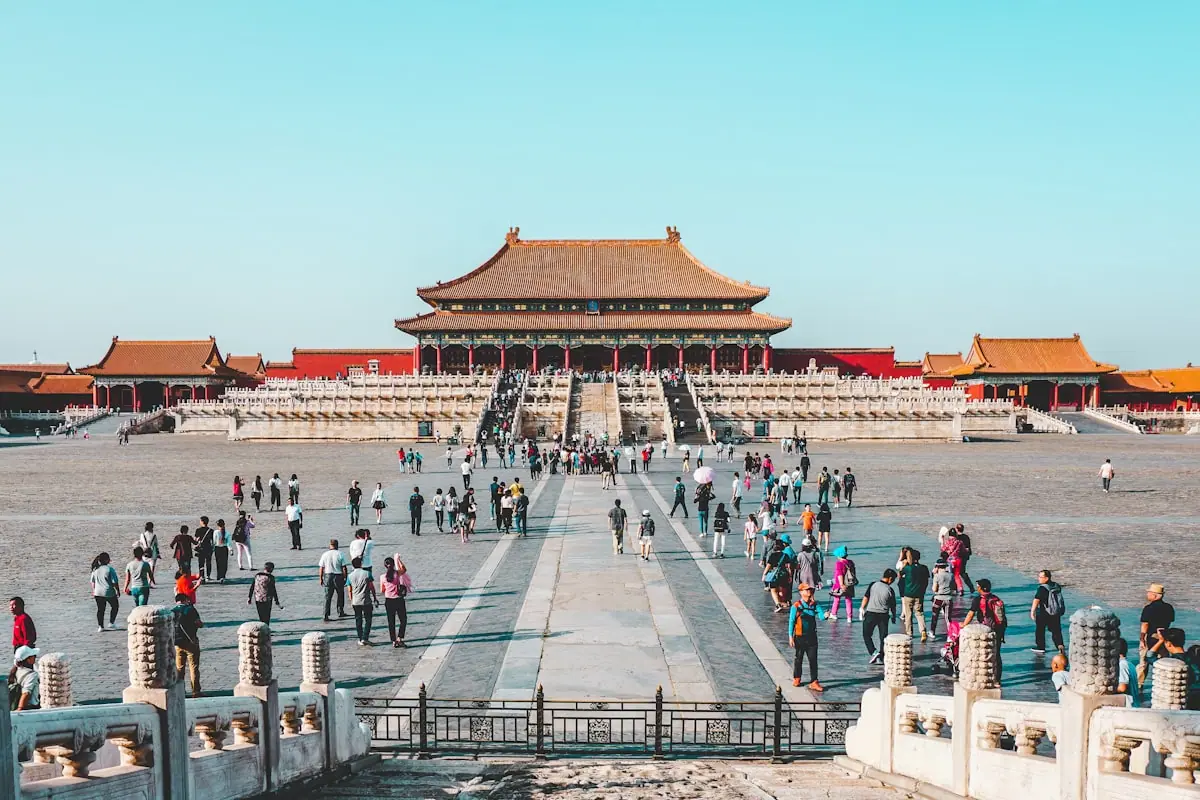
President Donald Trump has concluded his first state visit to China since returning to the White House, leaving Beijing with a series of high-profile commitments that he claims will 'rebalance' the global economy. While the trip was characterized by the traditional pomp and ceremony of a state visit, the underlying discussions focused on the hardest edges of the U.S.-China relationship: trade deficits, technological supremacy, and regional security.
As the dust settles on the May 15, 2026, summit, here are the five key takeaways that will define the next phase of the relationship between the world's two largest superpowers.
1. The 'Bulk Purchase' Strategy Returns
The centerpiece of the President's visit was the announcement of massive procurement commitments from the Chinese side. Trump claimed that China has agreed to buy hundreds of Boeing aircraft and billions of dollars in American agricultural and energy products. This strategy mirrors the 'Phase One' trade deal of his first term, prioritizing immediate, headline-grabbing export figures over deep structural changes to China's economic model.
Critics argue that these purchases are often aspirational and rely on market conditions that neither leader can fully control. However, for the Trump administration, these figures serve as a powerful domestic talking point, demonstrating a tangible 'win' for American farmers and manufacturers in the lead-up to the 2026 midterm elections.
2. Guardrails on Artificial Intelligence
For the first time, both leaders engaged in substantive discussions regarding the 'existential risks' posed by Artificial Intelligence (AI). While no formal treaty was signed, the establishment of a joint technical working group represents a significant step toward preventing an uncontrolled AI arms race. The focus appears to be on 'safety guardrails' — ensuring that AI-driven weapons systems remain under human control and that deepfake technology is not used to destabilize domestic political systems.
Despite this cooperative tone, the U.S. maintained its stance on export controls for high-end semiconductors, which remain the lifeblood of AI development. Beijing's willingness to discuss safety while under heavy U.S. sanctions suggests that both sides recognize the catastrophic potential of a total technological breakdown.
3. The 'Board of Trade' and Institutional Stability
To move beyond the cycle of tariff escalations, the summit proposed the creation of a permanent Board of Trade and Investment. This body is intended to serve as a high-level clearinghouse for commercial disputes, bypassing the slower processes of the WTO. By institutionalizing the dialogue, the leaders hope to create a more 'predictable' environment for multinational corporations operating in both countries.
Whether this board can actually resolve issues like intellectual property theft or state subsidies remains to be seen. Skeptics point out that similar bodies in the past have often devolved into talk shops without enforcement teeth, but the current 'fragile peace' may necessitate such a forum just to keep lines of communication open.
4. Xi Jinping's 'Red Lines' on Taiwan and Tech
While the public rhetoric was largely positive, private meetings were reportedly much more blunt. Chinese President Xi Jinping reiterating his 'red lines' regarding Taiwan and the U.S. 'containment' strategy in the Pacific. Xi warned that any further expansion of U.S. military presence in the region would be met with a proportional response.
Furthermore, Xi pushed back against the 'de-risking' narrative prevalent in Washington, arguing that the fragmentation of global supply chains is a 'lose-lose' scenario for the global economy. These warnings serve as a reminder that despite the 'fantastic trade deals' touted by Trump, the underlying geopolitical friction remains as volatile as ever.
5. Market Skepticism and the Reality of Implementation
Perhaps the most telling takeaway was the reaction of the global markets. Rather than a rally, stocks in sectors like aerospace and agriculture showed only modest gains, with some even sliding after the President's departure. Investors appear to be waiting for concrete contracts rather than verbal commitments.
The silence from Boeing regarding the 200-jet order is particularly noteworthy, suggesting that the negotiations may be far from over.
| Area | Key Outcome | Level of Certainty |
|---|---|---|
| Trade | $200B+ Purchase Claims | Low (Aspirational) |
| AI | Safety Working Group | Medium (Procedural) |
| Institutional | Board of Trade/Investment | Medium (Framework) |
| Geopolitics | 'Red Line' Reiteration | High (Historical) |
| Environment | Clean Energy Cooperation | Low (Secondary) |
Conclusion: A Fragile Truce
The 2026 Beijing summit did not result in a 'Grand Bargain' that resolves the fundamental differences between the U.S. and China. Instead, it produced a fragile truce—a series of high-value commercial promises intended to lower the temperature and provide a window of stability. For President Trump, the trip was a showcase of his deal-making prowess; for President Xi, it was an exercise in managing a complex rival.
As both leaders return to their respective domestic challenges, the success of the trip will be measured not by the rhetoric in Beijing, but by the flow of goods and the absence of conflict in the months to come.
Geography and themes
Related places and recurring themes for this story.
Suggested reading
Other stories that pair well with this one—often from the same section or on overlapping themes.
Trump–Xi in Beijing: what readers actually need to know after the summit
From tariffs and grocery bills to chips, travel risk, and how long ‘big purchase’ pledges take to prove out—plain answers to the questions people search after a superpower meeting.
Barney Frank Dies at 86, LGBTQ Trailblazer
He came out in Congress in 1987, chaired Financial Services through the 2008 crash, and helped steer Dodd-Frank before retiring in 2013; his sister confirmed his death to NBC Boston.
Trump-Backed Gallrein Ousts Massie in Kentucky
Ed Gallrein, backed by Donald Trump, ousted libertarian-leaning Rep. Thomas Massie in Kentucky's May 19 GOP primary for the 4th District—the costliest House primary on record.
Wyden: DOJ May Halt Trump IRS Audits
Senate Finance Chair Ron Wyden warns reported Justice Department settlement language could halt IRS audits of older Trump-family returns; CNN, ABC, the Post, and CNBC describe overlapping terms tied to the tax-leak lawsuit.
Brookings-linked modelling puts U.S.-citizen kids touched by parental ICE detention near 145,000 since the surge
ProPublica’s unpacking of a May 2026 Brookings exercise walks through Census-informed imputation against ICE arrest streams—far above what federal forms capture when parents fear disclosing citizen children—while parallel academic trackers still document the detention-and-removal machinery in administrative data alone.
House Democrats assail Trump’s IRS deal and $1.78 billion Anti-Weaponization Fund as a patronage slush lane
Jamie Raskin calls the vehicle unconstitutional; Pramila Jayapal says the president is exercising ‘open corruption’ in plain sight—while the Justice Department frames the payout as redress for weaponization and lawfare and points to older settlement precedents.
Trump withholds commitment on Taiwan arms after Xi warning as U.S.–China trade headlines land
President Donald Trump told reporters he would decide on a stalled roughly $14 billion arms package “over the next fairly short period,” after Xi Jinping warned mishandling Taiwan could bring the powers into conflict—while Washington and Taipei each insisted broader policy had not flipped overnight.
Thomas Massie news: Trump-backed Gallrein leads late KY-4 poll; Massie denies ‘hush money’ claim before primary
With Kentucky’s Republican primary for the 4th District set for 19 May 2026, a Quantus Insights survey of likely GOP voters put Ed Gallrein narrowly ahead of incumbent Thomas Massie while Axios-tracked ad spending blew past typical House races; Massie and Representative Victoria Spartz separately denied former aide Cynthia West’s election-week allegation of a $5,000 silence payment tied to a Spartz office dispute.
Chancellor Merz and President Trump hold 'reconciliatory' phone call after weeks of friction
The two leaders seek to move past a diplomatic rift over Iran and troop withdrawals, coordinating positions ahead of the NATO summit in Ankara.
US Border Patrol Chief Michael Banks resigns abruptly amid leadership exodus
The departure follows a string of high-profile exits within Trump administration immigration agencies as officials recalibrate deportation strategies.
Keep exploring
Browse the full archive or return to the front page.
Sources and external links
Sources and filings our editors consulted to verify this story. External links open in a new tab.