Section World
Canada tightens Arctic and Nordic defense links as Greenland studies a Ranger-style patrol force
After months of U.S. rhetoric over Greenland and strained North American politics, Ottawa is deepening military procurement talks with Denmark, Finland, Iceland, Norway, and Sweden while Nuuk and Copenhagen consult Canada on adapting the Canadian Rangers model for local surveillance.
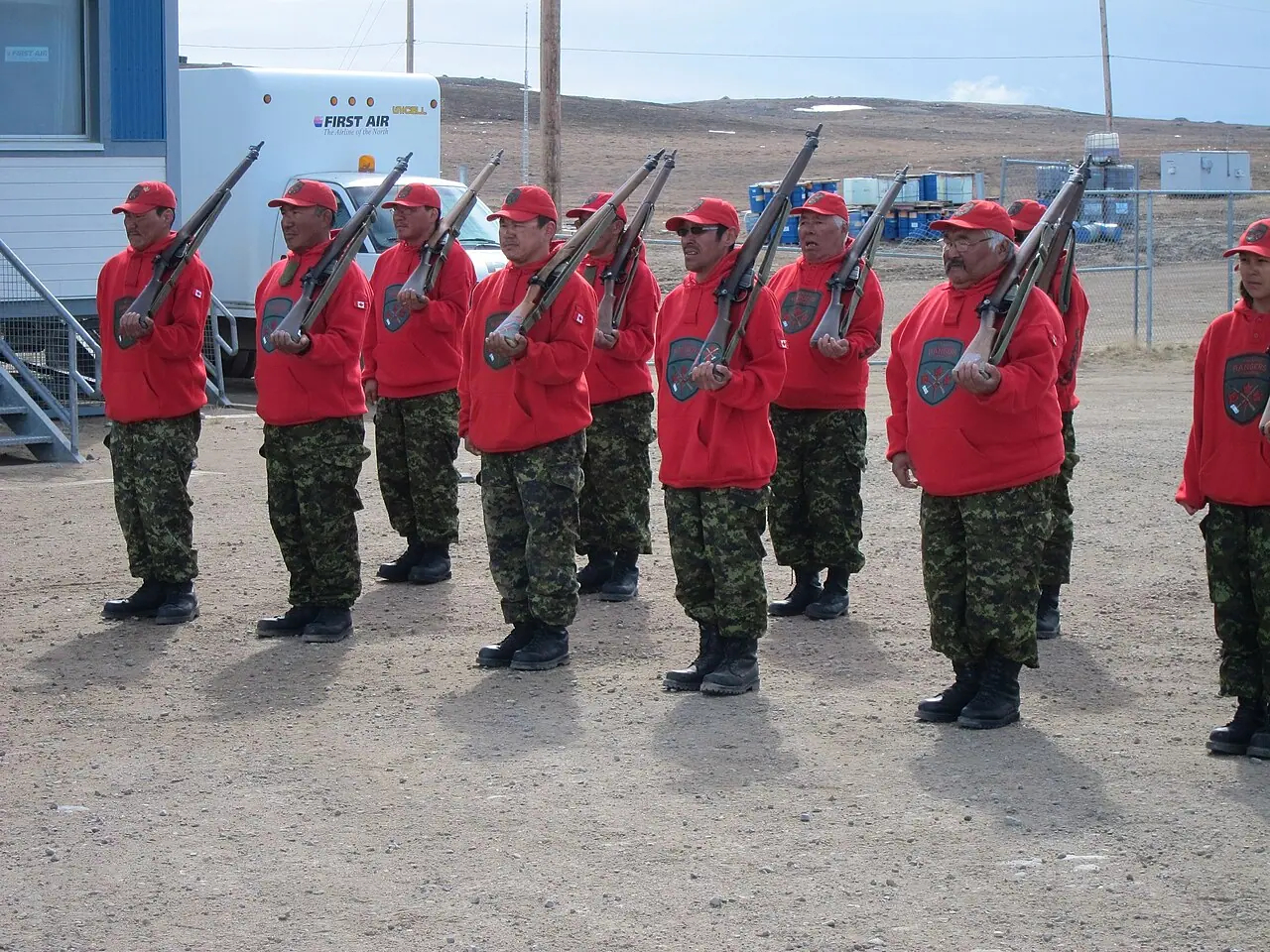
Canada is accelerating Arctic security cooperation with the five Nordic states and tightening its defense conversation with Denmark and Greenland at the same moment U.S. President Donald Trump’s public focus on acquiring Greenland has unsettled capitals around the circumpolar north.
Prime Minister Mark Carney’s government frames the shift as part of a wider bet on “middle power” coalitions that can pool procurement and share Arctic know-how when Washington is viewed in allied chancelleries as a less predictable guarantor. Officials still say the U.S. partnership through NORAD remains vital, which leaves Canadian strategy deliberately layered rather than all-or-nothing.
What changed in the Nordic channel this spring
In March 2026, Canada and Denmark, Finland, Iceland, Norway, and Sweden agreed to deepen cooperation on military procurement and to scale defense production in response to cyber and conventional threats, according to wire reporting from the leaders’ Oslo meetings and a joint readout circulated on Canadian newswires.
Canadian and Nordic leaders used the summit language to stress values-based order-building. Danish Prime Minister Mette Frederiksen told Carney, in remarks carried by the same reporting chain, that “we have to build something new” in global arrangements.
Finnish President Alexander Stubb visited Canada in April for agreements on Arctic cooperation; accounts of the trip highlighted denser leader-to-leader contact on NATO, Ukraine, and Middle East spillovers as well as polar security.
Why Greenland is studying Canada’s Rangers
Greenlandic and Danish authorities have consulted Canadian officials for roughly three years on adapting the Canadian Rangers—part-time Canadian Armed Forces members who maintain a year-round presence in remote settlements—into a Greenlandic surveillance and community-response model, according to Reuters interviews conducted during a roughly 5,000 km Canadian Ranger snowmobile patrol in Nunavut.
Canada opened a consulate in Nuuk, Greenland, in February 2026—a step the same wire report framed as another sign of warming Greenland–Canada ties.
Whitney Lackenbauer, a Trent University Arctic scholar and honorary Canadian Ranger lieutenant-colonel who has participated in the talks, told Reuters that White House rhetoric had “sped up efforts to rebuff the idea that Arctic communities need the U.S. to come in and save them,” and that Nordic–Canadian coordination was meant to carry diplomatic as well as operational weight.
How Washington and independent analysts read the pivot
A White House spokesperson, asked for comment on Arctic strategy, told Reuters the administration believes Mr Trump’s leadership has pushed allies “to recognise the need to meaningfully contribute to their own defence,” and that the United States is holding high-level technical talks with Denmark and Greenland about U.S. security interests on the island.
Canadian Foreign Minister Anita Anand was quoted saying she meets Nordic counterparts regularly on collective defense while underscoring that NORAD with the United States “remains critical.”
University of Calgary Arctic specialist Rob Huebert cautioned in the same wire package that war-fighting kit and deep Arctic logistics still lean heavily on the United States, and that Canada’s recent Nordic exercise participation had historically been modest until political friction with Washington sharpened incentives to show the flag alongside Europeans.
What practical signals come next
Watch for published procurement frameworks from the March six-country process, any Danish–Greenlandic legislation or budget lines backing a ranger corps, and Canadian Coast Guard–Danish navy coordination exercises that turn summit language into recurring presence patterns.
The Arctic is also an energy and minerals chessboard: Russian bases and Chinese investment partnerships remain the structural threat many Nordic planners emphasize even when headlines focus on transatlantic politics.
Until budgets, basing, and export controls line up with communiqués, the story stays at the intersection of diplomacy and procurement intent—important for alliance politics, but not yet a full rewrite of who patrols which fjord every week of the year.
Geography and themes
Related places and recurring themes for this story.
- Canada
- United States
- Denmark
- Diplomacy
- NATO
Suggested reading
Other stories that pair well with this one—often from the same section or on overlapping themes.
Greenlandic PM says US ambitions on controlling the territory still show no sign of changing
Jens-Frederik Nielsen is pairing warmer language about closed-door trilateral talks with the same red lines Nuuk has held since winter: no sale, no transfer of sovereignty, and deep scepticism that Washington has abandoned designs on ownership even as negotiators discuss southern bases.
Trump on Truth Social: Iran’s “clock is ticking,” move “FAST,” or “there won’t be anything left of them”
Agency-backed outlets reported on 17 May 2026 that U.S. President Donald Trump posted a capitalised ultimatum to Tehran on Truth Social amid fragile Gulf ceasefire diplomacy, quoting him verbatim as tying speed on a deal to survival while pairing the message with a reported call to Israeli Prime Minister Benjamin Netanyahu.
Germany braces as U.S. plans 5,000-troop cut after public clash with Trump over Iran
Berlin says a large American footprint stays in its interest, but officials treated a drawdown as foreseeable after alliance friction over the Middle East fight and transatlantic messaging.
Hegseth abruptly cancels 4,000-troop rotation to Poland, raising NATO reliability concerns
The U.S. defense secretary's decision to halt the scheduled nine-month deployment caught European allies off guard and follows a separate withdrawal of 5,000 troops from Germany announced weeks earlier.
Trump withholds commitment on Taiwan arms after Xi warning as U.S.–China trade headlines land
President Donald Trump told reporters he would decide on a stalled roughly $14 billion arms package “over the next fairly short period,” after Xi Jinping warned mishandling Taiwan could bring the powers into conflict—while Washington and Taipei each insisted broader policy had not flipped overnight.
Chancellor Merz and President Trump hold 'reconciliatory' phone call after weeks of friction
The two leaders seek to move past a diplomatic rift over Iran and troop withdrawals, coordinating positions ahead of the NATO summit in Ankara.
U.S. indicts Raúl Castro over 1996 plane shootdown
Federal prosecutors in Miami unsealed murder and conspiracy charges against the 94-year-old former Cuban leader for his alleged role in downing two civilian aircraft.
Aftenposten Modi Cartoon Stirs Racism Row
Aftenposten ran Halleraker’s cartoon the same day as Rossavik’s Meninger column; Red MP Rana called it racist; political editor Alstadheim told Dagbladet the symbols backed Rossavik’s point and were not meant to demean.
Trump delays Iran strike after Gulf appeal
President Donald Trump said late on 18 May 2026 in Washington that he was postponing a U.S. military strike on Iran that had been scheduled for the following day after Qatar, Saudi Arabia, and the United Arab Emirates asked for time while diplomacy continued; he also told the armed forces to stay ready for a large-scale assault if talks fail.
Havana leans on self-defense law while rejecting US drone-strike talk as intervention pretext
President Miguel Díaz-Canel framed military deterrence as a lawful shield, not a war wish, after US-facing outlets amplified an Axios-style tally of imported drones; Washington’s January national-emergency declaration on Cuba still frames the island as an extraordinary threat.
Keep exploring
Browse the full archive or return to the front page.
Sources and external links
Sources and filings our editors consulted to verify this story. External links open in a new tab.