Section World
The UK is edging closer to Europe again—without calling it rejoining
Think-tank and policy analysis of the post-2024 Labour reset describes a widening lattice of UK–EU agreements—defence industry access, sanitary and phytosanitary talks, youth and electricity files, and a path back into Erasmus+—all while ministers repeat manifesto red lines against the single market, customs union, and freedom of movement.
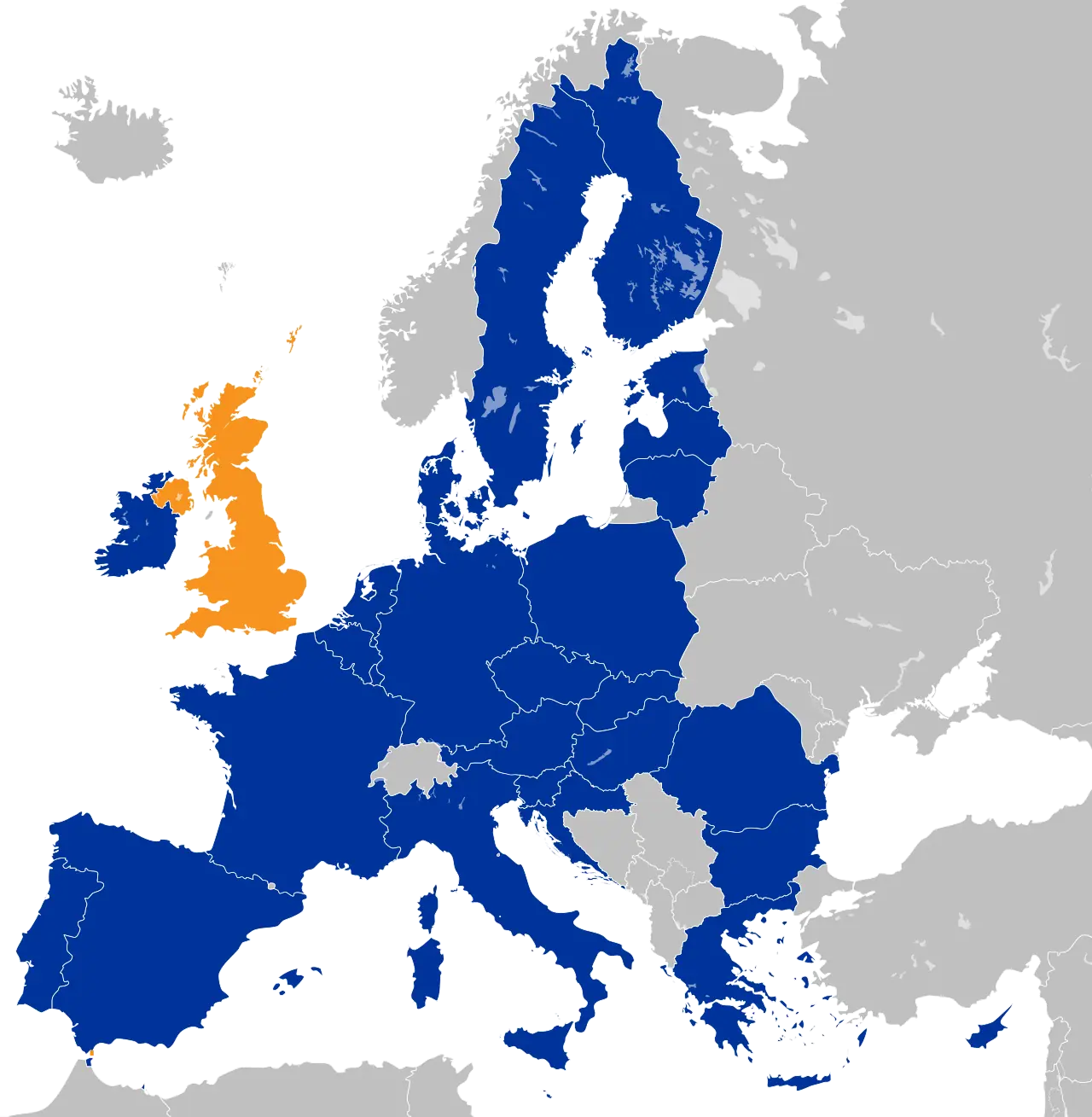
The sentence you sometimes hear in London and Brussels salons—“the UK is quietly rejoining Europe, just not calling it that”—is a metaphor, not a treaty fact. Article 49 accession is not on the Labour government’s menu; single-market membership, customs-union membership, and freedom of movement remain manifesto red lines ministers repeat in public. What is observable—documented in Centre for European Reform and Institute for Government briefings and in the May 2025 EU–UK summit paperwork—is a thickening of sectoral bridges: security and defence co-operation, food and plant-health alignment talks, energy market integration negotiations, youth-mobility files, and a political vocabulary of “reset” and “strategic partnership” that sounds more like neighbours sharing a roof repair than like 1973 re-run headlines.
That distinction matters legally and emotionally. Brexit removed automatic rights; each new layer is bargained, priced, and vulnerable to Westminster electoral swings. Treat the salon line as a shorthand for integration of functions, not for restoration of status.
What changed on paper after the 2025 London summit
The May 2025 meeting produced a joint statement, a more operational “Common Understanding” pointing to future workstreams, and a Security and Defence Partnership intended—among other things—to ease UK participation in EU defence-industrial projects, a priority when Russia’s war against Ukraine keeps European rearmament on a steep curve. Policy analysts at the Centre for European Reform summarise the summit as opening thematic tables spanning electricity-market integration, youth mobility, SAFE-style procurement access, and other items where Brussels traditionally demands non-cherry-picking discipline.
Progress is intentionally uneven: some files advance because NATO and Ukraine logistics force co-ordination; others stall where member-state industrial interests collide with UK firms’ bids, as think tanks have chronicled in arguments over loan-guarantee programmes and up-front financial asks.
Trade realism: SPS, services friction, and the 2026 TCA review
Labour entered office promising to chip away at “unnecessary barriers,” including a veterinary route better described as a sanitary and phytosanitary (SPS) agreement to align animal and plant health rules so perishable exports face fewer border surprises. EU institutions adopted a formal negotiating mandate in late 2025, letting talks start in earnest—though food industry groups and outlets such as Politico remain sceptical that consumer prices will fall neatly, warning about switching costs and third-country supply chains.
Parallel promises—mutual recognition of professional qualifications, smoother creative touring—move more slowly; CER notes cultural coalitions still complaining that post-Brexit paperwork starves venues and audiences. Meanwhile the Trade and Cooperation Agreement itself faces a 2026 implementation review and another summit window, which Institute for Government commentary frames as a hinge year: either capitals convert goodwill into signed texts, or momentum leaks back into vetoes and punitive optics left over from 2017–2020 negotiations.
Erasmus, electricity, and the symbolism of people-to-people ties
Among the most legible public wins analysts flagged heading into 2026 is UK re-entry to Erasmus+ exchanges from 2027—a programme name that still carries emotional voltage because education partnerships are visible in every constituency. Grid integration talks matter less on doorsteps but plenty in industrial competitiveness models when North Sea interconnectors and price spikes are live household issues.
None of that equals free movement; caps, fees, and insurance rules still gate who gets to study or train where. The point is narrower: both sides appear willing to price limited mobility rather than forbid it outright, which is how Swiss-style patchwork relationships historically grow.
Why the “quiet rejoin” metaphor captures mood but distorts incentives
Domestically, Reform UK polling pressure rewards sovereignty theatre; in Brussels, permanent representations remember Brexit bill standoffs and fear rewarding pick-and-mix. Starmer’s post-summit messaging has stressed independent Britain even while signing partnership language European Council leaders cast as a “new chapter,” a tension CER reads as risk-averse communications that may slow economic depth.
International tailwinds—US alliance stress under Trump-era transatlantic shocks, Canadian warnings of “rupture” in order—push London and continental capitals toward shared deterrence and sanctions habits even when trade liberalisation lags. That is alignment born of threat, not federalism.
What would falsify the metaphor quickly
A general election that elevates a hard Brexit-revisionist majority, a major SAFE-style finance impasse, or a trade war that forces UK regulators to diverge from EU standards for US market access would all snap the quiet convergence story. Watch 2026 summit communiqués for cash numbers, Erasmus implementation decrees, and SPS chapter text—paper beats vibes.
Geography and themes
Related places and recurring themes for this story.
Suggested reading
Other stories that pair well with this one—often from the same section or on overlapping themes.
Brussels Brexit veterans say a UK return would mean normal EU membership, not the old carve-outs
Georg Riekeles and Sandro Gozi, among others, describe warmth toward a future application but zero appetite to recreate bespoke opt-outs; the Commission stays on this week’s brief—July summit prep—not hypothetical accession terms.
Has Brexit really been a ‘catastrophic mistake’ for the UK?
The phrase is now political ammunition—most recently from a Labour leadership hopeful—but answering it honestly means separating rhetorical heat from official productivity modelling, from long-run polling regret, and from what voters will still tolerate if Westminster tries to reopen the 2016 choice.
Burnham vows to ‘change Labour’ through Makerfield while Starmer digs in against a leadership timetable
The Greater Manchester mayor won National Executive Committee clearance to contest Josh Simons’s former seat, told interviewers he wants to “change Labour for the better,” and used a northern summit stage to cast the byelection as a renewal mandate—without yet filing the twenty-per-cent MP nominations a formal challenge requires.
Starmer says he still wants to fight the next election and will not ‘walk away’ as Labour leadership pressure intensifies
Speaking while visiting small businesses in London on 18 May 2026, the prime minister acknowledged post–7 May losses in England, Wales, and Scotland, insisted his focus had drifted in the previous ten days, and ruled out publishing a resignation timetable tied to Andy Burnham’s Makerfield bye-election.
Tens of thousands join Tommy Robinson’s ‘Unite the Kingdom’ march to Parliament Square as London polices rival rallies
On Saturday 16 May 2026, Stephen Yaxley-Lennon, the activist widely known as Tommy Robinson, drew a large crowd to central London for the Unite the Kingdom demonstration while the Metropolitan Police ran one of its biggest recent public-order operations to keep it apart from a same-day Nakba Day march; the force estimated roughly 60,000 at Robinson’s event and said 31 people were arrested across the two protests, with senior officers warning prosecutors would pursue inflammatory chanting.
Wes Streeting resigns as Health Secretary, citing Starmer's 'lack of vision'
In a blistering resignation letter, Streeting warns of a 'vacuum' at the heart of government following Labour's heavy losses in the 2026 local elections.
Cooper presses Gulf partners to reopen Hormuz routes farmers need for fertiliser
Britain’s foreign secretary has tied Iran’s disruption of the strait to fertiliser reaching African fields and wider prosperity, while parallel reporting documents urea spikes, stuck cargoes, and UN hunger modelling that treat the next planting cycles as the clock that matters.
Trump delays Iran strike after Gulf appeal
President Donald Trump said late on 18 May 2026 in Washington that he was postponing a U.S. military strike on Iran that had been scheduled for the following day after Qatar, Saudi Arabia, and the United Arab Emirates asked for time while diplomacy continued; he also told the armed forces to stay ready for a large-scale assault if talks fail.
UK firms freeze capex and hiring plans as Hormuz-linked costs bite mid-market balance sheets
A BDO snapshot of five hundred mid-market companies finds three in five shelving or cancelling investment while Brent-style crude holds above one hundred dollars; parallel CIPD work shows fifty-eight per cent of employers putting cost control ahead of expansion with redundancy risks ticking up.
IMF nudges up its 2026 UK growth call while flagging Hormuz and home-grown risks
Article IV staff now pencil about 1.0 per cent GDP growth for 2026 after a modest upward revision from April’s World Economic Outlook track, yet they still warn that a drawn-out Middle East conflict, volatile energy markets, and domestic hesitation could sap consumption and investment.
Keep exploring
Browse the full archive or return to the front page.
Sources and external links
Sources and filings our editors consulted to verify this story. External links open in a new tab.
- Will Keir Starmer’s ‘EU reset’ deliver in 2026? (Institute for Government) (opens in a new tab)— Institute for Government