Section World
Hegseth abruptly cancels 4,000-troop rotation to Poland, raising NATO reliability concerns
The U.S. defense secretary's decision to halt the scheduled nine-month deployment caught European allies off guard and follows a separate withdrawal of 5,000 troops from Germany announced weeks earlier.
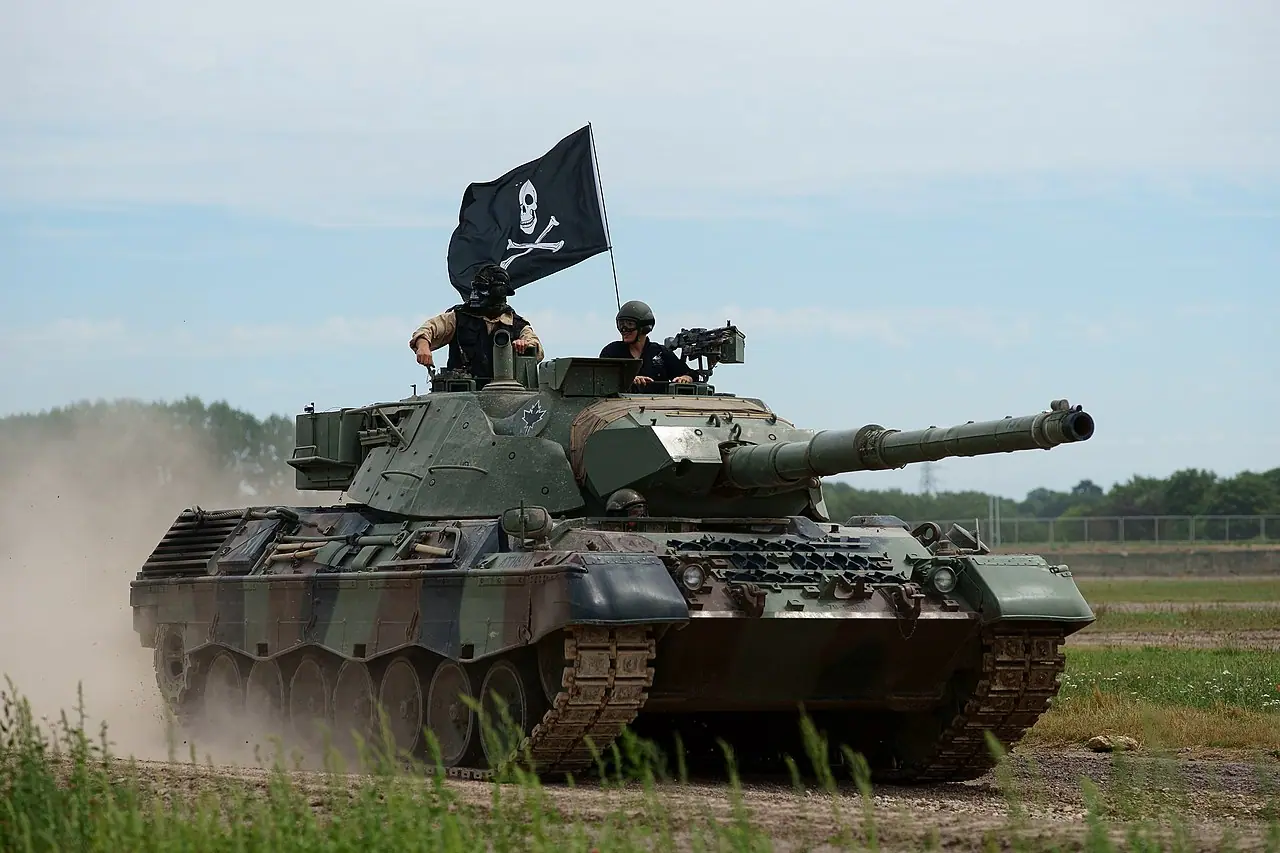
U.S. Defense Secretary Pete Hegseth abruptly cancelled a planned rotation of approximately 4,000 U.S. troops to Poland in mid-May 2026, a decision that caught Pentagon staff, allied governments, and lawmakers off guard. Some of the troops and their equipment had already begun moving toward Poland for the scheduled nine-month deployment before the order to halt was issued.
The cancellation follows Hegseth's separate announcement on May 1, 2026, that the U.S. would withdraw roughly 5,000 troops from Germany. Together, the two moves represent the largest reduction of American forward forces in Europe in years and have reignited a sharp debate about the reliability of U.S. security commitments to NATO allies on Russia's doorstep.
What was cancelled and how it happened
The cancelled rotation was a standard nine-month deployment under the U.S. Army's rotational presence framework, which has kept thousands of American troops cycling through Poland since Russia's full-scale invasion of Ukraine in 2022. The troops were to operate alongside Polish forces and serve as a visible deterrent on NATO's eastern flank.
Pentagon officials stated publicly that the decision followed a 'comprehensive, multilayered process' involving senior military leaders, pushing back against characterisations of it as sudden. However, multiple reports indicated that the cancellation blindsided mid-level Pentagon planners and that European allies were not given advance notice through normal diplomatic channels.
The broader pattern: Europe drawdown under the Trump administration
The Poland cancellation is not an isolated event. The Trump administration, with Hegseth driving defence policy, has been reassessing the scale and cost of U.S. military commitments in Europe since early 2025. Key elements of this reassessment include:
- Germany withdrawal (May 1, 2026): An announced drawdown of ~5,000 troops from bases in Germany, framed partly as a cost-saving measure and partly as leverage to pressure European NATO members to increase their own defence spending.
- Burden-sharing pressure: The administration has publicly linked troop presence to European support for U.S. foreign policy positions, including allied postures on the U.S.-Iran conflict.
- Diplomatic friction: The moves have arrived without the extended consultations typical of major alliance rebalancing, creating friction with governments in Warsaw, Berlin, and Brussels.
Poland's official response
Polish officials took a notably measured tone in public. Government spokespeople stated that the cancellation did not affect Poland's security and that U.S. troops continue to operate in Poland on a rotational basis through other frameworks and bilateral agreements. Warsaw has been one of the most consistent advocates for a strong U.S. forward presence in Europe and has invested heavily in its bilateral defence relationship with Washington, including a major increase in its own military spending to over 4% of GDP.
Whether Poland's public equanimity reflects a private deal with Washington or a strategic decision to avoid open confrontation with an unpredictable partner in the White House remains unclear. Polish officials declined to say whether they had been given advance warning before the announcement.
Implications for NATO deterrence
The strategic significance of the cancellation extends well beyond the 4,000 troops themselves. The rotational presence in Poland has served multiple functions:
- Trip-wire deterrence: Even a modest forward presence signals that an attack on Poland would immediately involve U.S. casualties, triggering Article 5 of the NATO treaty. Reducing that presence, even temporarily, weakens the psychological component of deterrence against Russian adventurism.
- Operational readiness: Troops on rotation in Poland train with Polish forces, learn the terrain, and maintain logistical infrastructure. Gaps in rotation reduce interoperability and slow the Alliance's ability to surge forces in a crisis.
- Alliance cohesion: NATO's effectiveness depends on mutual confidence. Unannounced or poorly explained reductions by the U.S. — the Alliance's dominant military power — undermine that confidence, particularly among the Baltic states and Poland which sit closest to Russian forces.
Congressional and expert reaction
Reaction in Washington was divided largely along partisan lines, with Democratic lawmakers and several senior Republicans expressing alarm. Foreign policy analysts warned that the signal sent to both Moscow and nervous NATO members could erode the deterrence architecture built up since 2022.
Critics argued that the moves weaken the credibility of Article 5 — the Alliance's mutual defence guarantee — at precisely the moment when Russia is still prosecuting a war in Ukraine and testing Western resolve. Supporters of the administration argued that the U.S. cannot sustain indefinite forward deployments and that Europe must shoulder more of its own defence burden.
What happens next
The Pentagon has not publicly confirmed whether the cancelled rotation will be rescheduled, replaced with a smaller deployment, or discontinued. European allies are pressing Washington for clarification through NATO consultative channels, but no joint statement has been issued.
The moves are expected to feature prominently at the upcoming NATO ministerial meetings, where European defence ministers will seek binding reassurances about the Alliance's eastern flank. The degree to which the U.S. is willing to give those reassurances — and in what form — will shape alliance dynamics through the rest of 2026.
Geography and themes
Related places and recurring themes for this story.
- NATO
- US Military
- Poland
- United States
About the author
NewsTenet deskReporting desk14 years' experience
Staff-edited wire and field notes turned into clear explainers—signed when a single reporter owns the file.
Focus areas
- World affairs
- Policy shifts
- Geopolitical risk
Suggested reading
Other stories that pair well with this one—often from the same section or on overlapping themes.
Canada tightens Arctic and Nordic defense links as Greenland studies a Ranger-style patrol force
After months of U.S. rhetoric over Greenland and strained North American politics, Ottawa is deepening military procurement talks with Denmark, Finland, Iceland, Norway, and Sweden while Nuuk and Copenhagen consult Canada on adapting the Canadian Rangers model for local surveillance.
Two Navy Growlers collide mid-air at Mountain Home air show; all four crew eject safely
Two U.S. Navy EA-18G Growlers struck each other during an aerial demonstration on the second day of Gunfighter Skies at Mountain Home Air Force Base, Idaho. Officials said all four aviators ejected and were being evaluated as the base locked down and investigators opened a review.
Germany braces as U.S. plans 5,000-troop cut after public clash with Trump over Iran
Berlin says a large American footprint stays in its interest, but officials treated a drawdown as foreseeable after alliance friction over the Middle East fight and transatlantic messaging.
Chancellor Merz and President Trump hold 'reconciliatory' phone call after weeks of friction
The two leaders seek to move past a diplomatic rift over Iran and troop withdrawals, coordinating positions ahead of the NATO summit in Ankara.
U.S. indicts Raúl Castro over 1996 plane shootdown
Federal prosecutors in Miami unsealed murder and conspiracy charges against the 94-year-old former Cuban leader for his alleged role in downing two civilian aircraft.
Trump delays Iran strike after Gulf appeal
President Donald Trump said late on 18 May 2026 in Washington that he was postponing a U.S. military strike on Iran that had been scheduled for the following day after Qatar, Saudi Arabia, and the United Arab Emirates asked for time while diplomacy continued; he also told the armed forces to stay ready for a large-scale assault if talks fail.
Havana leans on self-defense law while rejecting US drone-strike talk as intervention pretext
President Miguel Díaz-Canel framed military deterrence as a lawful shield, not a war wish, after US-facing outlets amplified an Axios-style tally of imported drones; Washington’s January national-emergency declaration on Cuba still frames the island as an extraordinary threat.
Greenlandic PM says US ambitions on controlling the territory still show no sign of changing
Jens-Frederik Nielsen is pairing warmer language about closed-door trilateral talks with the same red lines Nuuk has held since winter: no sale, no transfer of sovereignty, and deep scepticism that Washington has abandoned designs on ownership even as negotiators discuss southern bases.
India says Russian crude buys track commercial logic—not Washington’s waiver calendar
Petroleum ministry joint secretary Sujata Sharma told reporters on 18 May 2026 that imports ran before, during, and after the latest U.S. Treasury carve-out, while state fuel retailers still bleed roughly ₹750 crore a day even after a ₹3-per-litre pump increase.
NATO’s largest European special-forces rehearsal opens as Trojan Footprint 2026
Roughly three thousand American and allied commandos from twenty-three countries are training from the Baltic rim down through the Balkans and into the Mediterranean and Black Sea basins—led out of Stuttgart by U.S. Special Operations Command Europe with NATO’s special-operations headquarters in the same chain of command.
Keep exploring
Browse the full archive or return to the front page.
Sources and external links
Sources and filings our editors consulted to verify this story. External links open in a new tab.