Section World
U.S. indicts Raúl Castro over 1996 plane shootdown
Federal prosecutors in Miami unsealed murder and conspiracy charges against the 94-year-old former Cuban leader for his alleged role in downing two civilian aircraft.
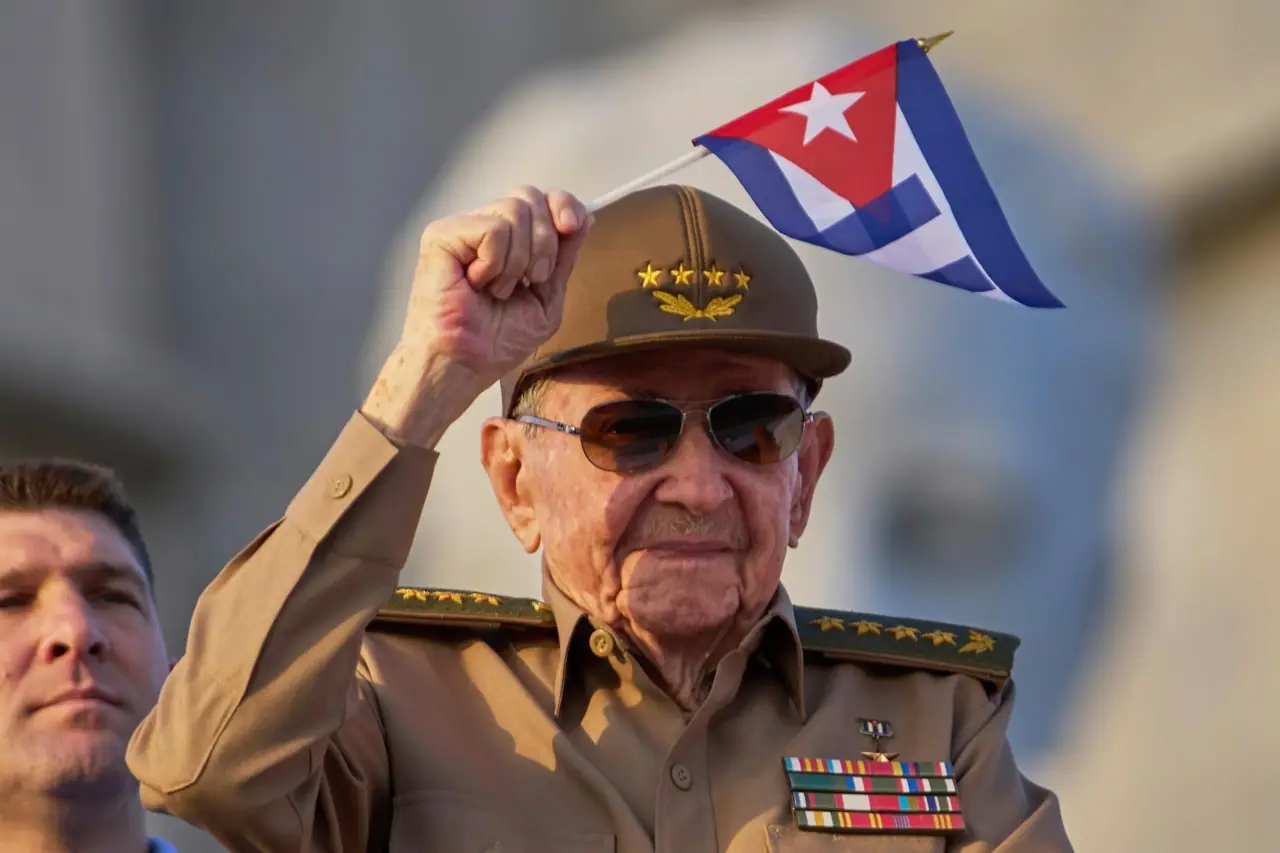
Raúl Castro, 94, served as Cuba's president from 2008 to 2018 and led the Communist Party until 2021.
Federal prosecutors in Miami on Wednesday unsealed an indictment charging former Cuban President Raúl Castro with conspiracy and murder for his alleged role in authorizing the 1996 shootdown of two civilian planes, escalating the Trump administration's pressure campaign against Havana.
The 20-page indictment, which a judge approved for unsealing, alleges that Castro — then Cuba's defense minister — met with military leaders in January 1996 and authorized "decisive and deadly action" against aircraft operated by the Florida-based exile group Brothers to the Rescue.
Acting Attorney General Todd Blanche announced the charges at a press conference in Miami. "For nearly 30 years, the families of four murdered Americans have waited for justice," Blanche said. He added that "this isn't a show indictment" and that the Justice Department intends to try the case.
The charges stem from the February 24, 1996 incident in which Cuban MiG-29 fighter jets shot down two unarmed Cessna aircraft over the Florida Straits, killing three U.S. citizens and one permanent resident. The United Nations' International Civil Aviation Organization found that the planes were outside Cuban airspace when attacked, a finding Havana disputes.
What the indictment alleges
The indictment charges Castro, 94, with one count of conspiracy to kill U.S. nationals, four counts of murder, and two counts of destruction of aircraft. Prosecutors allege that "all orders to kill by the Cuban military traveled through [the armed forces'] chain of command with [Raúl] Castro and Fidel Castro as the final decision makers."
Five additional defendants — identified as Cuban fighter pilots — face related charges. Lorenzo Alberto Perez-Perez, one of the pilots allegedly responsible for firing on the planes, was previously indicted in 2003 alongside other officials, though that case never reached trial. Four other pilots are charged with conspiracy for allegedly conducting training missions to intercept civilian aircraft before the shootdown.
The indictment also describes an espionage operation known as Operation Scorpion, in which Cuban intelligence allegedly infiltrated Brothers to the Rescue through the Wasp Network spy ring. The document claims that accused double agent Juan Pablo Roque falsely told the FBI the group would not be flying on the weekend of the attack, and that Cuban officials instructed Roque and another individual not to board the planes that weekend. Roque died in 2025.
Cuban government response
Cuban Foreign Minister Bruno Rodríguez Parrilla condemned the indictment on X, calling the allegations "illegitimate and illegal" and repeating Cuba's position that the shootdown occurred in self-defense. He called Brothers to the Rescue a "terrorist" group and accused the United States of trying to justify "intensified aggression against the Cuban people."
Carlos F. de Cossío, Cuba's deputy foreign minister, posted on social media that Secretary of State Marco Rubio "lies" about Cuba because he "knows full well that there is no excuse for such a cruel and ruthless aggression." The posts came after Rubio issued a video message urging the Cuban people to choose "a new path."
Context of U.S.-Cuba tensions
The indictment lands amid severe tensions between Washington and Havana. The Trump administration has threatened tariffs against countries shipping oil to Cuba, contributing to energy shortages and grid failures on the island. President Donald Trump posted on Truth Social last week that "Cuba is asking for help, and we are going to talk!!!"
Despite the public hostility, American officials have visited Havana for talks at least twice this year. CIA Director John Ratcliffe met with Castro's grandson, Raúl Guillermo Rodríguez Castro, in Havana last week. According to a U.S. intelligence official, Ratcliffe offered Cuban leaders "a genuine opportunity for collaboration" to stabilize the economy, while warning that the window would not remain open indefinitely.
Secretary Rubio, the son of Cuban immigrants, said in his Wednesday video message that "the only thing standing in the way of a better future are those who control your country." He spoke hours after Blanche declined to detail how U.S. authorities might bring Castro to trial, saying only that "there's all kinds of different ways" to apprehend defendants abroad.
Castro served as Cuba's president from 2008 to 2018 and led the Communist Party until 2021. Cuba does not extradite nationals to the United States, and Castro is widely believed to remain influential behind the scenes despite his formal retirement.
The 1996 shootdown hardened U.S. sanctions against Cuba and led to convictions of several Wasp Network operatives in federal court, including alleged leader Gerardo Hernández, who received a life sentence for murder conspiracy before returning to Cuba in a 2014 prisoner exchange.
Blanche said the indictment sends a message that "the United States and President Trump does not and will not forget its citizens." Whether Castro ever appears in a U.S. courtroom remains uncertain.
Geography and themes
Related places and recurring themes for this story.
- United States
- Cuba
Suggested reading
Other stories that pair well with this one—often from the same section or on overlapping themes.
Havana leans on self-defense law while rejecting US drone-strike talk as intervention pretext
President Miguel Díaz-Canel framed military deterrence as a lawful shield, not a war wish, after US-facing outlets amplified an Axios-style tally of imported drones; Washington’s January national-emergency declaration on Cuba still frames the island as an extraordinary threat.
United States reported to weigh indictment of Raúl Castro over 1996 Brothers to the Rescue shootdown
Syndicated May 2026 accounts attributed to a Justice Department official described prosecutors moving toward charges tied to the downing of two unarmed aircraft on 24 February 1996; a grand jury and any custody path would still face high legal and diplomatic hurdles.
Trump delays Iran strike after Gulf appeal
President Donald Trump said late on 18 May 2026 in Washington that he was postponing a U.S. military strike on Iran that had been scheduled for the following day after Qatar, Saudi Arabia, and the United Arab Emirates asked for time while diplomacy continued; he also told the armed forces to stay ready for a large-scale assault if talks fail.
Greenlandic PM says US ambitions on controlling the territory still show no sign of changing
Jens-Frederik Nielsen is pairing warmer language about closed-door trilateral talks with the same red lines Nuuk has held since winter: no sale, no transfer of sovereignty, and deep scepticism that Washington has abandoned designs on ownership even as negotiators discuss southern bases.
India says Russian crude buys track commercial logic—not Washington’s waiver calendar
Petroleum ministry joint secretary Sujata Sharma told reporters on 18 May 2026 that imports ran before, during, and after the latest U.S. Treasury carve-out, while state fuel retailers still bleed roughly ₹750 crore a day even after a ₹3-per-litre pump increase.
NATO’s largest European special-forces rehearsal opens as Trojan Footprint 2026
Roughly three thousand American and allied commandos from twenty-three countries are training from the Baltic rim down through the Balkans and into the Mediterranean and Black Sea basins—led out of Stuttgart by U.S. Special Operations Command Europe with NATO’s special-operations headquarters in the same chain of command.
Canada tightens Arctic and Nordic defense links as Greenland studies a Ranger-style patrol force
After months of U.S. rhetoric over Greenland and strained North American politics, Ottawa is deepening military procurement talks with Denmark, Finland, Iceland, Norway, and Sweden while Nuuk and Copenhagen consult Canada on adapting the Canadian Rangers model for local surveillance.
Two Navy Growlers collide mid-air at Mountain Home air show; all four crew eject safely
Two U.S. Navy EA-18G Growlers struck each other during an aerial demonstration on the second day of Gunfighter Skies at Mountain Home Air Force Base, Idaho. Officials said all four aviators ejected and were being evaluated as the base locked down and investigators opened a review.
Why America feels split—and why the world can’t agree on the United States
Census and World Bank population lines, Pew’s partisan and trust batteries, inequality in the World Bank Gini series, and Pew’s Spring 2024 global snapshot: one country’s domestic fracture sitting next to a median foreign public that still tilts favourable—just not everywhere.
Trump on Truth Social: Iran’s “clock is ticking,” move “FAST,” or “there won’t be anything left of them”
Agency-backed outlets reported on 17 May 2026 that U.S. President Donald Trump posted a capitalised ultimatum to Tehran on Truth Social amid fragile Gulf ceasefire diplomacy, quoting him verbatim as tying speed on a deal to survival while pairing the message with a reported call to Israeli Prime Minister Benjamin Netanyahu.
Keep exploring
Browse the full archive or return to the front page.
Sources and external links
Sources and filings our editors consulted to verify this story. External links open in a new tab.