Section World
IMF nudges up its 2026 UK growth call while flagging Hormuz and home-grown risks
Article IV staff now pencil about 1.0 per cent GDP growth for 2026 after a modest upward revision from April’s World Economic Outlook track, yet they still warn that a drawn-out Middle East conflict, volatile energy markets, and domestic hesitation could sap consumption and investment.
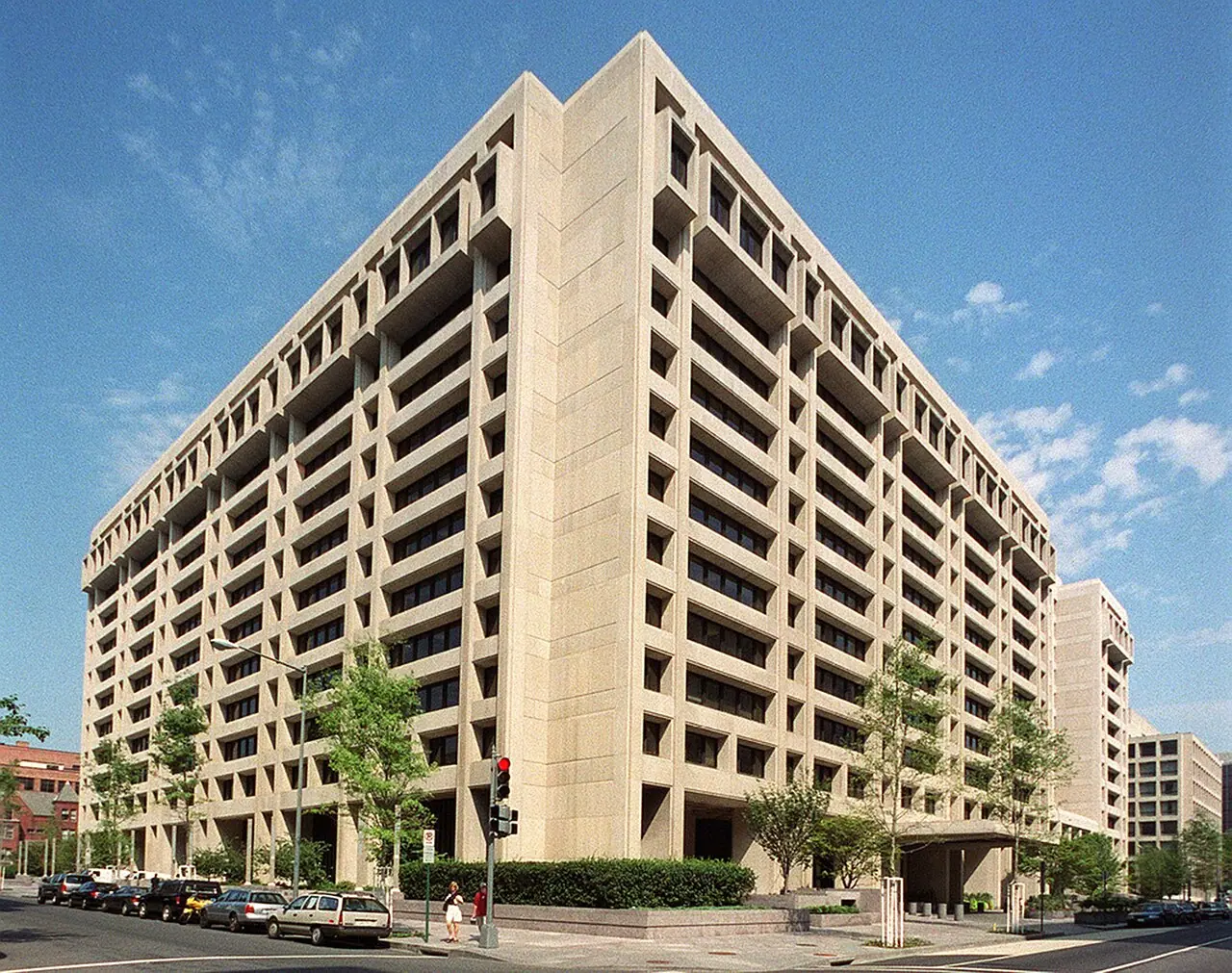
International Monetary Fund staff closed their 2026 Article IV mission on the United Kingdom with a modestly brighter headline for growth yet a familiarly stern risk chapter. The mission’s published line is that output growth should slow to about 1.0% in 2026—revised upward compared with the April World Economic Outlook—before recovering gradually once imported energy inflation fades. That single decimal change matters politically because it signals the Fund thinks the economy entered the latest global shock with more domestic momentum than feared, even while headline risks stay skewed to the downside.
The same release that carries the revision also repeats why a net energy importer cannot treat the Middle East as someone else’s war: prolonged conflict keeps open the possibility of higher energy and food prices feeding volatility in household budgets and corporate capex plans. Staff explicitly add “domestic uncertainty” as a separate amplifier that could interact with an already febrile global backdrop to delay consumption and investment decisions—language that sits alongside, rather than adjudicates, Westminster’s own dramas in the week the statement landed.
What hard data already told the models
Official first-quarter national accounts showed the UK economy growing 0.6% between January and March 2026, with services-led support from areas such as retail and construction helping explain why desk models were revisiting pessimistic spring tracks. The Fund’s narrative leans on that momentum as evidence of resilience into the shock, not as proof that structural productivity headaches have disappeared.
The step is modest in macro terms—from about 0.8% in the April World Economic Outlook track to roughly 1.0% now—but large in symbolism for a government that has pinned its credibility on growth after a volatile spring.
Monetary and fiscal homework still on the checklist
On monetary policy, the mission’s published guidance aligns with a steady-hand interpretation of Bank Rate at 3.75%: staff argue that holding through 2026 should be enough, conditional on the energy path, to shepherd headline inflation back toward the 2% target by the end of 2027 after a temporary lift from higher energy prices. That is not a guarantee the Monetary Policy Committee will obey—MPC members answer to domestic mandates—but it frames what international technocrats think is sufficient if fiscal policy does not lurch.
Fiscally, the concluding statement welcomes the government’s medium-term deficit-reduction framing while warning that demographic, defence, and climate spending pressures over the next two decades will collide with “limited” room for further untargeted tax increases unless deeper reforms arrive. Any household support for energy bills should be narrow and time-limited, staff argue, a standard IMF prescription that collides with retail politics whenever pump prices jump. Downstream retail politics also surfaced in domestic coverage noting possible cancellation of a scheduled 5p fuel-duty step in September—policy detail that can move both inflation and revenue baselines if adopted.
Why upgrades and warnings can coexist
Forecast upgrades in wartime are rarely unconditional celebrations; they are conditional mean paths that assume ports stay open, credit spreads do not seize, and politics do not freeze capital spending. The Fund’s mission chief also emphasised that investors now price predictable policy more highly when public debt service absorbs a rising share of budgets—an argument for continuity in fiscal institutions even when electoral arithmetic wobbles.
For readers, the practical upshot is threefold: growth this year looks fractionally better on paper than the April Outlook suggested, the error bands around energy and politics are still wide, and the IMF’s own advice is to pair cautious demand management with targeted relief rather than open-ended subsidies—exactly the trade-off chancellors tend to revisit whenever a forecast revision buys them forty-eight hours of better headlines.
Geography and themes
Related places and recurring themes for this story.
Suggested reading
Other stories that pair well with this one—often from the same section or on overlapping themes.
UK firms freeze capex and hiring plans as Hormuz-linked costs bite mid-market balance sheets
A BDO snapshot of five hundred mid-market companies finds three in five shelving or cancelling investment while Brent-style crude holds above one hundred dollars; parallel CIPD work shows fifty-eight per cent of employers putting cost control ahead of expansion with redundancy risks ticking up.
Has Brexit really been a ‘catastrophic mistake’ for the UK?
The phrase is now political ammunition—most recently from a Labour leadership hopeful—but answering it honestly means separating rhetorical heat from official productivity modelling, from long-run polling regret, and from what voters will still tolerate if Westminster tries to reopen the 2016 choice.
Cooper presses Gulf partners to reopen Hormuz routes farmers need for fertiliser
Britain’s foreign secretary has tied Iran’s disruption of the strait to fertiliser reaching African fields and wider prosperity, while parallel reporting documents urea spikes, stuck cargoes, and UN hunger modelling that treat the next planting cycles as the clock that matters.
Brussels Brexit veterans say a UK return would mean normal EU membership, not the old carve-outs
Georg Riekeles and Sandro Gozi, among others, describe warmth toward a future application but zero appetite to recreate bespoke opt-outs; the Commission stays on this week’s brief—July summit prep—not hypothetical accession terms.
India’s energy stress deepens as Hormuz risk drains crude tanks and forces pump-price catch-up
Commercial and strategic crude pools tracked by analytics houses have slid about fifteen per cent since late February while refiners keep runs high; Delhi is now bridging the gap with larger Atlantic and Russian-linked programmes, excise sacrifices, citizen conservation appeals, and the first visible retail increases after months of political patience.
Manhunt in Norfolk after reports two teenage girls were raped on Great Yarmouth seafront
Norfolk Constabulary says it was called to South Beach Parade just after midnight on 16 May 2026; one man in his 30s is in custody after a Northamptonshire arrest while detectives hunt a second male suspect and ask witnesses to quote crime reference 36/34665/26.
India says Russian crude buys track commercial logic—not Washington’s waiver calendar
Petroleum ministry joint secretary Sujata Sharma told reporters on 18 May 2026 that imports ran before, during, and after the latest U.S. Treasury carve-out, while state fuel retailers still bleed roughly ₹750 crore a day even after a ₹3-per-litre pump increase.
UK fields low-cost APKWS on Gulf Typhoons to blunt Shahed-style drone economics
Laser-guided 70mm rockets are reaching operational Typhoon loadsheets in weeks rather than years so interceptors can sit closer to the price of the one-way airframes they are meant to knock down—while ministers still have to balance magazine depth, basing access, and the rest of the regional air-defence stack.
Why America feels split—and why the world can’t agree on the United States
Census and World Bank population lines, Pew’s partisan and trust batteries, inequality in the World Bank Gini series, and Pew’s Spring 2024 global snapshot: one country’s domestic fracture sitting next to a median foreign public that still tilts favourable—just not everywhere.
Why China’s ageing curve is squeezing workers, pensions, and property at the same time
National Bureau of Statistics year-end 2024 tables alongside UN World Population Prospects 2024 and World Bank fertility prints: what “demographic crisis” means in workers, elders, yuan growth lines, and housing—not cable-news slogans.
Keep exploring
Browse the full archive or return to the front page.
Sources and external links
Sources and filings our editors consulted to verify this story. External links open in a new tab.
- United Kingdom: Staff Concluding Statement of the 2026 Article IV Mission (IMF) (opens in a new tab)— International Monetary Fund
- GDP first quarterly estimate, UK: January to March 2026 (Office for National Statistics) (opens in a new tab)— Office for National Statistics