Section World
India’s energy stress deepens as Hormuz risk drains crude tanks and forces pump-price catch-up
Commercial and strategic crude pools tracked by analytics houses have slid about fifteen per cent since late February while refiners keep runs high; Delhi is now bridging the gap with larger Atlantic and Russian-linked programmes, excise sacrifices, citizen conservation appeals, and the first visible retail increases after months of political patience.
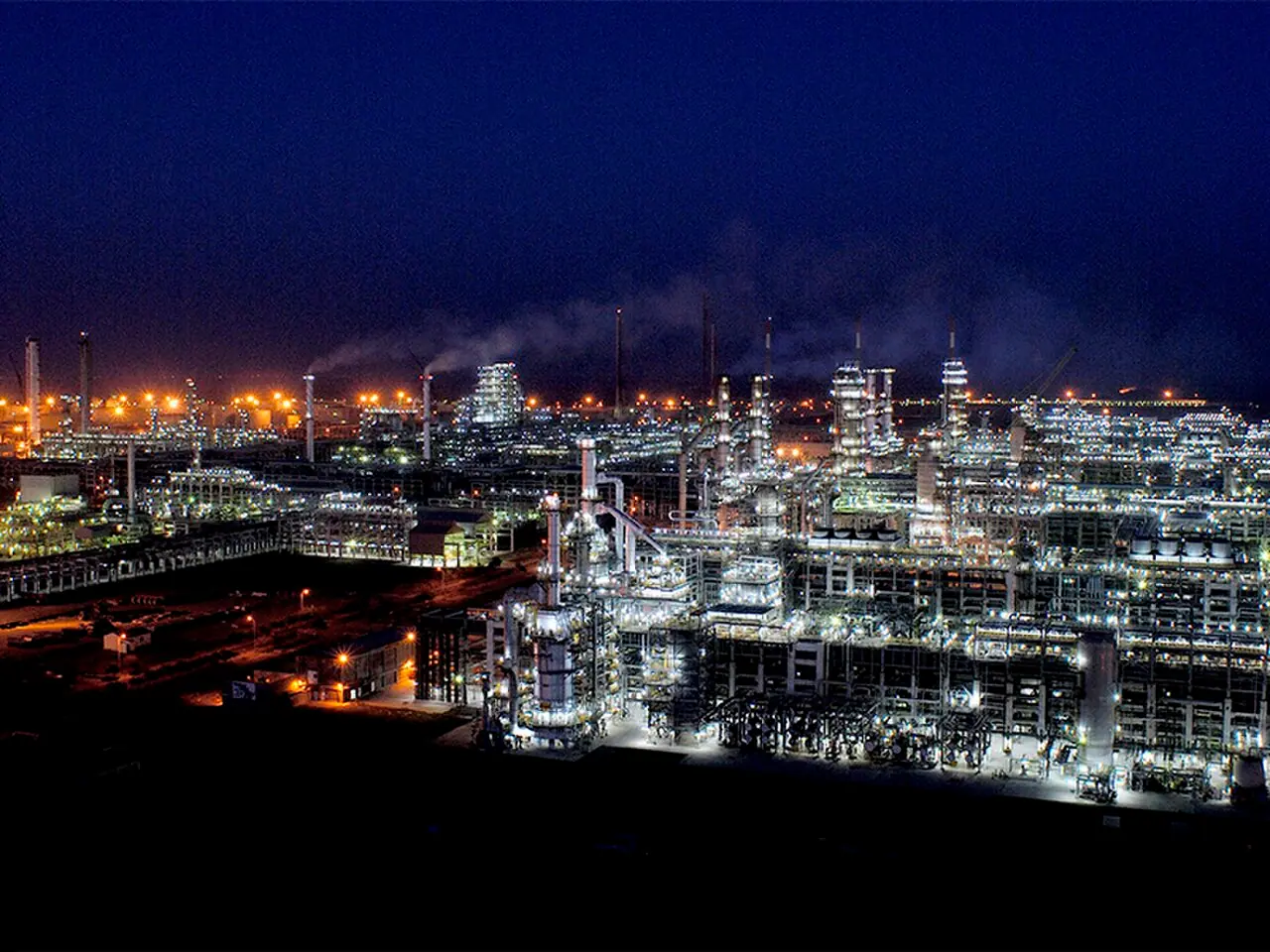
India entered the late-May 2026 news cycle carrying the same structural fact that framed every prior oil shock: it buys roughly nine-tenths of the crude it burns, and a large share of the cheapest historical pathways still threaded through the Strait of Hormuz until February’s widening conflict forced tankers onto longer routes, costlier insurance, and politically selective suppliers.
The difference this time is measurable in tanks, not just in headlines—commodity-tracker estimates quoted in domestic business coverage put combined strategic, refinery, and commercial crude inventories near 91 million barrels in mid-May, down from about 107 million at the end of February, a decline of about 15% while plants reportedly kept utilisation high by eating storage rather than cutting runs.
At the rule-of-thumb consumption pace of near five million barrels a day that same reporting cites, ninety-one million barrels is only about eighteen days of cover if you ignore cargoes already contracted on the water—hence the public reassurance exercise in which petroleum ministry briefings argue for a much longer effective horizon once floating storage and pipeline volumes are folded in. The honest macro picture is messier: seaborne imports have averaged nearer four and a half million barrels per day for the past ten weeks versus almost five million before the war, according to analyst commentary carried alongside the inventory tables, which means the system is living on bridging cargoes, diplomatic expeditions, and whatever discount barrels still clear compliance screens.
From hidden subsidy to visible pump pass-through
For weeks, state retailers absorbed world prices that had re-priced on Hormuz risk, producing the kind of daily under-recovery figures petroleum officials now discuss in the high hundreds of crore of rupees. A mid-May ₹3-per-litre increase in petrol and diesel list prices—lifting representative capital-city prints to about ₹97.77 and ₹90.67 respectively in wire copy—marks the political decision that the cushion could not widen further without damaging balance sheets or credit ratings.
The same policy window brought softer public-morale messaging: appeals for voluntary work-from-home where possible, denser public-transport use, and even discretionary curbs on gold purchases, framed as foreign-exchange patriotism rather than rationing. Delhi’s regional government layered its own administrative fuel-saving plan—mandating two remote-work days each week for desk-class public servants—showing how the centre’s narrative cascades into state budgets that also buy diesel for buses and ambulances.
Why global stock draws make India’s problem harder to warehouse
International energy monitors quoted in the Indian press noted enormous two-month global inventory withdrawals—on the order of one hundred twenty-nine million barrels in March and another one hundred seventeen million in April—which shrink the pool of discretionary barrels that might otherwise float toward South Asia on price alone. When everyone is drawing, spot differentials spike and term suppliers tighten destination clauses.
New Delhi’s response has therefore been diplomatic as much as fiscal: accelerated talks with Gulf exporters on alternative delivery routes, headline agreements with partners such as the United Arab Emirates on longer-term oil and gas cooperation, and continued diversification toward Atlantic and Russian-linked grades that do not solve Hormuz physics but do change the country-weight inside the import basket. None of that removes voltage from the grid or diesel from farm pumps; it only buys time until either the strait reopens in a trader-trusted way or domestic demand softens enough to match constrained supply.
What could still go wrong faster than forecasts update
Refinery run cuts remain the relief valve if imports stay soft while inventories bleed—a step governments avoid because it hits excise revenue and export product earnings simultaneously. A second risk channel is currency: a weaker rupee magnifies every dollar invoice the moment hedges roll. A third is social: India’s protests tend not when oil is expensive globally but when list prices jump locally after an election-quiet period, a sequencing opposition parties were already highlighting in cross-border coverage.
Energy crises in large democracies rarely end in single hero projects; they decay or resolve across months of tank levels, monsoon diesel demand, and whatever truce eventually alters tanker insurance in the Gulf. Until then, the operative word is not “shock” but “squeeze”—chronic, unevenly distributed, and visible first in stock curves and corporate working capital, only later in parliamentary rhetoric.
Geography and themes
Related places and recurring themes for this story.
Suggested reading
Other stories that pair well with this one—often from the same section or on overlapping themes.
UK firms freeze capex and hiring plans as Hormuz-linked costs bite mid-market balance sheets
A BDO snapshot of five hundred mid-market companies finds three in five shelving or cancelling investment while Brent-style crude holds above one hundred dollars; parallel CIPD work shows fifty-eight per cent of employers putting cost control ahead of expansion with redundancy risks ticking up.
India says Russian crude buys track commercial logic—not Washington’s waiver calendar
Petroleum ministry joint secretary Sujata Sharma told reporters on 18 May 2026 that imports ran before, during, and after the latest U.S. Treasury carve-out, while state fuel retailers still bleed roughly ₹750 crore a day even after a ₹3-per-litre pump increase.
Why India’s megascale still strains water, cities, and budgets in the 2020s
World Population Prospects, World Bank water briefs, and Indian household-survey tables in one place: the measurable story of the world’s largest national population colliding with monsoon hydrology, irrigation demand, and urban pipes.
Indian banks nudge fixed-deposit yields higher even with the RBI’s policy rate on pause
Mid-May 2026 rate cards show several large private lenders refreshing select tenures on the same calendar dates while small finance banks still print the headline peaks near eight per cent—competition for stable rupee funding, not a fresh repo hike, is doing most of the work.
Aftenposten Modi Cartoon Stirs Racism Row
Aftenposten ran Halleraker’s cartoon the same day as Rossavik’s Meninger column; Red MP Rana called it racist; political editor Alstadheim told Dagbladet the symbols backed Rossavik’s point and were not meant to demean.
IMF nudges up its 2026 UK growth call while flagging Hormuz and home-grown risks
Article IV staff now pencil about 1.0 per cent GDP growth for 2026 after a modest upward revision from April’s World Economic Outlook track, yet they still warn that a drawn-out Middle East conflict, volatile energy markets, and domestic hesitation could sap consumption and investment.
Israel boards Global Sumud flotilla off Crete; President Connolly’s sister sails on hull that slipped the net
Night-time interceptions in late April 2026 emptied more than twenty small craft of roughly 175–200 activists hundreds of nautical miles from Gaza, including seven Irish passport holders—while Dr Margaret Connolly, sister of President Catherine Connolly, remained with a companion vessel that organisers and reporters said had not been taken.
UK fields low-cost APKWS on Gulf Typhoons to blunt Shahed-style drone economics
Laser-guided 70mm rockets are reaching operational Typhoon loadsheets in weeks rather than years so interceptors can sit closer to the price of the one-way airframes they are meant to knock down—while ministers still have to balance magazine depth, basing access, and the rest of the regional air-defence stack.
Has Brexit really been a ‘catastrophic mistake’ for the UK?
The phrase is now political ammunition—most recently from a Labour leadership hopeful—but answering it honestly means separating rhetorical heat from official productivity modelling, from long-run polling regret, and from what voters will still tolerate if Westminster tries to reopen the 2016 choice.
‘Lack of understanding’: India answers Dutch press-freedom questions during Modi’s Hague visit
Secretary (West) Sibi George told reporters some trade headlines shortened his reply as a lack of knowledge; on the ministry transcript he faulted a lack of understanding of India while defending pluralism, turnout, and minority population trends during Narendra Modi’s Netherlands stop.
Keep exploring
Browse the full archive or return to the front page.
Sources and external links
Sources and filings our editors consulted to verify this story. External links open in a new tab.