Section World
Brussels Brexit veterans say a UK return would mean normal EU membership, not the old carve-outs
Georg Riekeles and Sandro Gozi, among others, describe warmth toward a future application but zero appetite to recreate bespoke opt-outs; the Commission stays on this week’s brief—July summit prep—not hypothetical accession terms.
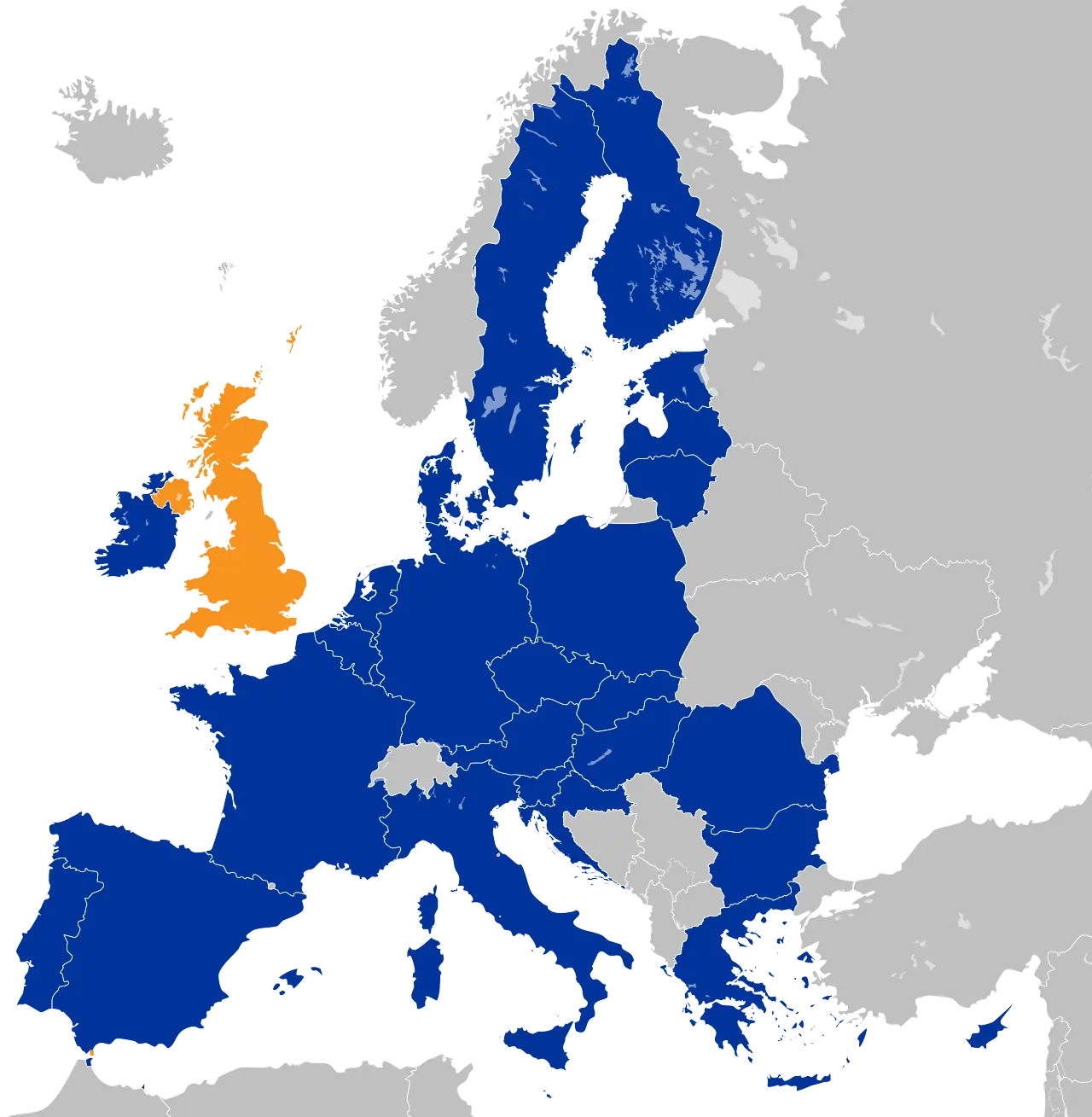
Veterans of the Brexit talks are warning, in unusually plain language, that the United Kingdom should not expect to rejoin the European Union on the privileged settlement it negotiated over forty-seven years inside the club.
Their comments land in the middle of a domestic political season in which senior Labour figures are again speaking openly about wanting the country back in the union at some point—without any settled route to a referendum, an election mandate, or a formal Article 49 application.
According to reporting by Jennifer Rankin in Brussels and Kiran Stacey in London, former officials from several capitals agree the mood could be generous toward a serious British bid, but not on bespoke legal architecture that recreates opt-outs from the single currency, Schengen, or the rest of the standard accession checklist.
What two prominent voices said on the record
Georg Riekeles: warmth plus a hard head
Georg Riekeles, who served as an adviser on the European Commission’s Brexit task force and now works at the European Policy Centre, told the Guardian he expects member states would take “a very warm, welcoming” stance but also a “hard-headed” one toward a British membership application.
“There is a strategic need for the EU and the UK to work together, but I don’t think there would be an appetite for opening up new decades of British exceptionalism,” he said. “The price of re-entry would be membership on normal terms.”
He cautioned that welcoming “the spirit and signals” from London is not the same as opening a treaty track. “The EU would need to see a durable national consensus that the UK has really changed its mind.” Reflecting on negotiation psychology, he added: “The EU can work with a UK that knows what it wants. It struggles with a UK that wants the benefits of integration while keeping the politics of separation.”
Sandro Gozi: the euro and Schengen as opening assumptions
Sandro Gozi, who was Italy’s Europe minister from 2014 to 2018, said “certainly we will start” with standard terms when asked about euro and Schengen membership in any re-entry talks. “It is clear that the tailor-made suit is gone, and it is clear that the negotiation of the UK should tackle all the issues which are foreseen for any candidate.”
Gozi, now a member of the European Parliament and chair of its delegation to the EU–UK parliamentary partnership assembly, also predicted that capitals would still welcome a British application despite domestic uncertainty in the UK—including the possibility of a Nigel Farage premiership, which the original reporting flags as a live political shadow rather than a forecast.
Why the historical comparison keeps returning
During its membership decades, the UK accumulated opt-outs from core policies such as the single currency and the Schengen passport-free area, secured a rebate on EU budget contributions, and carved out an agenda-setting role that few other states matched.
That combination is what interviewees are ruling out for a second act: not because they deny shared interests, but because they describe today’s union as unwilling to reopen a bespoke menu for a former member that left after a bruising divorce.
Wider European notes—and where the Commission stops
Poland’s foreign minister, Radosław Sikorski, is quoted in the same reporting cycle warning Britain not to expect a repeat of what he calls its past “de-facto à la carte membership,” urging British elites to “internalise” the trade-off that deeper benefits require pooling parts of sovereignty.
Gozi himself floated intermediate options—association with the single market, or roles in new security formats—but stressed those are choices for the UK to define, not shortcuts that erase accession politics.
At the Berlaymont, chief spokesperson Paula Pinho declined to speculate on hypothetical re-entry terms. Pointing instead to an EU–UK summit expected in early July, she framed the institution’s focus as “closer cooperation on a number of areas” in active preparation, “rather than speculating about big, new or renewed issues.”
How this intersects with Labour’s Europe chatter
The Guardian ties the Brussels warnings to weekend remarks by Wes Streeting, who argued the UK should rejoin in the future, and to longer-run positioning by Greater Manchester mayor Andy Burnham, who wants rejoining within his lifetime but said on Monday he would not pursue it in the short term were he to reach Downing Street.
Those domestic lines matter because Riekeles’s test—a durable national consensus—is political before it is legal. Until Westminster and the devolved governments settle what they would ask for, EU institutions can keep answering journalists’ accession questions with summit logistics.
Riekeles also sketches a strategic backdrop—Russian militarism, Chinese economic coercion, and transatlantic strain under Donald Trump’s “America first” posture—as reasons sensible capitals should treat the UK and the EU as one strategic space. His closing bar is still conditional: serious engagement, yes, if consensus appears; “are we there now? Not yet.”
Geography and themes
Related places and recurring themes for this story.
- United Kingdom
- European Union
- Politics
- Geopolitics
Suggested reading
Other stories that pair well with this one—often from the same section or on overlapping themes.
Has Brexit really been a ‘catastrophic mistake’ for the UK?
The phrase is now political ammunition—most recently from a Labour leadership hopeful—but answering it honestly means separating rhetorical heat from official productivity modelling, from long-run polling regret, and from what voters will still tolerate if Westminster tries to reopen the 2016 choice.
UK fields low-cost APKWS on Gulf Typhoons to blunt Shahed-style drone economics
Laser-guided 70mm rockets are reaching operational Typhoon loadsheets in weeks rather than years so interceptors can sit closer to the price of the one-way airframes they are meant to knock down—while ministers still have to balance magazine depth, basing access, and the rest of the regional air-defence stack.
The UK is edging closer to Europe again—without calling it rejoining
Think-tank and policy analysis of the post-2024 Labour reset describes a widening lattice of UK–EU agreements—defence industry access, sanitary and phytosanitary talks, youth and electricity files, and a path back into Erasmus+—all while ministers repeat manifesto red lines against the single market, customs union, and freedom of movement.
Burnham vows to ‘change Labour’ through Makerfield while Starmer digs in against a leadership timetable
The Greater Manchester mayor won National Executive Committee clearance to contest Josh Simons’s former seat, told interviewers he wants to “change Labour for the better,” and used a northern summit stage to cast the byelection as a renewal mandate—without yet filing the twenty-per-cent MP nominations a formal challenge requires.
Starmer says he still wants to fight the next election and will not ‘walk away’ as Labour leadership pressure intensifies
Speaking while visiting small businesses in London on 18 May 2026, the prime minister acknowledged post–7 May losses in England, Wales, and Scotland, insisted his focus had drifted in the previous ten days, and ruled out publishing a resignation timetable tied to Andy Burnham’s Makerfield bye-election.
Tens of thousands join Tommy Robinson’s ‘Unite the Kingdom’ march to Parliament Square as London polices rival rallies
On Saturday 16 May 2026, Stephen Yaxley-Lennon, the activist widely known as Tommy Robinson, drew a large crowd to central London for the Unite the Kingdom demonstration while the Metropolitan Police ran one of its biggest recent public-order operations to keep it apart from a same-day Nakba Day march; the force estimated roughly 60,000 at Robinson’s event and said 31 people were arrested across the two protests, with senior officers warning prosecutors would pursue inflammatory chanting.
Five key takeaways from President Trump's high-stakes China trip
From massive commodity purchases to the 'red lines' on technology, the Beijing summit of 2026 has reshaped the landscape of the world's most critical bilateral relationship.
Wes Streeting resigns as Health Secretary, citing Starmer's 'lack of vision'
In a blistering resignation letter, Streeting warns of a 'vacuum' at the heart of government following Labour's heavy losses in the 2026 local elections.
Cooper presses Gulf partners to reopen Hormuz routes farmers need for fertiliser
Britain’s foreign secretary has tied Iran’s disruption of the strait to fertiliser reaching African fields and wider prosperity, while parallel reporting documents urea spikes, stuck cargoes, and UN hunger modelling that treat the next planting cycles as the clock that matters.
Tehran floats Hormuz tolls on subsea internet cables as IRGC-tied media talk billions
Euronews and RFE/RL trace how Tasnim- and Fars-style outlets are packaging seabed leverage—transit fees, forced maintenance clauses, even cloud-giant localisation demands—while Mostafa Taheri, an Iranian parliamentary industries voice, throws around a headline revenue ceiling on the order of fifteen billion dollars annually that markets treated as rhetoric, not an invoice.
Keep exploring
Browse the full archive or return to the front page.
Sources and external links
Sources and filings our editors consulted to verify this story. External links open in a new tab.
- Taking the Pulse: Is the EU Ready for Rapprochement With the UK? (Carnegie Europe, Apr 2026) (opens in a new tab)— Carnegie Endowment for International Peace