Section World
Tehran floats Hormuz tolls on subsea internet cables as IRGC-tied media talk billions
Euronews and RFE/RL trace how Tasnim- and Fars-style outlets are packaging seabed leverage—transit fees, forced maintenance clauses, even cloud-giant localisation demands—while Mostafa Taheri, an Iranian parliamentary industries voice, throws around a headline revenue ceiling on the order of fifteen billion dollars annually that markets treated as rhetoric, not an invoice.
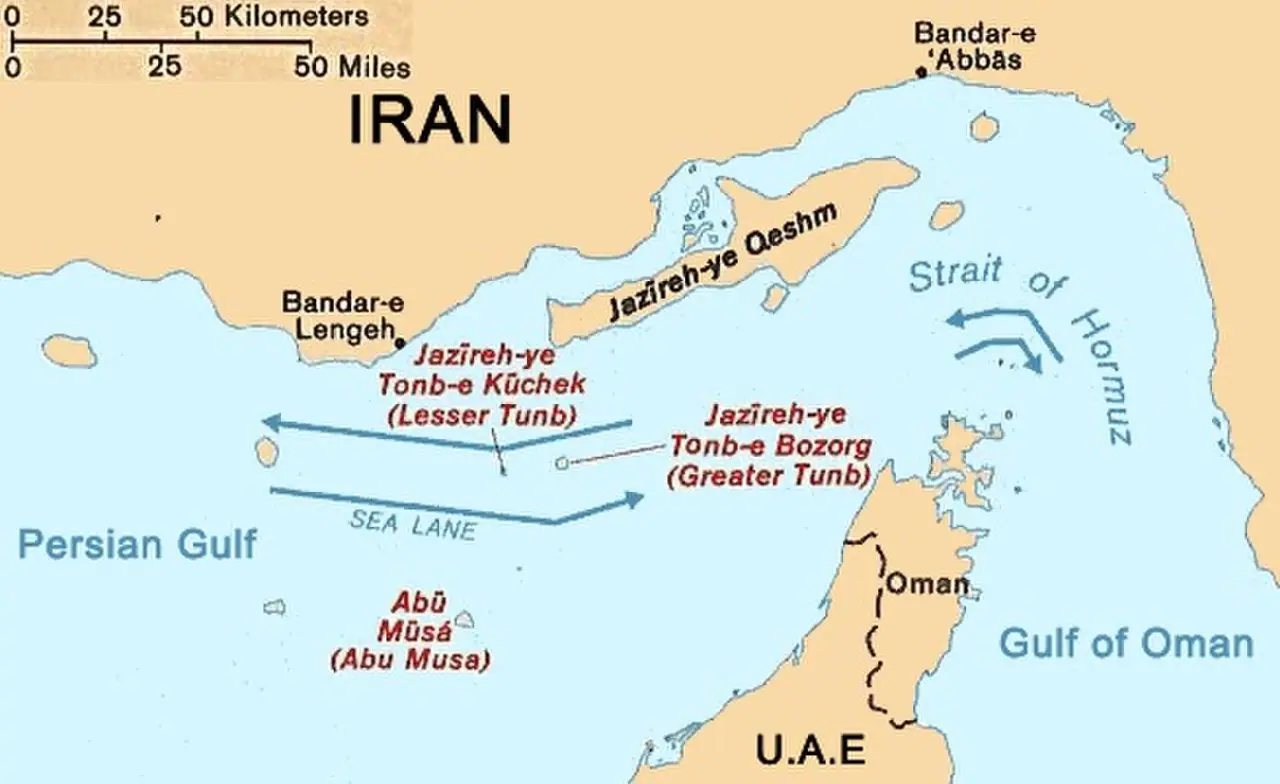
Iranian power centres are road-testing a novel pressure story: treat the dense bundle of submarine fibre-optic cables that stitch Gulf Arab capitals to global cloud hubs as taxable national infrastructure rather than invisible public goods. Euronews’ mid-May 2026 filing attributes the public push to outlets linked with the Islamic Revolutionary Guard Corps, naming scenarios in which international consortia would pay recurring transit charges, accept Iranian maintenance monopolies, and even route hyperscaler traffic through domestic compliance regimes—while a parliamentary industries voice cited in regional copy floated annual toll revenue on the order of $15 billion, a figure traders read as bargaining theatre rather than a priced tariff line.
Radio Free Europe/Radio Liberty’s parallel analysis stresses the geography–law mismatch: seabed rights, transit passage for ships, and uninterrupted communications freedoms do not line up as cleanly as a customs booth on a highway. Iran has long played asymmetric games in the same strait with tanker insurance and drone harassment; extending the logic to packets is less a technical upgrade than a narrative bid to make Western tech boards price a new tail risk.
Hurriyet Daily News relayed the same parliamentary chatter in English, highlighting Mostafa Taheri’s eye-watering revenue guess—up to fifteen billion dollars annually if tolling worked as advertised—and the implicit threat that Tehran could monetise inspection, permitting, or “security escort” fees even when it cannot physically sever every trunk. Gulf News amplified the consumer-facing fear: a nick on maintenance windows for cables such as FALCON, GBI, or Gulf-to-TGN could strand finance, telepresence, and remittance apps that Gulf economies now treat like tap water.
None of the open-source reporting reviewed here shows a signed budget line, a published tariff schedule, or a flagged cable cut—only a political market testing how NATO capitals, UAE regulators, and Mumbai clearinghouses react when “digital Hormuz” enters the lexicon beside crude Hormuz.
Why UNCLOS language is everyone’s first reflex—and insufficient alone
Law-of-the-sea experts cited across European and Gulf-focused outlets remind readers that transit passage protects continuous and expeditious transit for ships and aircraft; subsea cables complicate the picture because they rest on continental shelves claimed by both Iran and Oman while still serving as backbone routes for third states that are not party to Gulf littoral politics.
Iran has signed but not ratified UNCLOS, a fact RFE/RL foregrounds when arguing Tehran wants the rhetorical shield of seabed sovereignty without accepting the full dispute-settlement superstructure. In practice, deterrence therefore mixes admiralty law with insurer spreadsheets: even a credible threat to delay repair permits can spike latency-sensitive contracts without a shot fired.
What would actually move markets if rhetoric hardened
Watch for three non-headline indicators before treating this as operational: consortia filing force-majeure letters to cloud customers, submarine cable maintenance ships diverting to Djibouti or Mumbai for flag-state paperwork rather than Bandar Abbas clearances, and US Treasury or EU sanctions designations explicitly naming Iranian cable-toll entities with correspondent-bank exposure.
Until those appear, the defensible publish lane stays with attributed political economy—IRGC-linked media proposals, parliamentary revenue fantasies, and independent journalism translating both for finance ministries—not with simulated traceroutes or imagined cable cuts.
Honest limits on what Hacker News headlines can prove
A social-aggregator blurb timed at 18 May 2026 local clocks is a discovery cue, not a primary document. This desk’s chain runs through dated newsroom pages (Euronews, RFE/RL, Hurriyet, Gulf News) that each carry reporter bylines or wire pickups; none replaces a Tasnim PDF, a published tariff schedule, or a submarine cable protection notice filed with industry bodies.
If Tehran ever does publish a fee schedule, the next fight will be evidentiary—does the language apply only inside twelve nautical miles, does it hit landing stations or mid-strait repeaters, and which flag-state navies treat non-payment as a blockade trigger? Until then, editors should label the story what it is: leverage theatre in a war-budgeted month, not a completed customs union for photons.
Geography and themes
Related places and recurring themes for this story.
Suggested reading
Other stories that pair well with this one—often from the same section or on overlapping themes.
Cooper presses Gulf partners to reopen Hormuz routes farmers need for fertiliser
Britain’s foreign secretary has tied Iran’s disruption of the strait to fertiliser reaching African fields and wider prosperity, while parallel reporting documents urea spikes, stuck cargoes, and UN hunger modelling that treat the next planting cycles as the clock that matters.
Tehran markets a ‘Hormuz Safe’ lane that settles marine cover in Bitcoin as war-risk premiums bite
Indian and trade-press explainers describe a new Iranian digital platform pitching blockchain-settled policies for commercial hulls threading the strait—complete with ministry talk of a ten-billion-dollar revenue ceiling—while compliance lawyers warn U.S. and EU persons that paying premiums into Iranian rails can still collide with sanctions law regardless of coin type.
Aftenposten Modi Cartoon Stirs Racism Row
Aftenposten ran Halleraker’s cartoon the same day as Rossavik’s Meninger column; Red MP Rana called it racist; political editor Alstadheim told Dagbladet the symbols backed Rossavik’s point and were not meant to demean.
Trump delays Iran strike after Gulf appeal
President Donald Trump said late on 18 May 2026 in Washington that he was postponing a U.S. military strike on Iran that had been scheduled for the following day after Qatar, Saudi Arabia, and the United Arab Emirates asked for time while diplomacy continued; he also told the armed forces to stay ready for a large-scale assault if talks fail.
Havana leans on self-defense law while rejecting US drone-strike talk as intervention pretext
President Miguel Díaz-Canel framed military deterrence as a lawful shield, not a war wish, after US-facing outlets amplified an Axios-style tally of imported drones; Washington’s January national-emergency declaration on Cuba still frames the island as an extraordinary threat.
Brazil’s TRF-1 faces a reckoning on whether Belo Sun’s Volta Grande gold license snaps back to freeze
After a single federal appellate judge revived the Canadian miner’s installation permit in February 2026, prosecutors appealed to the same court’s Sixth Panel—where the next collegiate ruling decides if the decade-old suspension logic from 2017 returns or the Pará project keeps rolling.
Brussels Brexit veterans say a UK return would mean normal EU membership, not the old carve-outs
Georg Riekeles and Sandro Gozi, among others, describe warmth toward a future application but zero appetite to recreate bespoke opt-outs; the Commission stays on this week’s brief—July summit prep—not hypothetical accession terms.
Kenya’s matatu shutdown over pump prices turns lethal as ministers report four dead
Interior Cabinet Secretary Kipchumba Murkomen’s tally—four killed, dozens hurt, and hundreds detained—lands atop a nationwide minibus strike that BBC reporting ties to another double-digit jump in regulated diesel and petrol caps.
Belarus and Russia rehearse tactical nuclear delivery as Minsk dismisses alarm and Kyiv cries escalation
Missile troops and combat aircraft still drill covert moves and nuclear-use prep, but the same news cycle also airs Minsk’s insistence the exercise threatens no third country—set against Ukrainian Foreign Ministry warnings and Kremlin spokesman Dmitry Peskov’s pushback on Zelenskyy’s talk of a renewed Belarus-axis offensive.
Tarsus rampage leaves six dead and eight wounded as police scour Mersin for gunman
International outlets describe multiple shooting sites in southern Türkiye’s Tarsus district, a helicopter-backed manhunt, and a Cabinet-room toll readout from President Erdoğan while wire-sourced reporting sketches an alleged domestic-violence start and street-to-car attacks.
Keep exploring
Browse the full archive or return to the front page.
Sources and external links
Sources and filings our editors consulted to verify this story. External links open in a new tab.
- Could Iran start charging global tech firms for undersea cables in the Strait of Hormuz? (RFE/RL) (opens in a new tab)— Radio Free Europe/Radio Liberty