Section World
Brazil’s TRF-1 faces a reckoning on whether Belo Sun’s Volta Grande gold license snaps back to freeze
After a single federal appellate judge revived the Canadian miner’s installation permit in February 2026, prosecutors appealed to the same court’s Sixth Panel—where the next collegiate ruling decides if the decade-old suspension logic from 2017 returns or the Pará project keeps rolling.
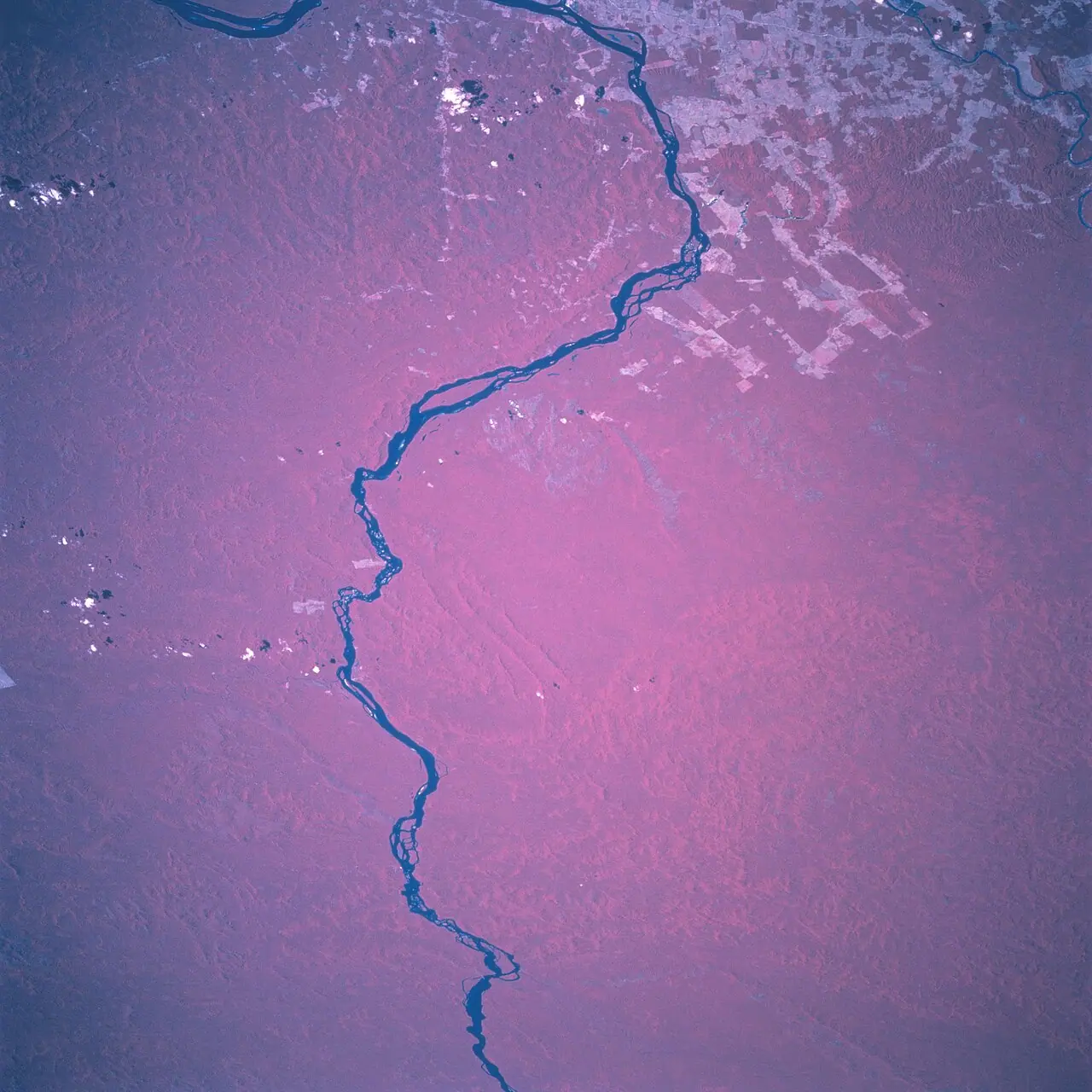
Canada-listed Belo Sun has spent more than a decade trying to license an open-pit gold complex beside the Volta Grande stretch of Brazil’s Xingu River in Pará, downstream from the controversial Belo Monte hydropower footprint. Federal prosecutors long argued the firm never finished a court-ordered Indigenous Component Study and free, prior, and informed consultation package to the standard Brazil’s constitution and ILO Convention 169 demand, which is why the Federal Regional Court of the 1st Region (TRF-1) first backed suspending the installation license in 2017.
SUMAÚMA’s English reporting on the February 2026 sequence explains what changed: appellate judge Flávio Jaime de Moraes Jardim issued a provisional ruling that restored the license’s efficacy just before the Carnaval break, accepting Belo Sun’s narrative that Bolsonaro-era Funai paperwork and partial community protocols were enough to lift the freeze. Indigenous councils representing Juruna and Arara territories had already disowned that consultation in a December 2025 council document SUMAÚMA quoted at length—so the factual tension is not “no paperwork” but whose version of compliance controls the docket.
The Federal Public Ministry (MPF) answered on the first post-holiday business day, filing an appeal that asks TRF-1’s Sixth Panel to slam the brakes again. Its public notice warns against privatising consultation—letting the company script community meetings—and repeats Funai’s later finding that studies remained incomplete, including on relocation risk for riverine communities that overlap mine engineering drawings.
That appeal is the hinge this headline points at: a three-justice collegiate panel, not a lone monocratic order, now carries the precedential weight on whether the installation license stays alive or the suspension doctrine from 2017 reasserts itself while wider IBAMA and state SEMAS channels keep moving in parallel.
Why one appellate chamber matters more than a press release cycle
Mining equities trade on permit headlines within hours, but Brazilian federal procedure stacks appeals like sediment. When prosecutors route their challenge to the Sixth Panel, they are asking colleagues on the same court to correct—or affirm—a judge who has already become a lightning rod in other Amazon licensing fights SUMAÚMA tied to potassium projects and shifted venue decisions.
Readers outside Brasília should treat “license reinstated” banners as a phase line, not a finale: Pará’s state environment secretariat can reissue or amend local installation papers on one calendar while TRF-1 still owns the federal civil-action story about Indigenous rights and irreversible harm. The two tracks can contradict each other for months, which is exactly when reporters lean on primary prosecutor filings instead of marketing departments.
What communities say is still missing
Independent journalism and prosecutor allegations converge on geography, not just paperwork: eight Indigenous territories intersect the Volta Grande reach, yet SUMAÚMA’s legal sources say Belo Sun formally consulted only two peoples while Xikrin, Xipai, Curuaia, and riverbank neighbourhoods remained outside the study footprint. Tailings dam height and volume estimates—SUMAÚMA cited a 35 million cubic metre waste stack figure—are not abstract engineering flex; they sit upstream of Juruna fisheries already stressed by Belo Monte’s altered flow.
Those facts frame the irreversible-harm argument the MPF recycled in its appeal. They also explain why Altamira saw occupations of federal Indigenous agency offices: when courts accelerate installation authority faster than demarcation or relocation guarantees advance, communities treat Brasília deadlines as existential, not bureaucratic.
Honest limits for editors updating this docket
Until the Sixth Panel publishes a dated unanimous or majority opinion, avoid predicting vote splits or exact hearing calendars from Telegram forwards. The defensible publish line ties each claim to filed documents: GlobeNewswire’s 14 February 2026 release summarises how Belo Sun tells shareholders the installation license is back; the MPF newsroom page documents the prosecutor’s legal theory opposing that release; SUMAÚMA connects both to on-the-ground Indigenous strategy.
If the panel restores suspension, expect another burst of regulatory ping-pong—state reissuance versus federal appellate injunctions—before any shovel-ready peace. If the panel denies the prosecutors, watch for fresh supreme-court or constitutional challenges rather than quiet closure: Volta Grande is now a reference case for how Latin American courts interpret FPIC when legislatures and executives disagree on mining’s Amazon footprint.
Geography and themes
Related places and recurring themes for this story.
- Brazil
- World
Suggested reading
Other stories that pair well with this one—often from the same section or on overlapping themes.
Aftenposten Modi Cartoon Stirs Racism Row
Aftenposten ran Halleraker’s cartoon the same day as Rossavik’s Meninger column; Red MP Rana called it racist; political editor Alstadheim told Dagbladet the symbols backed Rossavik’s point and were not meant to demean.
Cooper presses Gulf partners to reopen Hormuz routes farmers need for fertiliser
Britain’s foreign secretary has tied Iran’s disruption of the strait to fertiliser reaching African fields and wider prosperity, while parallel reporting documents urea spikes, stuck cargoes, and UN hunger modelling that treat the next planting cycles as the clock that matters.
Tehran floats Hormuz tolls on subsea internet cables as IRGC-tied media talk billions
Euronews and RFE/RL trace how Tasnim- and Fars-style outlets are packaging seabed leverage—transit fees, forced maintenance clauses, even cloud-giant localisation demands—while Mostafa Taheri, an Iranian parliamentary industries voice, throws around a headline revenue ceiling on the order of fifteen billion dollars annually that markets treated as rhetoric, not an invoice.
Tehran markets a ‘Hormuz Safe’ lane that settles marine cover in Bitcoin as war-risk premiums bite
Indian and trade-press explainers describe a new Iranian digital platform pitching blockchain-settled policies for commercial hulls threading the strait—complete with ministry talk of a ten-billion-dollar revenue ceiling—while compliance lawyers warn U.S. and EU persons that paying premiums into Iranian rails can still collide with sanctions law regardless of coin type.
Havana leans on self-defense law while rejecting US drone-strike talk as intervention pretext
President Miguel Díaz-Canel framed military deterrence as a lawful shield, not a war wish, after US-facing outlets amplified an Axios-style tally of imported drones; Washington’s January national-emergency declaration on Cuba still frames the island as an extraordinary threat.
Kenya’s matatu shutdown over pump prices turns lethal as ministers report four dead
Interior Cabinet Secretary Kipchumba Murkomen’s tally—four killed, dozens hurt, and hundreds detained—lands atop a nationwide minibus strike that BBC reporting ties to another double-digit jump in regulated diesel and petrol caps.
Tarsus rampage leaves six dead and eight wounded as police scour Mersin for gunman
International outlets describe multiple shooting sites in southern Türkiye’s Tarsus district, a helicopter-backed manhunt, and a Cabinet-room toll readout from President Erdoğan while wire-sourced reporting sketches an alleged domestic-violence start and street-to-car attacks.
Hargeisa fills its 18 May squares with a post-recognition parade as Herzog seals the envoy link
Nairobi- and Tel Aviv–linked reporting described thousands in Hargeisa for the usual independence anniversary—this time under the glare of December 2025’s Israeli recognition—while President Isaac Herzog formally received Somaliland’s first ambassador in Jerusalem the same diplomatic window.
DR Congo Ebola surge: six Americans exposed, one symptomatic, as WHO declares international emergency
The eastern Ituri outbreak is tied to Bundibugyo virus disease—no approved vaccine or drug for that species; CBS-linked sources told the BBC six US citizens were exposed and one may have symptoms, while the CDC weighs safe withdrawal and tighter border screening.
Drone strikes generator outside UAE nuclear plant perimeter
Air defenses intercepted two of three unmanned aircraft entering from the west, but a third hit an electrical generator near the Barakah facility, igniting a fire.
Keep exploring
Browse the full archive or return to the front page.
Sources and external links
Sources and filings our editors consulted to verify this story. External links open in a new tab.
- MPF appeals against Belo Sun release and warns on Indigenous consultation privatisation (MPF PRR1) (opens in a new tab)— Ministério Público Federal (Brazil)