Section Politics
Tens of thousands join Tommy Robinson’s ‘Unite the Kingdom’ march to Parliament Square as London polices rival rallies
On Saturday 16 May 2026, Stephen Yaxley-Lennon, the activist widely known as Tommy Robinson, drew a large crowd to central London for the Unite the Kingdom demonstration while the Metropolitan Police ran one of its biggest recent public-order operations to keep it apart from a same-day Nakba Day march; the force estimated roughly 60,000 at Robinson’s event and said 31 people were arrested across the two protests, with senior officers warning prosecutors would pursue inflammatory chanting.
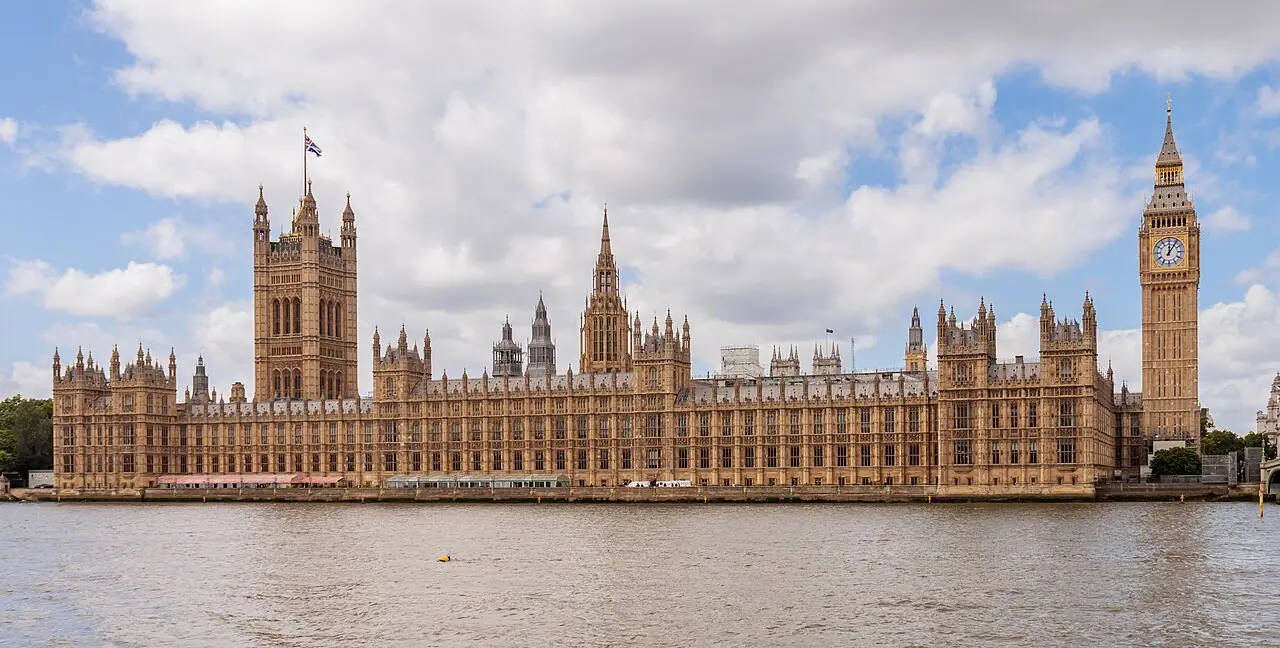
Stephen Yaxley-Lennon, the figure who campaigns under the name Tommy Robinson, led a Unite the Kingdom demonstration through central London on Saturday 16 May 2026 that CBS News and other outlets described as one of the largest far-right mobilisations in Britain in recent years, though still smaller than a comparable September 2025 rally the same network had covered. Robinson spoke from a stage in Parliament Square after crowds moved along a Metropolitan Police–controlled corridor—reporting consistently referenced a southbound route from Kingsway toward Whitehall and the square under Public Order Act conditions imposed to limit flashpoints.
The Met told reporters it estimated about 60,000 people at Robinson’s march while deploying roughly 4,000 officers across the capital alongside helicopters, drones, and live facial recognition at major transport hubs, part of an operation Deputy Assistant Commissioner James Harman said was likely to cost on the order of £4.5 million. By Saturday afternoon the force said 31 people had been arrested across both demonstrations for assorted offences while describing the day as having proceeded largely without major clashes—still a heavy tally for a single day of competing protests.
Same-day Nakba march and political reaction
London also hosted a large Nakba Day pro-Palestinian march the same afternoon, which Prime Minister Keir Starmer’s office and prosecutors framed as a parallel risk for disorder and for hate speech if chants crossed criminal lines. Starmer accused Unite the Kingdom organisers of “peddling hatred and division” and, in remarks carried by CBS, called some participants “convicted thugs and racists,” language his allies have used to stress a zero-tolerance line after recent antisemitic violence had already prompted Whitehall to raise the UK terrorism threat level. News accounts also noted Home Office moves to block several foreign hard-right speakers from entering the country ahead of the rally, a restriction Robinson’s critics said was meant to cap imported incitement.
Messaging on the route and from the stage
Wire and broadcast correspondents described Union and St George’s Cross flags, visible Christian symbolism including crosses and Knights Templar–style costumes, and chants such as “we want Starmer out” and “Christ is King,” alongside red “Make England Great Again” hats that several outlets explicitly compared to Donald Trump’s branding. Interviewees told CBS they felt British culture was slipping from view—Chris Wickland, described as a priest from the Confessing Anglican Church, said he attended “to represent Christianity” amid fears “something is disappearing” from national life. From Parliament Square, Robinson urged supporters to register to vote and become activists before the next general election, warning that inaction would mean “lose our country forever,” and thanked Elon Musk for amplifying the movement, prompting a crowd chant of the billionaire’s first name; Musk had previously addressed a Robinson rally by video, language CBS recalled in the same report.
NewsTenet does not treat activist slogans as settled policy: a Nakba marcher told CBS they found Unite the Kingdom rhetoric “worrying” and linked it to talk among some marchers about “mass deportations and enemies within,” a characterisation Robinson’s allies would dispute as caricature. Treat any demand for sweeping removals or a “take our country back” frame as disputed political language unless tied to named legislation, party manifestos, or court filings.
Legal and biographical context readers may look up
Robinson has repeatedly been in the headlines for contempt, public order, and libel episodes—CBS noted a 2024 Unite the Kingdom plan he missed because he was jailed for contempt of court after breaching a 2021 High Court order over defamation of a Syrian refugee who had won a civil case against him. Earlier convictions reporters still cite include assault and mortgage fraud. None of that history automatically proves what any given attendee believed on 16 May; it explains why mainstream parties treat his events as political lightning rods rather than routine civic processions.
What to watch next
Scotland Yard will publish more granular arrest statistics and any charge sheets; Parliament may face Home Affairs questions on facial recognition, cost recovery, and ban lists for foreign speakers. Reform UK and smaller nationalist groups may also clarify whether they welcome or distance themselves from Robinson’s coalition-building—his stage speech stopped short of a formal party endorsement while inviting supporters to engage across the British right.
Geography and themes
Related places and recurring themes for this story.
Suggested reading
Other stories that pair well with this one—often from the same section or on overlapping themes.
Burnham vows to ‘change Labour’ through Makerfield while Starmer digs in against a leadership timetable
The Greater Manchester mayor won National Executive Committee clearance to contest Josh Simons’s former seat, told interviewers he wants to “change Labour for the better,” and used a northern summit stage to cast the byelection as a renewal mandate—without yet filing the twenty-per-cent MP nominations a formal challenge requires.
Starmer says he still wants to fight the next election and will not ‘walk away’ as Labour leadership pressure intensifies
Speaking while visiting small businesses in London on 18 May 2026, the prime minister acknowledged post–7 May losses in England, Wales, and Scotland, insisted his focus had drifted in the previous ten days, and ruled out publishing a resignation timetable tied to Andy Burnham’s Makerfield bye-election.
Wes Streeting resigns as Health Secretary, citing Starmer's 'lack of vision'
In a blistering resignation letter, Streeting warns of a 'vacuum' at the heart of government following Labour's heavy losses in the 2026 local elections.
Brussels Brexit veterans say a UK return would mean normal EU membership, not the old carve-outs
Georg Riekeles and Sandro Gozi, among others, describe warmth toward a future application but zero appetite to recreate bespoke opt-outs; the Commission stays on this week’s brief—July summit prep—not hypothetical accession terms.
Has Brexit really been a ‘catastrophic mistake’ for the UK?
The phrase is now political ammunition—most recently from a Labour leadership hopeful—but answering it honestly means separating rhetorical heat from official productivity modelling, from long-run polling regret, and from what voters will still tolerate if Westminster tries to reopen the 2016 choice.
The UK is edging closer to Europe again—without calling it rejoining
Think-tank and policy analysis of the post-2024 Labour reset describes a widening lattice of UK–EU agreements—defence industry access, sanitary and phytosanitary talks, youth and electricity files, and a path back into Erasmus+—all while ministers repeat manifesto red lines against the single market, customs union, and freedom of movement.
Barney Frank Dies at 86, LGBTQ Trailblazer
He came out in Congress in 1987, chaired Financial Services through the 2008 crash, and helped steer Dodd-Frank before retiring in 2013; his sister confirmed his death to NBC Boston.
Trump-Backed Gallrein Ousts Massie in Kentucky
Ed Gallrein, backed by Donald Trump, ousted libertarian-leaning Rep. Thomas Massie in Kentucky's May 19 GOP primary for the 4th District—the costliest House primary on record.
Wyden: DOJ May Halt Trump IRS Audits
Senate Finance Chair Ron Wyden warns reported Justice Department settlement language could halt IRS audits of older Trump-family returns; CNN, ABC, the Post, and CNBC describe overlapping terms tied to the tax-leak lawsuit.
Brookings-linked modelling puts U.S.-citizen kids touched by parental ICE detention near 145,000 since the surge
ProPublica’s unpacking of a May 2026 Brookings exercise walks through Census-informed imputation against ICE arrest streams—far above what federal forms capture when parents fear disclosing citizen children—while parallel academic trackers still document the detention-and-removal machinery in administrative data alone.
Keep exploring
Browse the full archive or return to the front page.
Sources and external links
Sources and filings our editors consulted to verify this story. External links open in a new tab.