Section World
Trump on Truth Social: Iran’s “clock is ticking,” move “FAST,” or “there won’t be anything left of them”
Agency-backed outlets reported on 17 May 2026 that U.S. President Donald Trump posted a capitalised ultimatum to Tehran on Truth Social amid fragile Gulf ceasefire diplomacy, quoting him verbatim as tying speed on a deal to survival while pairing the message with a reported call to Israeli Prime Minister Benjamin Netanyahu.
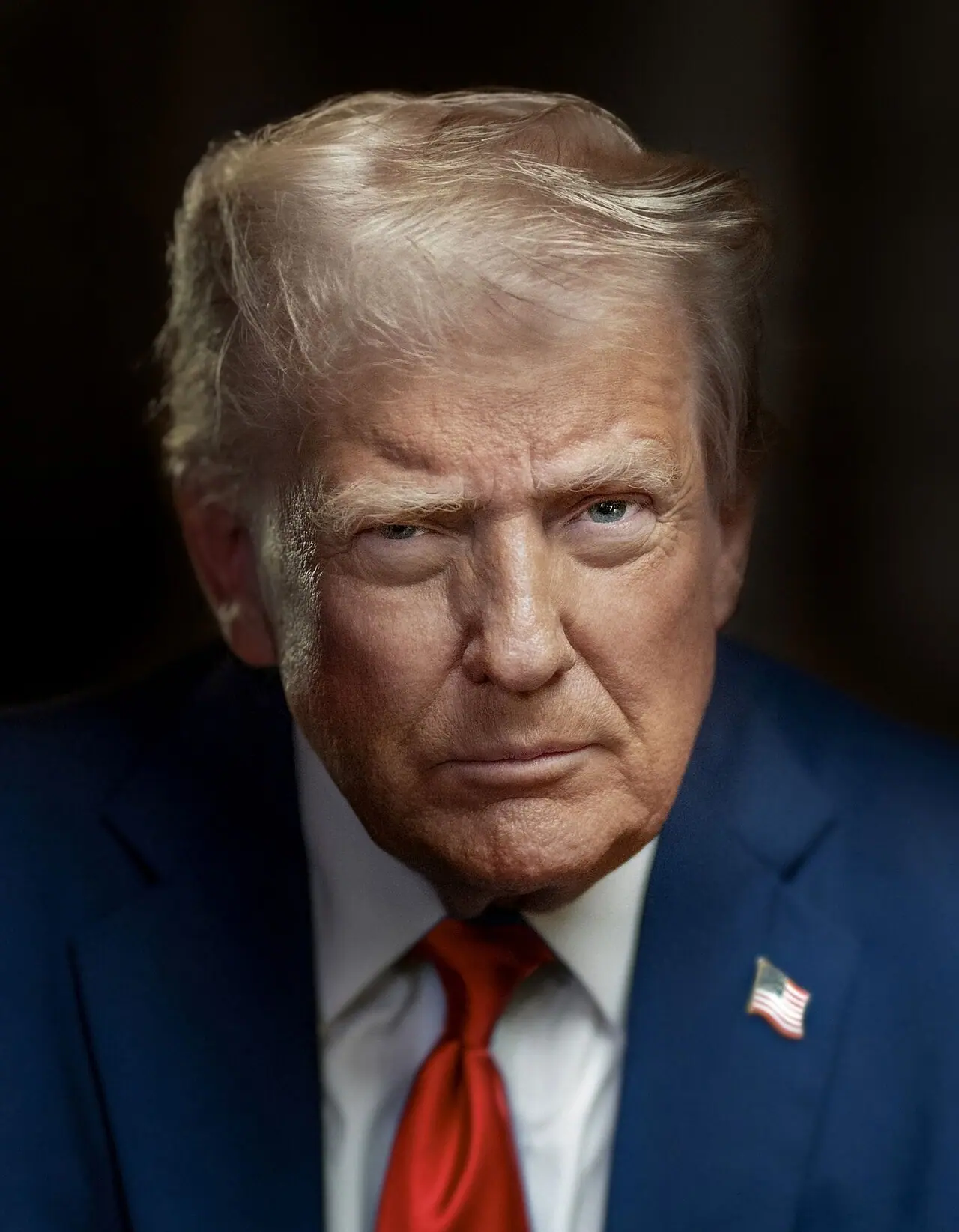
Multiple newsrooms carrying agency inputs quoted President Donald J. Trump posting on Truth Social on Sunday, 17 May 2026: “**For Iran, the Clock is Ticking, and they better get moving, FAST, or there won’t be anything left of them. TIME IS OF THE ESSENCE!
**” News18, among others, published the line as direct quotation from the platform rather than paraphrase—useful for readers tracking tone shifts even when Washington and Tehran disagree on what text counts as a serious negotiating position versus signalling.
Because Truth Social posts can be edited or deleted and third-party scrapers vary, this brief treats the wording as reported text attributed to outlets, not as an independently archived primary document in this page’s evidence chain.
Immediate political context outlets attached
News18 reported the warning landed shortly after Trump spoke with Israeli Prime Minister Benjamin Netanyahu about the Iran war—framing that matters because Jerusalem’s threat perceptions and U.S. domestic politics often move on linked clocks even when formal State Department channels emphasise process. The same summary noted a ceasefire narrative dating to 8 April 2026 while describing peace efforts as stalled, a pairing that helps explain why a social-media ultimatum can read simultaneously as diplomatic pressure and as domestic reassurance that the president still holds escalation dominance.
Separately, Iranian state and semi-state outlets had been airing dissatisfaction with U.S. responses to Tehran’s negotiating agenda—details that help situate why Trump might choose a loud public channel rather than a quiet demarche alone.
How to read apocalyptic phrasing without over-reading orders
Presidents often use maximalist rhetoric to anchor bargaining ranges; militaries meanwhile operate under rules of engagement, logistics, alliance consultations, and Congressional scrutiny that do not track sentence-level capitalization on social networks. That gap is why responsible coverage distinguishes (a) what was literally posted, (b) what Pentagon or CENTCOM posture actually changed the same hour—often nothing verifiable from open sources—and (c) what Iran chooses to treat as a bluff, a tripwire, or a pretext to harden its own public position.
Analysts cited in broader BBC reporting earlier in May had already flagged whiplash between optimistic Strait of Hormuz “Project Freedom” messaging and Trump’s own caveats about whether any deal was a “big assumption,” a pattern consistent with impulse-led public communications rather than a single steady-state policy line.
What would actually change the story next
Watch for written proposals exchanged through mediators (including Pakistan-hosted tracks referenced in regional coverage), any verified change in U.S. air-naval orders, Israeli cabinet statements that narrow or widen strike options, Iranian parliamentary votes on negotiation mandates, and market readings on Hormuz insurance rather than headline adjectives alone. A social post can move oil volatility faster than it moves munitions; the durable file is what envoys initial on paper after the capital letters fade.
Geography and themes
Related places and recurring themes for this story.
Suggested reading
Other stories that pair well with this one—often from the same section or on overlapping themes.
US–Iran war in the Middle East: who is involved, what each country is doing, and how they are affected
A widening U.S.–Iran war is fought with missiles and sanctions but lived through shipping insurance, food prices, refugee routes, and alliance politics from Manama to Mumbai—this is a full tour of the chessboard, not a scorecard of two capitals alone.
Trump delays Iran strike after Gulf appeal
President Donald Trump said late on 18 May 2026 in Washington that he was postponing a U.S. military strike on Iran that had been scheduled for the following day after Qatar, Saudi Arabia, and the United Arab Emirates asked for time while diplomacy continued; he also told the armed forces to stay ready for a large-scale assault if talks fail.
Hargeisa fills its 18 May squares with a post-recognition parade as Herzog seals the envoy link
Nairobi- and Tel Aviv–linked reporting described thousands in Hargeisa for the usual independence anniversary—this time under the glare of December 2025’s Israeli recognition—while President Isaac Herzog formally received Somaliland’s first ambassador in Jerusalem the same diplomatic window.
Greenlandic PM says US ambitions on controlling the territory still show no sign of changing
Jens-Frederik Nielsen is pairing warmer language about closed-door trilateral talks with the same red lines Nuuk has held since winter: no sale, no transfer of sovereignty, and deep scepticism that Washington has abandoned designs on ownership even as negotiators discuss southern bases.
Canada tightens Arctic and Nordic defense links as Greenland studies a Ranger-style patrol force
After months of U.S. rhetoric over Greenland and strained North American politics, Ottawa is deepening military procurement talks with Denmark, Finland, Iceland, Norway, and Sweden while Nuuk and Copenhagen consult Canada on adapting the Canadian Rangers model for local surveillance.
BRICS talks end without joint statement as divisions over Iran war deepen
Host negotiators could not bridge competing language on the Gulf conflict, energy sanctions, and neutral mediation—leaving a chair’s summary instead of a unified communiqué.
FBI maintains $200,000 reward for former US counterintelligence agent Monica Witt over Iran espionage charges
The former Air Force intelligence specialist remains a fugitive after defecting to Iran in 2013 and allegedly handing over highly classified national defense information.
Revised Iranian proposal to end war shared with U.S., Pakistani source says
Prime Minister Shehbaz Sharif told a public event in Islamabad that Pakistan had received Iran’s written answer to Washington’s latest peace text, while Iranian state outlets framed the document around stopping the war and reopening shipping. Wire dispatches citing a Pakistani government official involved in mediation said the material was passed onward to the United States the same day.
Post analysis of satellite imagery ties Iranian strikes to damage or loss of at least 228 U.S. structures or pieces of equipment
A Washington Post investigation published in early May 2026 says it catalogued hangars, barracks, fuel sites, aircraft, and radar, communications, and air-defense assets hit across fifteen U.S. military locations in six Gulf and Levant partner states—arguing the tally dwarfs prior public U.S. disclosures while documenting how commercial imagery gaps and Iranian-published photos shaped what could be verified.
Iran’s World Cup squad reaches Türkiye for camp while US entry papers stay unresolved
Wire and regional copy describe a May 18 departure toward Antalya for weeks of friendlies and logistics—still paired with federation warnings that American visas had not materialized and that FIFA was being asked to help secure guarantees before June fixtures in the United States.
Keep exploring
Browse the full archive or return to the front page.
Sources and external links
Sources and filings our editors consulted to verify this story. External links open in a new tab.