Section World
U.S. lets Russian seaborne-oil sanctions waiver lapse with no renewal
A one-month Treasury general license that had let third countries complete purchases of Russian-origin crude already loaded on tankers ended at 12:01 a.m. Eastern on 16 May 2026; OFAC posted no follow-on extension, after the secretary had already ruled out another rollover.
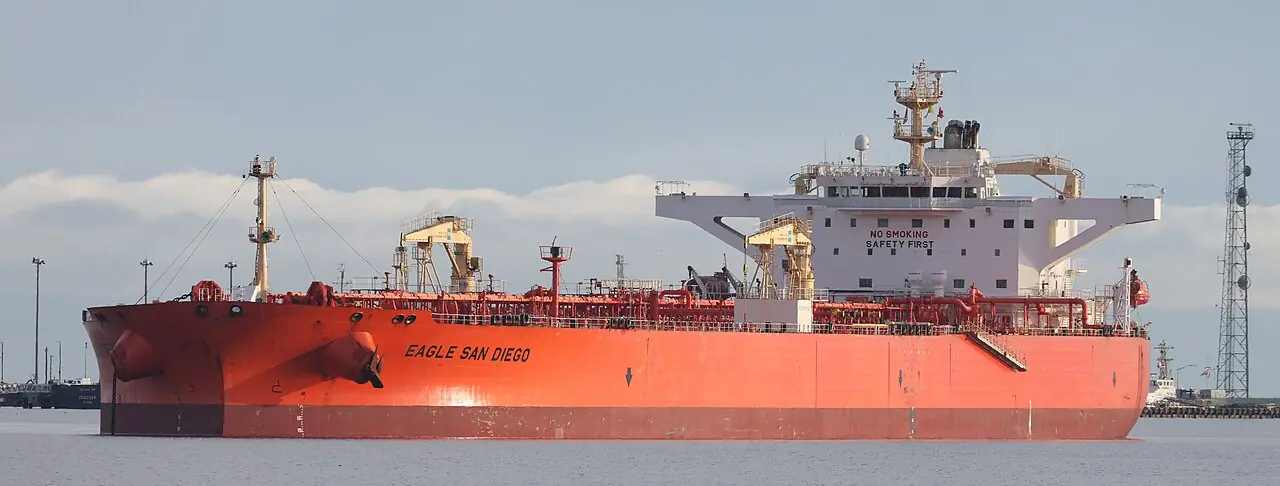
The United States allowed a temporary Treasury carve-out for certain Russian-origin seaborne oil sales to expire at 12:01 a.m. Eastern Daylight Time on Friday, 16 May 2026, with no replacement general license posted on the Office of Foreign Assets Control public register in the first renewal window—an outcome consistent with earlier guidance that Washington would not roll the authorization forward again. The lapse matters because it closes a narrow compliance door through which some importers had been able to complete deliveries of Russian crude already sitting in floating storage or in transit chains, even as broader Russia-related sanctions and the price-cap policy family remain their own parallel legal universe.
The instrument in question, Russia-related General License 134B, was issued on 17 April 2026 and described by Treasury as authorizing transactions ordinarily incident and necessary to the sale, delivery, or offloading of crude oil and petroleum products of Russian Federation origin loaded on vessels as of that date, together with supporting vessel services such as management, crewing, bunkering, insurance, and salvage. It had followed an earlier general license that expired on 11 April, leaving a short gap the April text was written to bridge. Officials tied the spring waivers to acute global oil-market stress after late-February 2026 strikes on Iran and subsequent closure of the Strait of Hormuz—a chokepoint through which a large share of seaborne crude normally moves—rather than to a permanent change of Russia policy.
What changed at the deadline
| Layer | Before midnight EDT 16 May | After, unless new text appears |
|---|---|---|
| OFAC posture | GL 134B authorized a defined basket of “incident” transactions for Russian-origin oil loaded under its date conditions | Default prohibitions and licensing rules apply again to the same activity unless another written exemption covers it |
| Compliance focus | Banks, insurers, and flags could point to the text for a time-boxed subset of deliveries | Desks must re-check beneficial ownership, payment rails, and services chains without that specific license |
| Politics | The waiver was always framed as temporary market relief | Letting it lapse reads as a deliberate choice to absorb whatever price or diplomatic feedback follows |
The headline is about authorization, not about whether any particular cargo physically offloads on 16 May: tanker logistics often slip hours or days; law firms care whether settlement and title steps remain lawful when clocks roll.
Why India and other large importers sit in the front row
Press and trade-desk summaries in the expiry window emphasized India’s role as the largest consumer of discounted Russian seaborne grades during the waiver months—a position that makes Delhi’s refiners and state traders the natural first place to look for import-mix shifts, term-contract renegotiations, and any scramble for alternative barrels from West Africa, the Americas, or the Middle East when Hormuz risk premia allow. That is a market-structure story more than a morality play: the same geography that bought cheap Russian oil under one license still has baseload demand, power-sector backup fuels, and inventory rules that do not turn on a six-hour OFAC filing.
How this interacts—not merges—with the wider sanctions map
Readers should not conflate a cargo-specific general license with the price-cap regime, EU member-state implementation, or UK maritime insurance rules; each layer has its own definitions, wind-down clauses, and enforcement agents. What expired here is the U.S. Treasury’s explicit written permission for a narrow set of Russian-origin transactions tied to floating or in-transit commercial facts described in the April text.
Sanctions evasion investigations, designations of traders, and secondary-pressure debates about “shadow fleet” tonnage can all continue on separate tracks.
What to watch next
Watch for three signals: whether Treasury publishes a new numbered license or FAQ clarifying residual cargoes; whether Indian or Middle Eastern customs and central-bank channels issue operational guidance to banks overnight; and whether Brent-linked benchmarks move on spread repricing rather than headline drama alone. Until those appear, treat social-video claims about “instant bans” or secret side letters as noise—the actionable fact for compliance desks is the absence of a renewed GL in the public register after the stated timestamp.
Geography and themes
Related places and recurring themes for this story.
- United States
- Russia
- Energy markets
Suggested reading
Other stories that pair well with this one—often from the same section or on overlapping themes.
India says Russian crude buys track commercial logic—not Washington’s waiver calendar
Petroleum ministry joint secretary Sujata Sharma told reporters on 18 May 2026 that imports ran before, during, and after the latest U.S. Treasury carve-out, while state fuel retailers still bleed roughly ₹750 crore a day even after a ₹3-per-litre pump increase.
Putin to visit Chinese leader Xi Jinping days after Trump’s trip to Beijing
Beijing announced a May 19–20 state visit for the Russian president—Xi and Li Qiang on the schedule, a joint declaration, and Russia–China “years of education”—immediately after Donald Trump’s May 13–15 Beijing summit, the first bilateral U.S. presidential visit to China in roughly nine years.
U.S. indicts Raúl Castro over 1996 plane shootdown
Federal prosecutors in Miami unsealed murder and conspiracy charges against the 94-year-old former Cuban leader for his alleged role in downing two civilian aircraft.
Trump delays Iran strike after Gulf appeal
President Donald Trump said late on 18 May 2026 in Washington that he was postponing a U.S. military strike on Iran that had been scheduled for the following day after Qatar, Saudi Arabia, and the United Arab Emirates asked for time while diplomacy continued; he also told the armed forces to stay ready for a large-scale assault if talks fail.
Havana leans on self-defense law while rejecting US drone-strike talk as intervention pretext
President Miguel Díaz-Canel framed military deterrence as a lawful shield, not a war wish, after US-facing outlets amplified an Axios-style tally of imported drones; Washington’s January national-emergency declaration on Cuba still frames the island as an extraordinary threat.
Belarus and Russia rehearse tactical nuclear delivery as Minsk dismisses alarm and Kyiv cries escalation
Missile troops and combat aircraft still drill covert moves and nuclear-use prep, but the same news cycle also airs Minsk’s insistence the exercise threatens no third country—set against Ukrainian Foreign Ministry warnings and Kremlin spokesman Dmitry Peskov’s pushback on Zelenskyy’s talk of a renewed Belarus-axis offensive.
Greenlandic PM says US ambitions on controlling the territory still show no sign of changing
Jens-Frederik Nielsen is pairing warmer language about closed-door trilateral talks with the same red lines Nuuk has held since winter: no sale, no transfer of sovereignty, and deep scepticism that Washington has abandoned designs on ownership even as negotiators discuss southern bases.
NATO’s largest European special-forces rehearsal opens as Trojan Footprint 2026
Roughly three thousand American and allied commandos from twenty-three countries are training from the Baltic rim down through the Balkans and into the Mediterranean and Black Sea basins—led out of Stuttgart by U.S. Special Operations Command Europe with NATO’s special-operations headquarters in the same chain of command.
Canada tightens Arctic and Nordic defense links as Greenland studies a Ranger-style patrol force
After months of U.S. rhetoric over Greenland and strained North American politics, Ottawa is deepening military procurement talks with Denmark, Finland, Iceland, Norway, and Sweden while Nuuk and Copenhagen consult Canada on adapting the Canadian Rangers model for local surveillance.
Two Navy Growlers collide mid-air at Mountain Home air show; all four crew eject safely
Two U.S. Navy EA-18G Growlers struck each other during an aerial demonstration on the second day of Gunfighter Skies at Mountain Home Air Force Base, Idaho. Officials said all four aviators ejected and were being evaluated as the base locked down and investigators opened a review.
Keep exploring
Browse the full archive or return to the front page.
Sources and external links
Sources and filings our editors consulted to verify this story. External links open in a new tab.
- Issuance of Russia-related General License 134B (OFAC, U.S. Treasury, 17 Apr 2026) (opens in a new tab)— U.S. Department of the Treasury (OFAC)