Section Politics
Deep South states redraw congressional maps ahead of 2026 midterms after Supreme Court ruling weakens Voting Rights Act protections
Louisiana, Alabama, Georgia, and Mississippi are each navigating court orders, legislative sessions, and delayed primaries as a mid-decade redistricting wave — unprecedented since the 1800s — reshapes the electoral map.
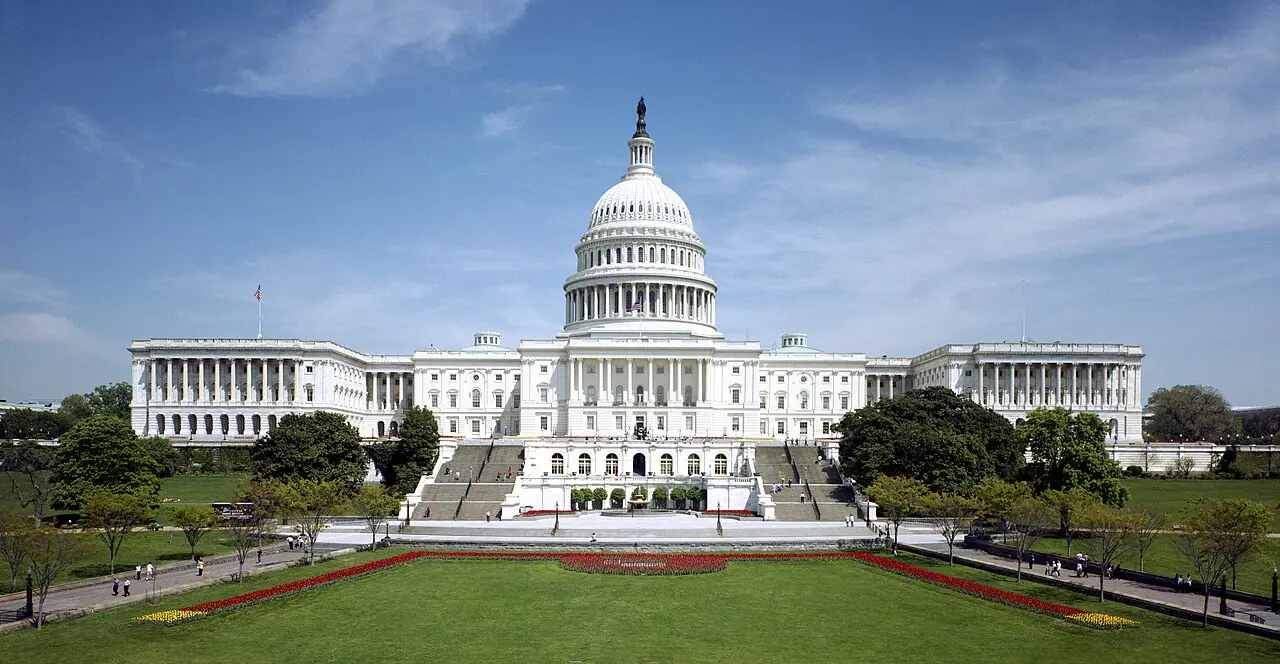
A wave of mid-decade redistricting is reshaping congressional maps across Louisiana, Alabama, Georgia, and Mississippi ahead of the 2026 midterm elections, following a U.S. Supreme Court ruling in Louisiana v. Callais that has weakened key protections under the Voting Rights Act of 1965.
The scale of the effort — states redrawing maps outside of the standard post-census cycle — is without precedent since the 19th century.
The affected states are each at different stages of redrawing, delaying, or litigating their district lines, with significant consequences for the balance of majority-Black congressional seats and the composition of the House of Representatives heading into a competitive midterm cycle.
The Supreme Court ruling driving the changes
The Louisiana v. Callais decision by the Supreme Court narrowed the standard under which courts can require states to draw majority-minority districts to remedy vote dilution under Section 2 of the Voting Rights Act. The ruling gave Republican-led legislatures renewed confidence to challenge or dissolve court-ordered maps that had required additional majority-Black districts — and several moved quickly to do so.
Louisiana: eliminating a majority-Black seat
Louisiana has been the most aggressive mover. After the Supreme Court ruling struck down its existing congressional map as an unconstitutional racial gerrymander, the legislature moved to redraw districts under less restrictive standards. Republican state senators advanced a plan that would eliminate one of the state's two majority-Black congressional seats, effectively reducing Black voting power in the state's delegation.
Gov. Jeff Landry postponed the state's congressional primary elections to allow time for the new district lines to be finalised and implement before voters go to the polls. The delay has drawn criticism from voting rights groups, who argue it is designed to entrench Republican advantages under a redrawn map before legal challenges can take effect.
Alabama: dissolving court injunctions
Alabama took steps to dissolve prior court injunctions that had mandated two majority-Black congressional districts following earlier Voting Rights Act litigation. Gov. Kay Ivey directed the state legislature to consider adjusting the primary election calendar to accommodate the redrawn district boundaries.
The state's moves come after years of litigation that had resulted in court-ordered maps creating a second majority-Black district — a district Republican legislators had resisted drawing. The post-Callais environment has given the state grounds to argue those orders are now superseded.
Georgia: deferring to 2028
Georgia took a more cautious position. Gov. Brian Kemp announced that the state would not hold a special redistricting session ahead of the 2026 midterms, citing the logistical difficulty of redrawing and implementing maps while elections are already underway.
Kemp indicated he plans to call lawmakers back to redraw legislative voting districts — though not congressional ones — ahead of the 2028 election cycle instead.
The decision means Georgia's 2026 races will be contested on the existing map, which had itself been subject to litigation over majority-Black district requirements.
Mississippi: session called off
In Mississippi, Gov. Tate Reeves recently called off a planned special legislative session that was intended to redraw state Supreme Court districts, stating there was no longer an immediate need. While no changes are being implemented for the 2026 midterms, Reeves indicated he expects the legislature to revisit congressional, legislative, and Supreme Court district lines ahead of the 2027 state elections.
Broader implications for 2026 and beyond
The redistricting wave carries significant implications for the balance of power in the U.S. House of Representatives. Majority-Black districts have historically returned Black Democratic members to Congress.
Rolling them back — or redrawing them to dilute Black voter concentration — is likely to shift several seats toward Republican candidates, potentially narrowing the path for a Democratic majority in the 2026 midterms.
National implications and the House control math
Political strategists are closely watching these developments because of the extremely thin margins in the U.S. House. In a cycle where control of the chamber could be decided by fewer than five seats, the net shift of even two or three districts in the Deep South could prove decisive.
By moving to eliminate one majority-Black district in Louisiana and challenging the second in Alabama, Republican legislatures are effectively trying to reclaim seats that were flipped to Democrats by court order in the previous cycle.
The ripple effect extends beyond the Deep South. Similar mid-decade litigation is active in North Carolina and Wisconsin, creating a national environment of 'permanent redistricting.' Unlike the 20th-century model where maps were settled for a decade, the 2026 cycle is characterized by a fluid legal landscape where voters in some states may cast ballots in districts that have changed three times in six years.
The role of the U.S. Department of Justice
The U.S. Department of Justice (DOJ) has expressed concern over the rapid redrawing of these maps, particularly where they appear to target minority voting strength. However, the Callais ruling has significantly constrained the DOJ's ability to intervene under Section 2 of the Voting Rights Act.
Federal attorneys are now forced to meet a much higher burden of proof to demonstrate that a map was drawn with 'discriminatory intent' rather than 'partisan necessity' — a distinction that the current Supreme Court majority has increasingly used to protect state-led redistricting efforts.
Voting rights advocates argue the post-Callais environment effectively accelerates a dismantling of the structural remedies built into the Voting Rights Act over decades of litigation. Legal challenges are expected in each of the states currently redrawing, but court timelines may not resolve before ballots are cast in November 2026. This creates a 'race against the clock' where unconstitutional maps may be used for a full election cycle before they can be struck down.
The mid-decade nature of the push is itself historically significant. Redistricting has traditionally occurred after each decennial census. A coordinated effort to redraw maps in the middle of a decade, timed to a midterm election cycle, is a break from established norms that critics characterise as an unprecedented use of legislative power to entrench partisan control.
As primary dates approach in Louisiana and Alabama, the focus shifts from the courtrooms to the polling stations, where the results of these map-making battles will finally be felt by voters.
Geography and themes
Related places and recurring themes for this story.
- Redistricting
- Voting Rights
- United States
About the author
NewsTenet deskReporting desk14 years' experience
Staff-edited wire and field notes turned into clear explainers—signed when a single reporter owns the file.
Focus areas
- World affairs
- Policy shifts
- Geopolitical risk
Suggested reading
Other stories that pair well with this one—often from the same section or on overlapping themes.
Thousands rally in Alabama for Black voting rights as redistricting fight reaches Montgomery and Selma
Organizers billed the May 2026 “All Roads Lead to the South” weekend as a mass response to a fresh Supreme Court order that reopened Alabama’s congressional map fight—linking Selma’s bridge to the Capitol steps where the Voting Rights Movement once converged.
Virginia redistricting fight reaches U.S. Supreme Court as justices decline emergency stay
A week after Virginia’s highest court voided a voter-approved amendment, Democratic leaders asked federal justices to freeze the ruling; the application failed, leaving pre-amendment House lines in place for now.
Barney Frank Dies at 86, LGBTQ Trailblazer
He came out in Congress in 1987, chaired Financial Services through the 2008 crash, and helped steer Dodd-Frank before retiring in 2013; his sister confirmed his death to NBC Boston.
Trump-Backed Gallrein Ousts Massie in Kentucky
Ed Gallrein, backed by Donald Trump, ousted libertarian-leaning Rep. Thomas Massie in Kentucky's May 19 GOP primary for the 4th District—the costliest House primary on record.
Wyden: DOJ May Halt Trump IRS Audits
Senate Finance Chair Ron Wyden warns reported Justice Department settlement language could halt IRS audits of older Trump-family returns; CNN, ABC, the Post, and CNBC describe overlapping terms tied to the tax-leak lawsuit.
Brookings-linked modelling puts U.S.-citizen kids touched by parental ICE detention near 145,000 since the surge
ProPublica’s unpacking of a May 2026 Brookings exercise walks through Census-informed imputation against ICE arrest streams—far above what federal forms capture when parents fear disclosing citizen children—while parallel academic trackers still document the detention-and-removal machinery in administrative data alone.
House Democrats assail Trump’s IRS deal and $1.78 billion Anti-Weaponization Fund as a patronage slush lane
Jamie Raskin calls the vehicle unconstitutional; Pramila Jayapal says the president is exercising ‘open corruption’ in plain sight—while the Justice Department frames the payout as redress for weaponization and lawfare and points to older settlement precedents.
Trump withholds commitment on Taiwan arms after Xi warning as U.S.–China trade headlines land
President Donald Trump told reporters he would decide on a stalled roughly $14 billion arms package “over the next fairly short period,” after Xi Jinping warned mishandling Taiwan could bring the powers into conflict—while Washington and Taipei each insisted broader policy had not flipped overnight.
Trump approval sinks amid unpopular Iran conflict and darkening G.O.P. midterm signals
National surveys from late April 2026 put the president’s overall job rating in the mid-thirties, pair that rating with majority rejection of the Iran fight on forced-choice items, and—on one national survey—give Democrats a ten-point lead on the generic House ballot with higher reported enthusiasm.
Trump attacks Massie as Republican critic describes ‘desperate’ attempts to oust him from primary
With Kentucky’s 4th District Republican primary on Tuesday, President Donald Trump again blasted Representative Thomas Massie on social media while Massie—framing rival spending as an outside “buy” of the seat—said his opponents act “desperate” because he believes he leads in surveys.
Keep exploring
Browse the full archive or return to the front page.
Sources and external links
Sources and filings our editors consulted to verify this story. External links open in a new tab.