Section World
‘Only four more months this government will survive’: Tamil Nadu DMK’s Anitha Radhakrishnan attacks Vijay’s TVK rule
The Tiruchendur MLA opened a southern Tamil Nadu DMK event on 18 May 2026 with that verbatim collapse line, then stretched the horizon to about six months when discussing M. K. Stalin’s return, dared TVK’s Aadhav Arjuna to resign and meet her in Tiruchendur, and reopened Kolathur and swearing-in family questions.
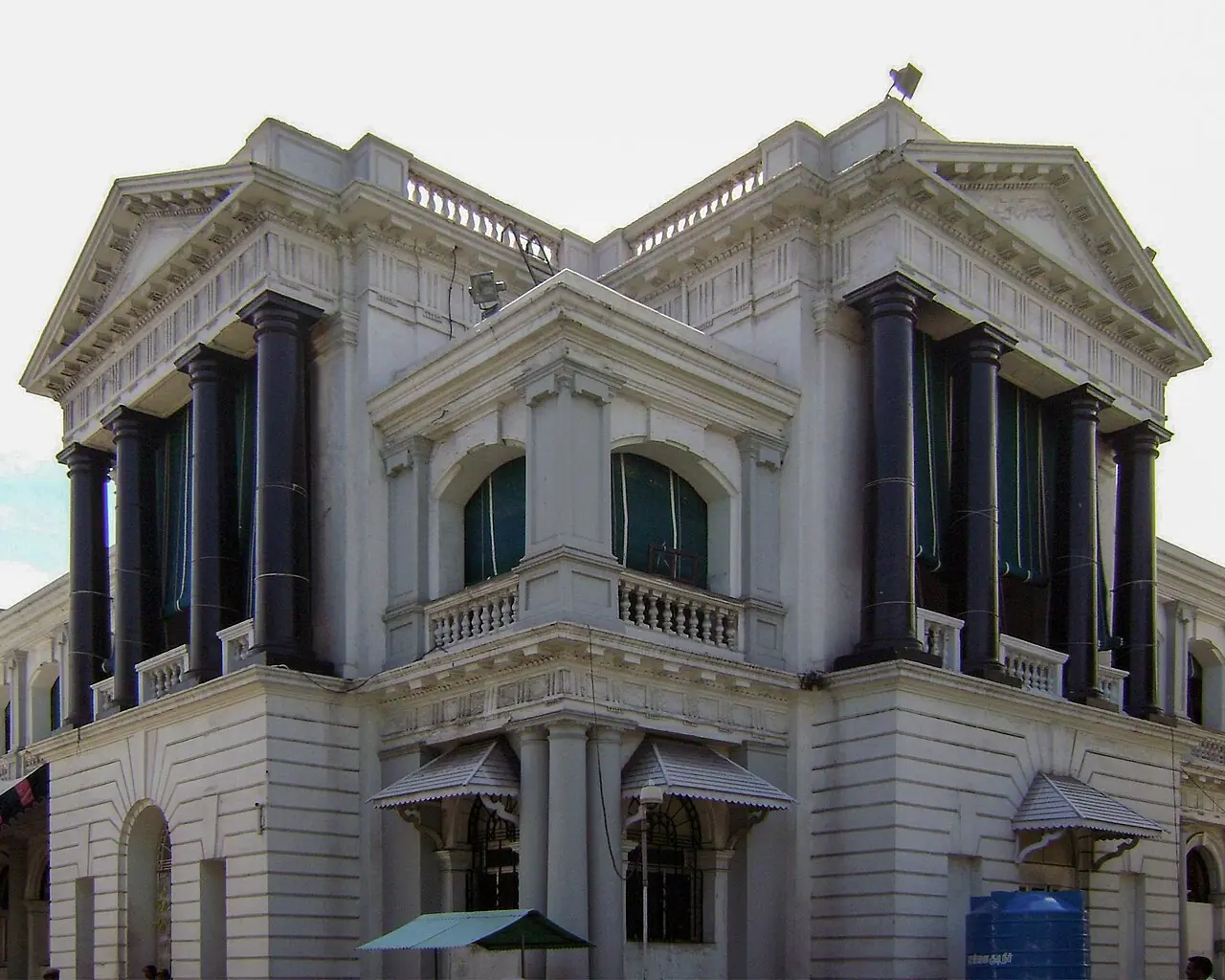
Tiruchendur legislator Anitha R. Radhakrishnan opened a Dravida Munnetra Kazhagam workers’ meeting in southern Tamil Nadu on 18 May 2026 with a single collapse vow aimed at Chief Minister Joseph Vijay’s Tamilaga Vetri Kazhagam-led government: “Only four more months this government will survive.”
In the same address she widened the horizon when discussing party president M. K. Stalin’s return—public summaries quote her stretching that collapse window to about four or six months—and she challenged TVK’s Aadhav Arjuna to resign his assembly seat and face her in Tiruchendur, a coastal constituency she has represented for more than twenty years after first winning it in 2001 on an All India Anna Dravida Munnetra Kazhagam ticket and later retaining it for the DMK, including from 2009 within the bloc she now speaks for.
The speech lands after an April assembly election that broke the state’s long DMK–AIADMK rotation: the same public tallies being recycled in 18 May copy place TVK near 108 seats in the 234-member house, with outside support from the Indian National Congress, Left parties, and Viduthalai Chiruthaigal Kazhagam—partners that in earlier cycles often sat with the DMK.
After the four-month line: confidence votes, Kolathur, and the oath-day family tableau
The same 18 May accounts tie her attack to real assembly math from the confidence motion after Vijay’s swearing-in: government supporters carried about 144 votes while roughly 22 registered on the losing side, a margin her side must now try to narrate as fragile even though it cleared the formal hurdle.
On Stalin’s personal loss in Kolathur to V. S. Babu—described across the summaries as a former DMK figure who moved to Vijay’s camp before the poll—she praised Stalin’s development record there in effusive terms while also criticising voters in the neighbourhood, language that circulated as its own flashpoint separate from the anti-government predictions.
She further asked why Vijay’s wife and children were not visible at his chief ministerial oath while his parents attended, turning a private attendance choice into a values argument against a leader who campaigns heavily on women’s safety and family-oriented themes. By the publication timestamps on the summaries reviewed for this file, Vijay’s office, TVK, and Arjuna had not yet issued replies.
What would actually have to move for a majority to crack
Calendar talk does not remove a chief minister: defections, alliance withdrawals, governor-led tests, or fresh elections do—and none of those instruments appeared in the same 18 May summaries as imminent filings or scheduled votes.
The nearer-term contest is therefore rhetorical and organisational: whether the DMK can keep district cadre focused on service gaps and price pain while the TVK ministry publishes budgets, transfers, and relief programmes voters can score before the next scheduled accountability moment. Tiruchendur itself may stay mostly a stage fight unless Arjuna accepts the resignation dare or the party leadership chooses to elevate the exchange into a formal by-election conversation.
Geography and themes
Related places and recurring themes for this story.
Suggested reading
Other stories that pair well with this one—often from the same section or on overlapping themes.
Aftenposten Modi Cartoon Stirs Racism Row
Aftenposten ran Halleraker’s cartoon the same day as Rossavik’s Meninger column; Red MP Rana called it racist; political editor Alstadheim told Dagbladet the symbols backed Rossavik’s point and were not meant to demean.
Trump delays Iran strike after Gulf appeal
President Donald Trump said late on 18 May 2026 in Washington that he was postponing a U.S. military strike on Iran that had been scheduled for the following day after Qatar, Saudi Arabia, and the United Arab Emirates asked for time while diplomacy continued; he also told the armed forces to stay ready for a large-scale assault if talks fail.
Brussels Brexit veterans say a UK return would mean normal EU membership, not the old carve-outs
Georg Riekeles and Sandro Gozi, among others, describe warmth toward a future application but zero appetite to recreate bespoke opt-outs; the Commission stays on this week’s brief—July summit prep—not hypothetical accession terms.
India’s energy stress deepens as Hormuz risk drains crude tanks and forces pump-price catch-up
Commercial and strategic crude pools tracked by analytics houses have slid about fifteen per cent since late February while refiners keep runs high; Delhi is now bridging the gap with larger Atlantic and Russian-linked programmes, excise sacrifices, citizen conservation appeals, and the first visible retail increases after months of political patience.
India says Russian crude buys track commercial logic—not Washington’s waiver calendar
Petroleum ministry joint secretary Sujata Sharma told reporters on 18 May 2026 that imports ran before, during, and after the latest U.S. Treasury carve-out, while state fuel retailers still bleed roughly ₹750 crore a day even after a ₹3-per-litre pump increase.
Has Brexit really been a ‘catastrophic mistake’ for the UK?
The phrase is now political ammunition—most recently from a Labour leadership hopeful—but answering it honestly means separating rhetorical heat from official productivity modelling, from long-run polling regret, and from what voters will still tolerate if Westminster tries to reopen the 2016 choice.
‘Lack of understanding’: India answers Dutch press-freedom questions during Modi’s Hague visit
Secretary (West) Sibi George told reporters some trade headlines shortened his reply as a lack of knowledge; on the ministry transcript he faulted a lack of understanding of India while defending pluralism, turnout, and minority population trends during Narendra Modi’s Netherlands stop.
Why America feels split—and why the world can’t agree on the United States
Census and World Bank population lines, Pew’s partisan and trust batteries, inequality in the World Bank Gini series, and Pew’s Spring 2024 global snapshot: one country’s domestic fracture sitting next to a median foreign public that still tilts favourable—just not everywhere.
The UK is edging closer to Europe again—without calling it rejoining
Think-tank and policy analysis of the post-2024 Labour reset describes a widening lattice of UK–EU agreements—defence industry access, sanitary and phytosanitary talks, youth and electricity files, and a path back into Erasmus+—all while ministers repeat manifesto red lines against the single market, customs union, and freedom of movement.
Why India’s megascale still strains water, cities, and budgets in the 2020s
World Population Prospects, World Bank water briefs, and Indian household-survey tables in one place: the measurable story of the world’s largest national population colliding with monsoon hydrology, irrigation demand, and urban pipes.
Keep exploring
Browse the full archive or return to the front page.
Sources and external links
Sources and filings our editors consulted to verify this story. External links open in a new tab.