Section World
Why India’s megascale still strains water, cities, and budgets in the 2020s
World Population Prospects, World Bank water briefs, and Indian household-survey tables in one place: the measurable story of the world’s largest national population colliding with monsoon hydrology, irrigation demand, and urban pipes.
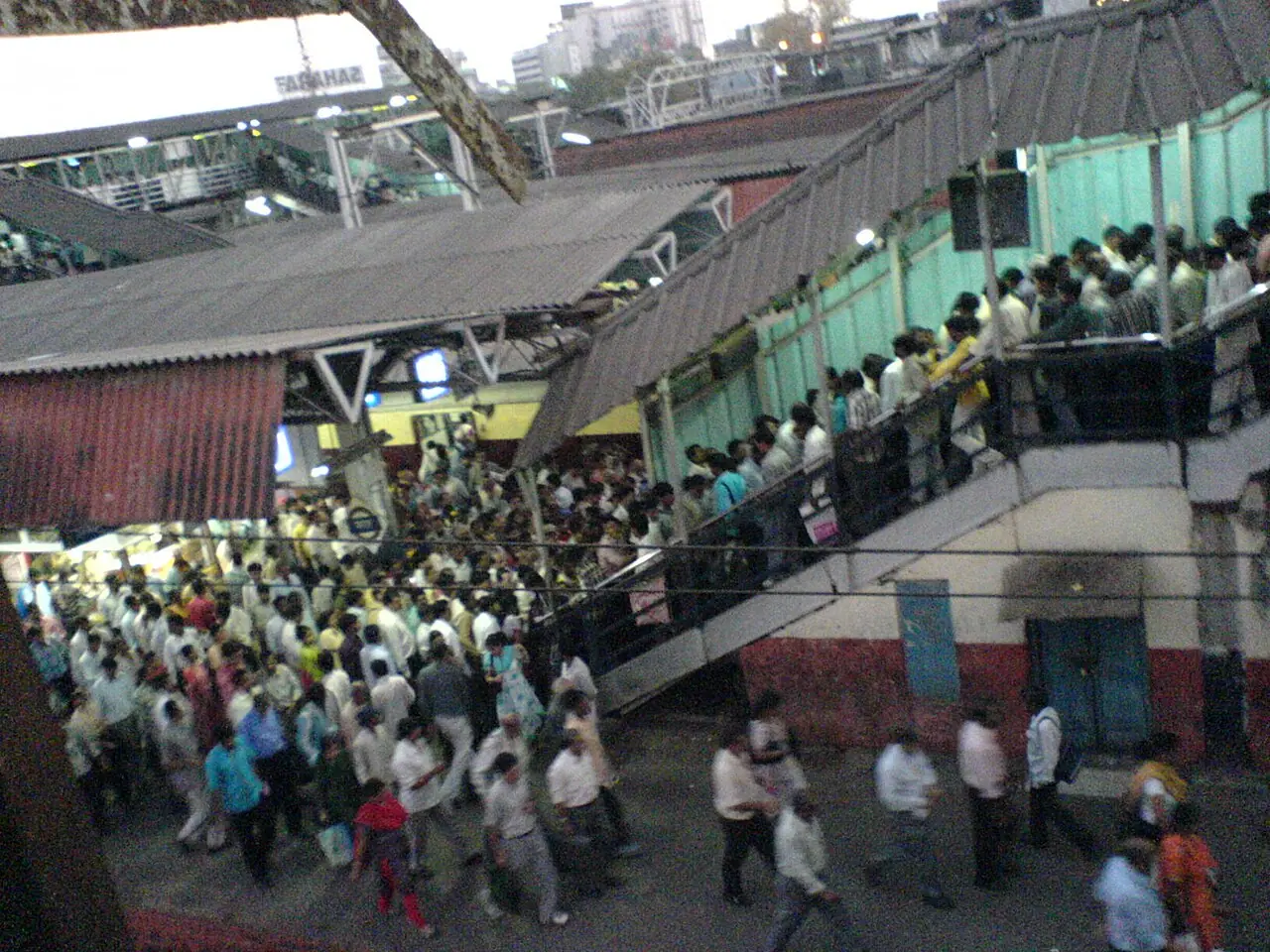
India’s demographic weight is no longer a future headline: the United Nations’ 2024 revision of World Population Prospects treats India as likely to remain the world’s largest national population throughout the twenty-first century, with a projected peak in the early 2060s near 1.7 billion people before a gradual decline of roughly twelve per cent toward century’s end. That long arc matters for carbon budgets, food markets, and diplomacy—but day-to-day politics often turns on a narrower arithmetic: how fast schools, hospitals, power grids, and aquifers can stretch when millions more households each year want taps, scooters, protein, and cooling degree-hours.
Resource stress is therefore best read as a per-person and per-place problem, not a single national guilt figure. A World Bank country brief on India’s water economy, updated in the desk window for this piece, compresses the hydrology into one memorable ratio the institution has used in public summaries: India hosts about eighteen per cent of the world’s people on roughly four per cent of its renewable freshwater, with rainfall concentrated so that nearly seven-tenths of precipitation can fall in just three months. The same overview notes that per capita water availability has roughly halved since 1970 and that on the order of six hundred million people live under significant water stress, while urbanisation could add more than four hundred million city residents by mid-century—each increment tightening competition among homes, factories, and the irrigation systems that still consume the largest share of withdrawals.
What the UN projections imply—and what they do not
The 2024 World Population Prospects synthesis groups India with several other very large countries—including Indonesia, Nigeria, Pakistan, and the United States—whose populations are likely to keep growing through 2054 under the report’s medium scenario, unlike dozens of countries (including China) where size has already peaked or is projected to peak before mid-century. For readers comparing India with China, the same UN summary stresses a stark asymmetry in the next thirty years: China, still the world’s second most populous country in 2024, is projected to record the largest absolute population loss of any country between 2024 and 2054—on the order of two hundred million people—while India’s trajectory in that window is still upward before its much later national peak.
At global scale, the UN’s youth headline is also useful for India’s school-and-jobs math: the world counted about 1.3 billion people aged roughly 15–24 in 2024, with that cohort projected to edge up to a peak near 1.4 billion in the early 2030s before slowly declining—growth that is not evenly distributed, because much of the increase is concentrated in sub-Saharan Africa. India’s own age pyramid still carries momentum from past high fertility: many women already born will move through childbearing years even as each woman’s expected births fall—so total population can rise for years after national total fertility slips below the long-run replacement shorthand of about 2.1 children per woman.
None of that mechanical modelling tells a mayor how many boreholes a ward may drill tomorrow; it does frame central finance: pension timing, teacher recruitment waves, and the years when peak energy demand for air-conditioning may overlap with still-rising irrigation loads.
Water: the clearest textbook example of “more people, same rain”
Surface-water storage, groundwater tables, and inter-state river compacts all respond slowly; demand from cities and industry responds quickly. When a monsoon weakens or shifts, the same population feels it as crop loss, power-plant cooling limits, and tanker economies in peripheral suburbs. The World Bank’s India water note states that agriculture alone consumes about eighty to ninety per cent of the country’s water withdrawals—roughly two to three times the agricultural share reported for China or Brazil—which is why crop choice (rice and wheat in stressed aquifer belts, sugarcane in some northern states) is inseparable from “population pressure” in newspaper debates.
The same brief quantifies the urban financing gap: it cites an order-of-magnitude estimate that urban water infrastructure alone may need on the order of $150 billion over the next fifteen years, alongside storage, irrigation, and flood works, while user charges in many cities still fail to cover operations and maintenance—limiting service hours and private finance. On the positive ledger the institution publishes for its own portfolio, it aims to improve water security for about one hundred million people in India during FY25–30—roughly one-quarter of a four hundred million global target—through programmes aligned with national schemes the bank names explicitly, including Jal Jeevan Mission, AMRUT, and Swachh Bharat.
World Bank sectoral language in the same overview underscores how water-dependent activities contribute on the order of half of economic value added while engaging a large majority of workers—so scarcity is simultaneously a welfare story and a competitiveness story for firms that need reliable inputs. “Virtual water” embedded in food trade, crop choice, and electricity generation therefore enters cabinet slides as often as litre-per-day household norms.
Land, energy, and services: where density becomes queue length
Even where aggregate hectares of arable land look adequate on a map, fragmentation, salinity, and non-farm conversion shrink effective farming units. Urban land markets translate population pressure into rent spirals long before anyone debates a national carrying capacity. On the energy side, peak-load hours on distribution networks and the cost of imported fuels interact with the same summer afternoons when water pumps run hardest.
The World Bank’s water-for-planet section on India adds hard infrastructure ageing numbers that rarely make population op-eds but shape risk: roughly three hundred of about five thousand large dams are already more than one hundred years old, with many classified in higher-hazard bands—relevant when cities downstream assume stable flood moderation as populations thicken on floodplains. The same documentation notes that the Ganga basin alone supports on the order of five hundred million people, tying river health to nutrition, groundwater recharge narratives, and inter-state politics simultaneously.
On data infrastructure—often the difference between panic and planning—the bank reports that India’s National Hydrology Project–style backbone has integrated on the order of one hundred nineteen thousand hydro-meteorological monitoring stations into a national platform, with more than eighteen states building or strengthening State Water Informatics Centres—the kind of public good that must scale if “more people” is to meet measurable per capita risk reduction rather than anecdote.
Education and primary-care queues are the social face of the same curve: states that reduced family size faster still need more teachers per child if standards rise; states with younger age structures need classrooms first. Quality metrics—learning outcomes, nurse-to-bed ratios—scale worse than headline enrolment when budgets grow linearly while cohorts bulge.
Why “fertility is falling” is not an all-clear siren
India’s most recent large household survey round used in national briefings—NFHS-5, covering 2019–21—put all-India total fertility at 2.0 children per woman, below the long-run replacement shorthand of about 2.1 cited in Indian government population-health policy documents. A December 2022 written parliamentary reply summarising those results also recorded thirty-one of thirty-six states and union territories at or below replacement-level fertility, modern contraceptive use at about 56.5 per cent, unmet need for family planning near 9.4 per cent, and a Sample Registration System crude birth rate of 19.5 live births per thousand population in 2020—each figure a lagging indicator that still moves more slowly than the school-age bulge already in the classroom.
Lower desired family size is good news for maternal health and female labour-force participation when paired with jobs and contraceptive access. It does not instantly shrink school-age rolls, erase housing deficits, or refill aquifers. Climate volatility adds variance on top of trend: one bad monsoon can erase several years of per capita income gains in rain-fed districts, precisely where public insurance schemes are stretched thinnest.
What honest policy debates sound like
Serious answers combine efficiency (more crop per drop, less transmission loss on power lines, better land-use rules near transit), redistribution (cross-subsidies in water tariffs, fiscal federalism so poorer states are not trapped), and openness to trade in food and fuel where domestic buffers are thin. The World Bank’s own India examples show the pattern: performance-based water contracts and ring-fenced utility accounts in states such as Karnataka and Himachal Pradesh (Shimla); hybrid annuity structures under Namami Gange that split capital risk between government annuities and private operators where effluent standards bind; and tertiary reuse pilots in Chennai that free freshwater for households by selling treated wastewater to industry—each a concrete lever where “carrying capacity” is really governance capacity.
International readers should resist the caricature that India is either doomed or destined to succeed solely from demography: the same population size produces Kerala-style human-development paths or Bihar-scale service gaps depending on institutions and investment timing. Watch for updated census releases, groundwater satellite assessments, and state-level urban water utility balance sheets—they move the facts faster than a once-a-decade slogan about population control ever could.
Geography and themes
Related places and recurring themes for this story.
Suggested reading
Other stories that pair well with this one—often from the same section or on overlapping themes.
India’s energy stress deepens as Hormuz risk drains crude tanks and forces pump-price catch-up
Commercial and strategic crude pools tracked by analytics houses have slid about fifteen per cent since late February while refiners keep runs high; Delhi is now bridging the gap with larger Atlantic and Russian-linked programmes, excise sacrifices, citizen conservation appeals, and the first visible retail increases after months of political patience.
India says Russian crude buys track commercial logic—not Washington’s waiver calendar
Petroleum ministry joint secretary Sujata Sharma told reporters on 18 May 2026 that imports ran before, during, and after the latest U.S. Treasury carve-out, while state fuel retailers still bleed roughly ₹750 crore a day even after a ₹3-per-litre pump increase.
Why China’s ageing curve is squeezing workers, pensions, and property at the same time
National Bureau of Statistics year-end 2024 tables alongside UN World Population Prospects 2024 and World Bank fertility prints: what “demographic crisis” means in workers, elders, yuan growth lines, and housing—not cable-news slogans.
Indian banks nudge fixed-deposit yields higher even with the RBI’s policy rate on pause
Mid-May 2026 rate cards show several large private lenders refreshing select tenures on the same calendar dates while small finance banks still print the headline peaks near eight per cent—competition for stable rupee funding, not a fresh repo hike, is doing most of the work.
Aftenposten Modi Cartoon Stirs Racism Row
Aftenposten ran Halleraker’s cartoon the same day as Rossavik’s Meninger column; Red MP Rana called it racist; political editor Alstadheim told Dagbladet the symbols backed Rossavik’s point and were not meant to demean.
UK firms freeze capex and hiring plans as Hormuz-linked costs bite mid-market balance sheets
A BDO snapshot of five hundred mid-market companies finds three in five shelving or cancelling investment while Brent-style crude holds above one hundred dollars; parallel CIPD work shows fifty-eight per cent of employers putting cost control ahead of expansion with redundancy risks ticking up.
IMF nudges up its 2026 UK growth call while flagging Hormuz and home-grown risks
Article IV staff now pencil about 1.0 per cent GDP growth for 2026 after a modest upward revision from April’s World Economic Outlook track, yet they still warn that a drawn-out Middle East conflict, volatile energy markets, and domestic hesitation could sap consumption and investment.
Has Brexit really been a ‘catastrophic mistake’ for the UK?
The phrase is now political ammunition—most recently from a Labour leadership hopeful—but answering it honestly means separating rhetorical heat from official productivity modelling, from long-run polling regret, and from what voters will still tolerate if Westminster tries to reopen the 2016 choice.
‘Lack of understanding’: India answers Dutch press-freedom questions during Modi’s Hague visit
Secretary (West) Sibi George told reporters some trade headlines shortened his reply as a lack of knowledge; on the ministry transcript he faulted a lack of understanding of India while defending pluralism, turnout, and minority population trends during Narendra Modi’s Netherlands stop.
‘Only four more months this government will survive’: Tamil Nadu DMK’s Anitha Radhakrishnan attacks Vijay’s TVK rule
The Tiruchendur MLA opened a southern Tamil Nadu DMK event on 18 May 2026 with that verbatim collapse line, then stretched the horizon to about six months when discussing M. K. Stalin’s return, dared TVK’s Aadhav Arjuna to resign and meet her in Tiruchendur, and reopened Kolathur and swearing-in family questions.
Keep exploring
Browse the full archive or return to the front page.
Sources and external links
Sources and filings our editors consulted to verify this story. External links open in a new tab.
- World Population Prospects 2024 — data and publications (UN DESA Population Division) (opens in a new tab)— United Nations Department of Economic and Social Affairs
- World Population Prospects 2024: Summary of Results (PDF, UN Population Division) (opens in a new tab)— United Nations Department of Economic and Social Affairs
- National Family Planning Program — NFHS-5 TFR and SRS crude birth rate (PIB, 13 Dec 2022) (opens in a new tab)— Press Information Bureau, Government of India