Section World
Post analysis of satellite imagery ties Iranian strikes to damage or loss of at least 228 U.S. structures or pieces of equipment
A Washington Post investigation published in early May 2026 says it catalogued hangars, barracks, fuel sites, aircraft, and radar, communications, and air-defense assets hit across fifteen U.S. military locations in six Gulf and Levant partner states—arguing the tally dwarfs prior public U.S. disclosures while documenting how commercial imagery gaps and Iranian-published photos shaped what could be verified.
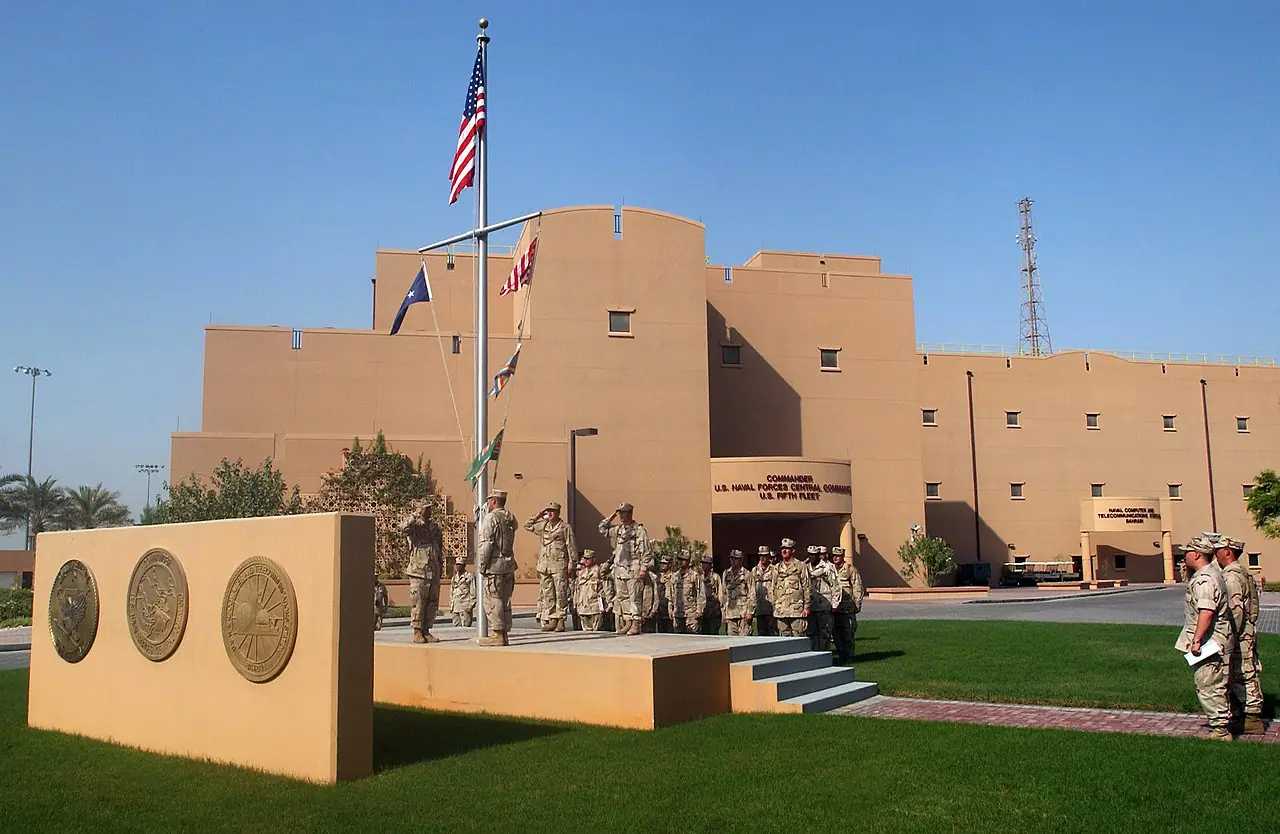
The Washington Post reported that Iranian airstrikes and related fires had damaged or destroyed at least 228 structures or pieces of equipment at U.S. military sites across the Middle East since hostilities widened in late February 2026, citing the newspaper’s own review of satellite and overhead evidence. The lead conclusion—echoed in secondary summaries of the same investigation—was blunt: the visible destruction footprint appears far larger than what Washington had publicly acknowledged at the time the story ran.
This brief summarises the Post’s published claims and the caveats its reporters attached; it does not substitute for Pentagon damage assessments, which may classify targets, suppress imagery, or count losses on different taxonomies than open-source analysts.
Geographic scope the investigation emphasised
Downstream write-ups of the Post analysis said damage was traced across fifteen U.S. facilities spread through Kuwait, Bahrain, Qatar, Jordan, Saudi Arabia, and the United Arab Emirates—a footprint consistent with CENTCOM’s dispersed posture rather than a single mega-base narrative. Some summaries attributed to the same investigation broke the headline 228 count into 217 damaged or destroyed structures plus 11 damaged equipment items, a taxonomy reminder that “structure” and “platform” lines blur in overhead views. Naval Support Activity Bahrain, home of the Fifth Fleet headquarters, and three Kuwait installations—Ali al-Salem Air Base, Camp Arifjan, and Camp Buehring—were repeatedly highlighted as concentration points for heavy strikes.
Equipment classes named in summaries of the Post work include Patriot batteries in Bahrain and Kuwait, satellite-communications nodes at Al Udeid in Qatar, radomes at several posts, and THAAD-linked radar and support gear in Jordan and the UAE—categories that matter because they bridge force protection, theatre C2, and missile-defence depth.
Human and operational knock-ons the story tied to the same dataset
Secondary accounts of the investigation cited seven American service members killed—six in Kuwait and one in Saudi Arabia—and more than 400 wounded by late April, with most returning quickly but at least 12 suffering serious injuries, alongside command decisions to thin staffing at exposed sites early in the campaign. Those figures are politically salient even when medically “returned to duty” masks lingering trauma and readiness drag.
Separately, the Post reporting described how commercial satellite vendors tightened or withheld Middle East imagery after U.S. government requests—an information-control choice that simultaneously complicates adversary targeting and slows independent verification, then forces reporters toward Iranian state-affiliated releases the paper said it cross-checked where Copernicus baselines allowed.
Method limits readers should carry alongside the 228 headline
Open-source war accounting always risks double counting rubble, mistaking maintenance revetments for fresh hits, or missing repaired roofs that satellites see as intact weeks later. The Post narrative, as relayed by outlets that reviewed it, acknowledged excluding frames where before-and-after comparisons were inconclusive—honest science that still leaves headline numbers sensitive to threshold choices about what counts as “destroyed.”
When Iranian outlets publish crisp overhead shots, authenticity checks matter, but so does motive: Tehran has incentives to maximise visible harm narratives. The Post said it treated a subset of those images as usable after verification steps; readers should still treat any single still as evidence of publication, not necessarily evidence of totalised U.S. combat incapacity.
What would update this file responsibly
Department of Defense imagery releases, CENTCOM after-action reviews, Congress testimony with unclassified damage ranges, and post-war contractor repair contracts would each test the 228 figure against official ledgers. Until then, the honest epistemic label for the Post project is “best available public composite,” not a closed forensic verdict—and the strategic question remains how much persistent Gulf basing friction those hits impose even when platforms are replaced on paper.
Geography and themes
Related places and recurring themes for this story.
Suggested reading
Other stories that pair well with this one—often from the same section or on overlapping themes.
Trump delays Iran strike after Gulf appeal
President Donald Trump said late on 18 May 2026 in Washington that he was postponing a U.S. military strike on Iran that had been scheduled for the following day after Qatar, Saudi Arabia, and the United Arab Emirates asked for time while diplomacy continued; he also told the armed forces to stay ready for a large-scale assault if talks fail.
Trump on Truth Social: Iran’s “clock is ticking,” move “FAST,” or “there won’t be anything left of them”
Agency-backed outlets reported on 17 May 2026 that U.S. President Donald Trump posted a capitalised ultimatum to Tehran on Truth Social amid fragile Gulf ceasefire diplomacy, quoting him verbatim as tying speed on a deal to survival while pairing the message with a reported call to Israeli Prime Minister Benjamin Netanyahu.
US–Iran war in the Middle East: who is involved, what each country is doing, and how they are affected
A widening U.S.–Iran war is fought with missiles and sanctions but lived through shipping insurance, food prices, refugee routes, and alliance politics from Manama to Mumbai—this is a full tour of the chessboard, not a scorecard of two capitals alone.
FBI maintains $200,000 reward for former US counterintelligence agent Monica Witt over Iran espionage charges
The former Air Force intelligence specialist remains a fugitive after defecting to Iran in 2013 and allegedly handing over highly classified national defense information.
Revised Iranian proposal to end war shared with U.S., Pakistani source says
Prime Minister Shehbaz Sharif told a public event in Islamabad that Pakistan had received Iran’s written answer to Washington’s latest peace text, while Iranian state outlets framed the document around stopping the war and reopening shipping. Wire dispatches citing a Pakistani government official involved in mediation said the material was passed onward to the United States the same day.
Iran’s World Cup squad reaches Türkiye for camp while US entry papers stay unresolved
Wire and regional copy describe a May 18 departure toward Antalya for weeks of friendlies and logistics—still paired with federation warnings that American visas had not materialized and that FIFA was being asked to help secure guarantees before June fixtures in the United States.
War has made the United States and Iran weaker—in different ways and on different clocks
Open conflict shrinks margin for both Washington and Tehran: budgets, energy markets, and domestic legitimacy absorb shocks that do not land symmetrically, even when each side still has lethal tools left.
U.S. indicts Raúl Castro over 1996 plane shootdown
Federal prosecutors in Miami unsealed murder and conspiracy charges against the 94-year-old former Cuban leader for his alleged role in downing two civilian aircraft.
Cooper presses Gulf partners to reopen Hormuz routes farmers need for fertiliser
Britain’s foreign secretary has tied Iran’s disruption of the strait to fertiliser reaching African fields and wider prosperity, while parallel reporting documents urea spikes, stuck cargoes, and UN hunger modelling that treat the next planting cycles as the clock that matters.
Tehran floats Hormuz tolls on subsea internet cables as IRGC-tied media talk billions
Euronews and RFE/RL trace how Tasnim- and Fars-style outlets are packaging seabed leverage—transit fees, forced maintenance clauses, even cloud-giant localisation demands—while Mostafa Taheri, an Iranian parliamentary industries voice, throws around a headline revenue ceiling on the order of fifteen billion dollars annually that markets treated as rhetoric, not an invoice.
Keep exploring
Browse the full archive or return to the front page.
Sources and external links
Sources and filings our editors consulted to verify this story. External links open in a new tab.