Section World
FBI maintains $200,000 reward for former US counterintelligence agent Monica Witt over Iran espionage charges
The former Air Force intelligence specialist remains a fugitive after defecting to Iran in 2013 and allegedly handing over highly classified national defense information.
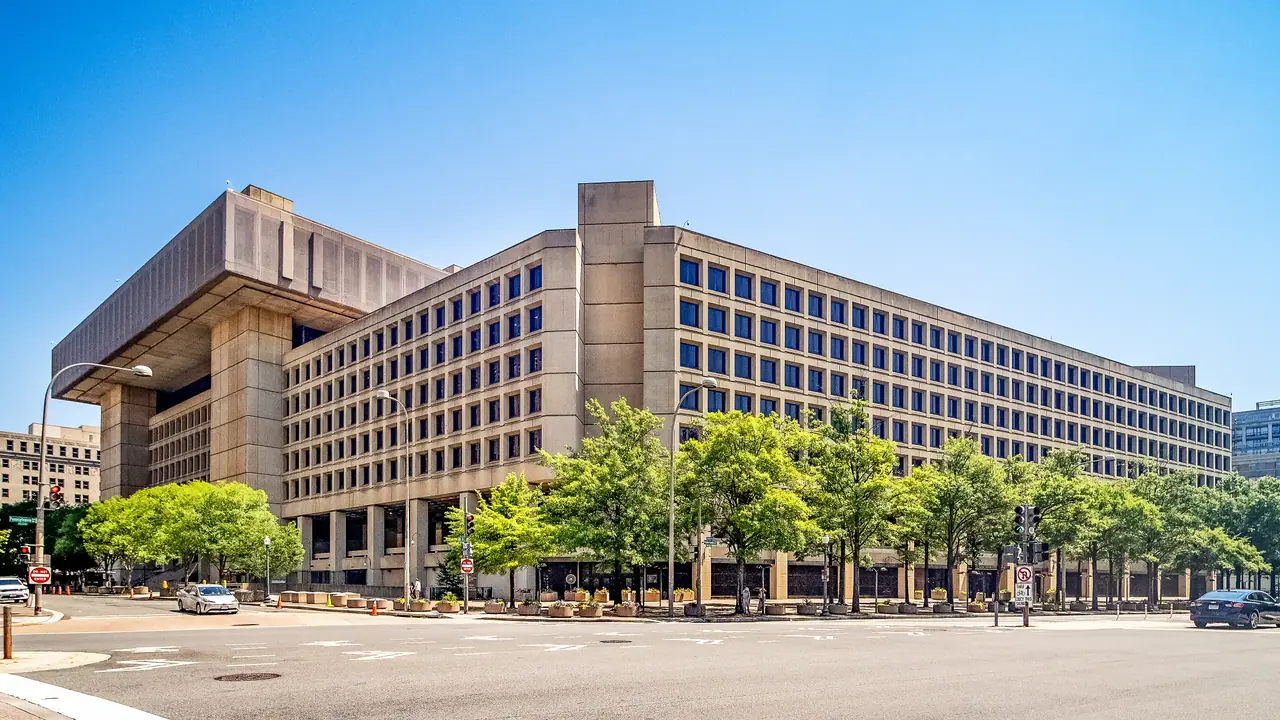
The Federal Bureau of Investigation continues to seek the arrest of Monica Elfriede Witt, a former U.S. Air Force intelligence specialist indicted for espionage on behalf of the Iranian government. Witt, who defected to Iran in 2013, is accused of revealing the identities of U.S. intelligence personnel and providing highly classified national defense information to Iranian operatives.
Her defection represents one of the most severe security breaches by an American intelligence professional in recent years. Witt's actions allegedly provided the Iranian regime with the operational details necessary to target her former colleagues, significantly jeopardizing U.S. national security operations in the Middle East and exposing the methods of the U.S. Intelligence Community to a foreign adversary.
Intelligence background and early career
Witt served as a cryptologic linguist and counterintelligence investigator in the U.S. Air Force from 1997 to 2008. During her active duty service, she was deployed to several locations in the Middle East, conducting classified missions that required her to identify and neutralize foreign intelligence threats.
Following her military career, she worked as a cleared defense contractor until 2010.
During her tenure, she held high-level Top Secret/Sensitive Compartmented Information (TS/SCI) security clearances. This access granted her deep insight into U.S. intelligence collection programs targeting foreign adversaries, specifically operations related to the Iranian government and its military apparatus.
Recruitment and defection to Iran
Following her departure from government service, Witt began expressing ideological shifts and dissatisfaction with U.S. foreign policy. In 2012, she traveled to Iran to attend a conference sponsored by the New Horizon Organization, an entity that U.S. officials claim acts as a front for the Islamic Revolutionary Guard Corps (IRGC) Quds Force to spot, assess, and recruit foreign attendees for Iranian intelligence.
While American counterintelligence agents warned her about the nature of the conference, Witt reportedly ignored the warnings and returned to Iran in 2013 for a subsequent event. It was during this period that investigators state she officially defected. She is believed to have renounced her U.S. citizenship, converted to Islam, and offered her specialized services to the government in Tehran, bringing with her a wealth of classified knowledge.
Alleged espionage operations and target packages
In February 2019, a federal grand jury indicted Witt on charges of conspiracy to deliver and the actual delivery of classified national defense information to representatives of the Iranian government. The indictment outlines a calculated effort to compromise U.S. assets and programs.
According to federal prosecutors, Witt committed several severe breaches of national security:
- Disclosed classified programs: She reportedly revealed the existence and highly classified code name of a U.S. Department of Defense Special Access Program (SAP) to Iranian authorities.
- Exposed U.S. personnel: She is accused of revealing the true identity and classified operations of a specific U.S. intelligence officer she had worked alongside, thereby putting that individual's life in immediate danger.
- Created target packages: Leveraging her intimate knowledge of the U.S. Intelligence Community, Witt conducted extensive research on her former colleagues to build detailed "target packages." These dossiers contained personal and professional information intended to help Iranian intelligence services identify, recruit, or compromise American operatives.
Coordinated cyber espionage campaign
The 2019 indictment did not solely focus on Witt. It also charged four Iranian nationals— Mojtaba Masoumpour, Behzad Mesri, Hossein Parvar, and Mohamad Paryar—with conspiracy, computer intrusion, and aggravated identity theft. This group, acting on behalf of the IRGC, utilized the specific target packages developed by Witt to launch a malicious cyber campaign against her former U.S. colleagues.
The connection between Witt's intelligence gathering and the subsequent cyber activities demonstrates a highly coordinated effort. The conspirators used the personal details provided by Witt to create fraudulent social media accounts, posing as individuals known to the targets. Through these fake personas, they initiated contact and sent messages containing malicious links and attachments.
When targets interacted with these seemingly benign messages, the attackers deployed malware designed to grant them covert access to the targets' computers. This allowed the Iranian hackers to capture keystrokes, monitor webcams, exfiltrate files, and observe real-time online activity, directly threatening the operational security of active U.S. intelligence agents.
The indictment and international implications
The unsealing of the indictment in 2019 sent a clear message to the intelligence community about the enduring threat of insider compromises. The charges against Witt carry severe penalties, reflecting the gravity of her alleged betrayal.
The coordinated cyber attacks that followed her defection highlight the evolving nature of espionage, where traditional human intelligence (HUMINT) gathering is combined with advanced cyber operations to maximize the impact against an adversary.
Ongoing fugitive status and $200,000 reward
As of May 2026, the FBI maintains that Witt is currently residing in Iran, where she is shielded from U.S. extradition treaties. Because the charges involve espionage and severe, ongoing national security risks, the case remains an active priority for federal counterintelligence investigators.
The U.S. government continues to authorize a reward of up to $200,000 for information leading directly to her arrest and conviction. While her physical apprehension by U.S. authorities remains highly unlikely as long as she stays within Iranian borders, the standing indictment severely limits her international mobility. Any travel to a country with a U.S. extradition treaty could result in her immediate detention.
The public accounting of her alleged compromises serves both as a deterrent to others and a necessary step in mitigating the damage she caused. The FBI’s Washington Field Office continues to monitor her status, urging anyone with actionable intelligence on her location outside of Iran to contact the nearest U.S. Embassy or Consulate.
Geography and themes
Related places and recurring themes for this story.
- Espionage
- Iran
- United States
About the author
NewsTenet deskReporting desk14 years' experience
Staff-edited wire and field notes turned into clear explainers—signed when a single reporter owns the file.
Focus areas
- World affairs
- Policy shifts
- Geopolitical risk
Suggested reading
Other stories that pair well with this one—often from the same section or on overlapping themes.
Trump delays Iran strike after Gulf appeal
President Donald Trump said late on 18 May 2026 in Washington that he was postponing a U.S. military strike on Iran that had been scheduled for the following day after Qatar, Saudi Arabia, and the United Arab Emirates asked for time while diplomacy continued; he also told the armed forces to stay ready for a large-scale assault if talks fail.
Trump on Truth Social: Iran’s “clock is ticking,” move “FAST,” or “there won’t be anything left of them”
Agency-backed outlets reported on 17 May 2026 that U.S. President Donald Trump posted a capitalised ultimatum to Tehran on Truth Social amid fragile Gulf ceasefire diplomacy, quoting him verbatim as tying speed on a deal to survival while pairing the message with a reported call to Israeli Prime Minister Benjamin Netanyahu.
US–Iran war in the Middle East: who is involved, what each country is doing, and how they are affected
A widening U.S.–Iran war is fought with missiles and sanctions but lived through shipping insurance, food prices, refugee routes, and alliance politics from Manama to Mumbai—this is a full tour of the chessboard, not a scorecard of two capitals alone.
Revised Iranian proposal to end war shared with U.S., Pakistani source says
Prime Minister Shehbaz Sharif told a public event in Islamabad that Pakistan had received Iran’s written answer to Washington’s latest peace text, while Iranian state outlets framed the document around stopping the war and reopening shipping. Wire dispatches citing a Pakistani government official involved in mediation said the material was passed onward to the United States the same day.
Post analysis of satellite imagery ties Iranian strikes to damage or loss of at least 228 U.S. structures or pieces of equipment
A Washington Post investigation published in early May 2026 says it catalogued hangars, barracks, fuel sites, aircraft, and radar, communications, and air-defense assets hit across fifteen U.S. military locations in six Gulf and Levant partner states—arguing the tally dwarfs prior public U.S. disclosures while documenting how commercial imagery gaps and Iranian-published photos shaped what could be verified.
Iran’s World Cup squad reaches Türkiye for camp while US entry papers stay unresolved
Wire and regional copy describe a May 18 departure toward Antalya for weeks of friendlies and logistics—still paired with federation warnings that American visas had not materialized and that FIFA was being asked to help secure guarantees before June fixtures in the United States.
War has made the United States and Iran weaker—in different ways and on different clocks
Open conflict shrinks margin for both Washington and Tehran: budgets, energy markets, and domestic legitimacy absorb shocks that do not land symmetrically, even when each side still has lethal tools left.
U.S. indicts Raúl Castro over 1996 plane shootdown
Federal prosecutors in Miami unsealed murder and conspiracy charges against the 94-year-old former Cuban leader for his alleged role in downing two civilian aircraft.
Cooper presses Gulf partners to reopen Hormuz routes farmers need for fertiliser
Britain’s foreign secretary has tied Iran’s disruption of the strait to fertiliser reaching African fields and wider prosperity, while parallel reporting documents urea spikes, stuck cargoes, and UN hunger modelling that treat the next planting cycles as the clock that matters.
Tehran floats Hormuz tolls on subsea internet cables as IRGC-tied media talk billions
Euronews and RFE/RL trace how Tasnim- and Fars-style outlets are packaging seabed leverage—transit fees, forced maintenance clauses, even cloud-giant localisation demands—while Mostafa Taheri, an Iranian parliamentary industries voice, throws around a headline revenue ceiling on the order of fifteen billion dollars annually that markets treated as rhetoric, not an invoice.
Keep exploring
Browse the full archive or return to the front page.
Sources and external links
Sources and filings our editors consulted to verify this story. External links open in a new tab.