Section Education
India’s 2026 medical school entrance exam is at the centre of a national leak investigation
After the 3 May 2026 NEET (UG) sitting, police and the CBI are tracing phones, money trails, and custody statements. Charges in a first information report are not trial proof; NTA PDF notices still set the rules for students.
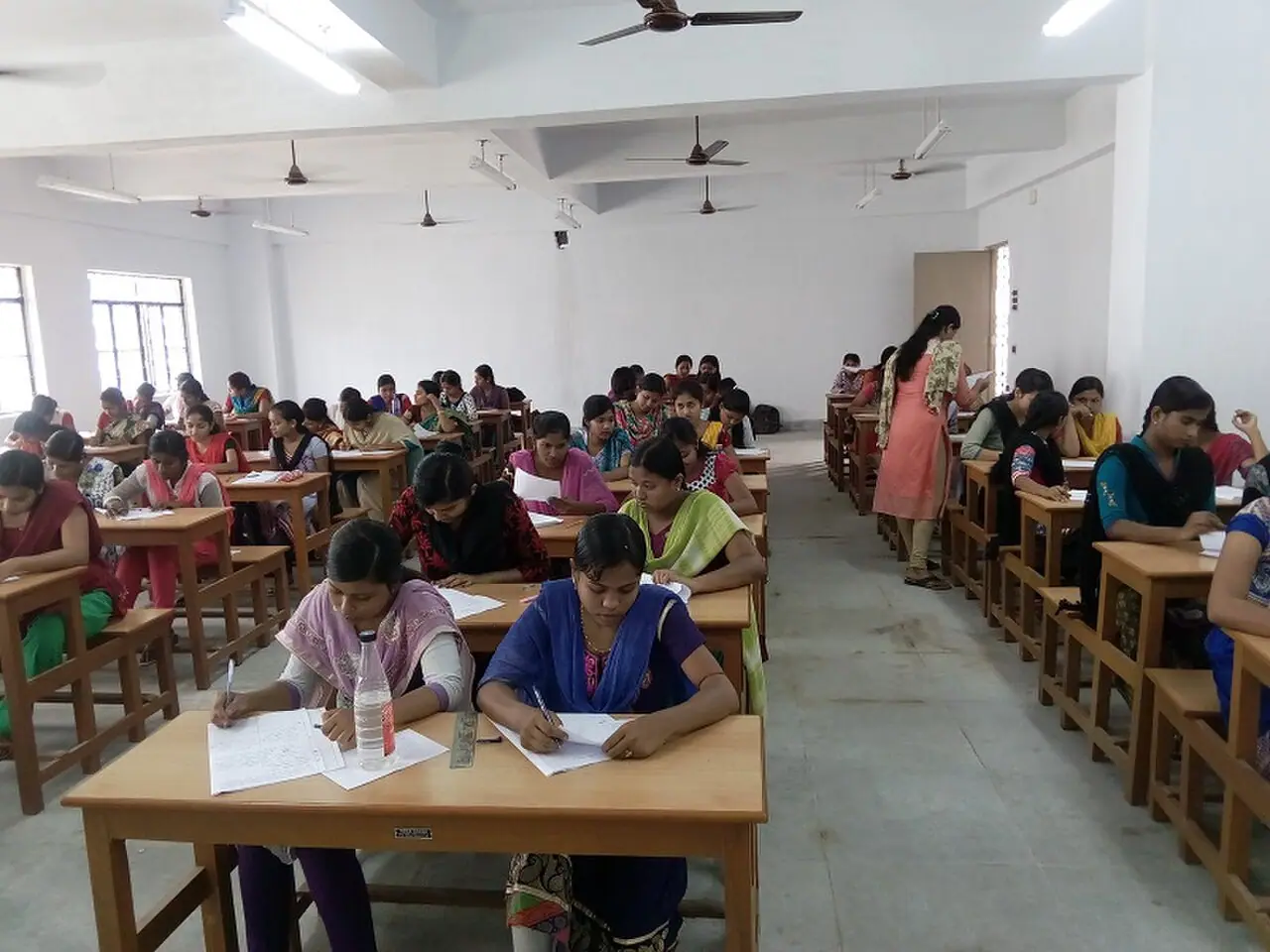
NEET (UG) is India’s national entrance test for undergraduate medical seats. The National Testing Agency (NTA) ran the 2026 sitting on 3 May; its posted notices tied to that date confirm the exam was held nationwide as scheduled.
The case is now criminal, not only social chatter. Detectives describe a very large practice-style question set circulating on phones before the exam window. Press and social threads cite different overlap counts with the final sealed paper—each figure remains an allegation until prosecutors trace a specific file to the embargoed item bank and courts test the chain of custody.
The investigation: scale, state work, and the federal FIR
More than two million candidates sat NEET (UG) in 2026, which is why any public decision to void a cycle or order a re-run would cascade through families, college admissions, counselling calendars, and downstream hospital staffing years later. Early complaints and police work converged on two facts investigators keep stressing in updates: a big item file moved early, and money changed hands close to the exam.
State forces moved first—arrests, seizures, and local complaints are the normal shape when a network sprawls across districts. The education ministry then routed a central complaint to the Central Bureau of Investigation (CBI) so one agency could stitch bank trails, device downloads, and travel across state lines without each province working in isolation. The CBI’s first information report (FIR)—the instrument that formally opens a police case—lists conspiracy, cheating, criminal breach of trust, and exam-fraud statutes aimed at organised cheating in public tests.
That charge sheet matters for readers in two ways. First, it sets the penal stakes: if the narrative survives trial, defendants face serious prison exposure, not mere exam-policy fines. Second, it sets the procedural pace the public will see—remand arguments, bail conditions, requests for scientific analysis of phones, and eventually charge sheets that must survive judicial screening. None of that proves every paragraph in the opening complaint; it proves the state is treating the leak as a high-priority criminal enterprise, not a student rumour.
| Thread | What investigators are testing | What courts still must settle |
|---|---|---|
| Printing and logistics | Whether the secure corridor from print to centre had a weak link | Whether the breach started there or elsewhere |
| Agency insiders | Whether anyone with embargo access moved content early | Whether suspicion becomes admissible evidence |
| Chat commerce | Whether buyers paid for actual items or lucky “guess” packs | How many recipients ever saw embargoed content |
| Exam-day policing | Impersonation or parallel fraud on 3 May | Whether those arrests merge into one conspiracy |
Police narratives drawn from custody statements and phone extractions can sketch a vivid multi-state map, but alleged is not convicted. Defence teams will challenge confessions, hash matches, and chain-of-custody logs. Prosecutors still need to show which file matched which sealed item, on which device, moved by whom—a narrow technical bar behind the political heat.
How the official cycle could change—and where to read it
Nothing in television debates or chat forwards replaces signed NTA or ministry PDFs for students. Those notices carry enforceable rules: whether another sitting is scheduled, how fees are credited or refunded, whether a 2026 attempt counts against lifetime caps, and how counselling timetables shift if scores are delayed or annulled. Mid-May reporting also described political talk of voiding the sitting completely; treat that as policy in motion until the same guarantees appear on the agency site in fixed form.
Until charge sheets and trial records crystallise, the honest reader posture is procedural: two million futures hung on one spring weekend; detectives are mapping people, cash, and bits; judges—not headlines—will own the final word on guilt. Forensic results on devices and bank ledgers will decide whether this becomes a landmark exam-integrity precedent or a messy stack of overlapping local fraud cases.
Geography and themes
Related places and recurring themes for this story.
- India
- Education
Suggested reading
Other stories that pair well with this one—often from the same section or on overlapping themes.
ICAI plots AI and data analytics inside the CA course—CRET review, public feedback, and a ~2028 rollout
The Institute of Chartered Accountants of India is not treating artificial intelligence as a siloed “CS elective” for accountants: **President CA Prasanna Kumar D** told **PTI** (as carried by **The Times of India**) that **without AI, no chartered accountant can survive**, while a new **Committee for Review of Education and Training (CRET)** rewrites syllabus, **articleship**, exams, and soft skills ahead of a **December** recommendation cut-off and a **2028**-ish implementation horizon.
Aftenposten Modi Cartoon Stirs Racism Row
Aftenposten ran Halleraker’s cartoon the same day as Rossavik’s Meninger column; Red MP Rana called it racist; political editor Alstadheim told Dagbladet the symbols backed Rossavik’s point and were not meant to demean.
Gautam Adani consents to US SEC penalties; Adani Enterprises settles Treasury OFAC case for $275m
Federal filings show the SEC moving for $6m and $12m civil judgments against Gautam and Sagar Adani over a 2021 green-bond roadshow, while a parallel Treasury arm deal wraps Iranian-linked LPG trade allegations against the listed flagship Adani Enterprises—not a single envelope with both signatures.
Indian banks nudge fixed-deposit yields higher even with the RBI’s policy rate on pause
Mid-May 2026 rate cards show several large private lenders refreshing select tenures on the same calendar dates while small finance banks still print the headline peaks near eight per cent—competition for stable rupee funding, not a fresh repo hike, is doing most of the work.
India’s energy stress deepens as Hormuz risk drains crude tanks and forces pump-price catch-up
Commercial and strategic crude pools tracked by analytics houses have slid about fifteen per cent since late February while refiners keep runs high; Delhi is now bridging the gap with larger Atlantic and Russian-linked programmes, excise sacrifices, citizen conservation appeals, and the first visible retail increases after months of political patience.
India says Russian crude buys track commercial logic—not Washington’s waiver calendar
Petroleum ministry joint secretary Sujata Sharma told reporters on 18 May 2026 that imports ran before, during, and after the latest U.S. Treasury carve-out, while state fuel retailers still bleed roughly ₹750 crore a day even after a ₹3-per-litre pump increase.
‘Lack of understanding’: India answers Dutch press-freedom questions during Modi’s Hague visit
Secretary (West) Sibi George told reporters some trade headlines shortened his reply as a lack of knowledge; on the ministry transcript he faulted a lack of understanding of India while defending pluralism, turnout, and minority population trends during Narendra Modi’s Netherlands stop.
‘Only four more months this government will survive’: Tamil Nadu DMK’s Anitha Radhakrishnan attacks Vijay’s TVK rule
The Tiruchendur MLA opened a southern Tamil Nadu DMK event on 18 May 2026 with that verbatim collapse line, then stretched the horizon to about six months when discussing M. K. Stalin’s return, dared TVK’s Aadhav Arjuna to resign and meet her in Tiruchendur, and reopened Kolathur and swearing-in family questions.
Why India’s megascale still strains water, cities, and budgets in the 2020s
World Population Prospects, World Bank water briefs, and Indian household-survey tables in one place: the measurable story of the world’s largest national population colliding with monsoon hydrology, irrigation demand, and urban pipes.
Fire engulfs two coaches on Thiruvananthapuram–Nizamuddin Rajdhani near Ratlam; all 68 in B-1 evacuated
Indian Railways field teams halted Train 12431 between Vikramgarh Alot and Lunirichha early on 17 May 2026 after flames began in the B-1 air-conditioned coach and spread to the rear luggage-cum-guard van, isolating both cars from the rake while Delhi–Mumbai corridor traffic backed up and a relief van later crashed elsewhere in Ratlam district injuring several staff, according to Times of India reporting and official statements it quoted.
Keep exploring
Browse the full archive or return to the front page.
Sources and external links
Sources and filings our editors consulted to verify this story. External links open in a new tab.